
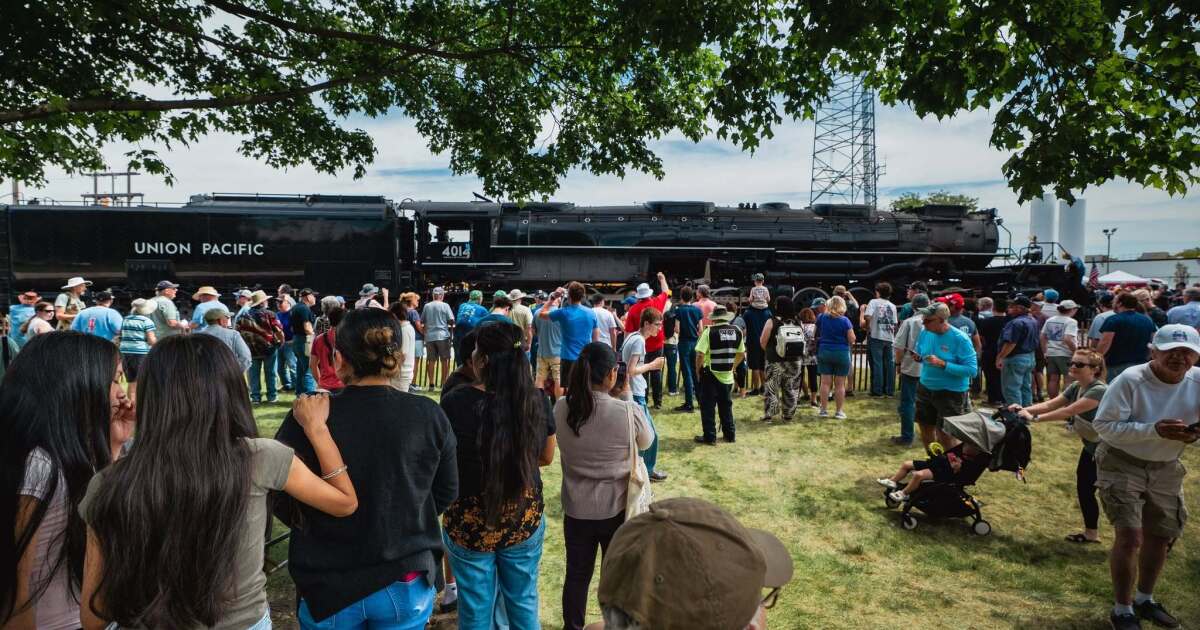
It’s finally Pittsburgh’s turn to see Big Boy. The world’s largest operating steam locomotive, otherwise known as Union Pacific’s No. 4014, is continuing its national tour in celebration of America’s 250th anniversary.
The national Big Boy tour comes in the run up to a proposed Norfolk Southern and Union Pacific merger; Norfolk Southern operates the railway on the eastern side of the tour, Union Pacific operates the western railway. A merger would create the country’s first coast-to-coast freight train company. This partnership was instrumental in bringing the Big Boy tour to life, said Mike Jaixen with Union Pacific.
“The merger is one of the things that kind of opened up this conversation to have it,” he said. “It takes an incredible amount of work to put together a steam tour.”
Pittsburgh area locals can catch sight of Big Boy this weekend east or west of the city.
For a track-side viewing:
On Saturday morning, July 11, the locomotive will make a public whistle stop in Cresson from 10:45 a.m. to 11:15 a.m. before traveling west through the region. It is scheduled to arrive in Leetsdale, about 20 miles northwest of downtown Pittsburgh, at 6:15 p.m. for a 30-minute public whistle stop before departing at 6:45 p.m.
For the more adventurous, Big Boy’s exact whereabouts can be tracked online, and viewers can go trackside to see it chug by. But the map is subject to change due to rail traffic and debris, so the planned events in Cresson and Leetsdale are the surest viewing options.
From afar:
Beginning at 2 p.m., Point State Park will host a viewing on the opposite bank from the tracks.
After Western Pennsylvania the locomotive will continue west to complete its tour by the end of the month, landing in its home in Cheyenne, Wyoming. More details on the Big Boy’s schedule can be found on the Union Pacific website.
“This is American innovation from 80 years ago that’s been brought back to life,” said Jaixen. He estimated that more than 1 million people have already come out to see Big Boy in action.
Onlookers should take precautions and remember that Big Boy gets its name for a reason. Never go near the tracks, which are active before and after Big Boy’s showing, and stay back 25 feet at all times.
Jaixen said it takes a lot to operate this train, so it can run early or behind schedule. Onlookers should therefore be sure to plan ahead and pack plenty of snacks and water in the high heat.
Last week, at a Big Boy viewing in Berks County, the local police declared a mass casualty incident when more than 100 people required medical care on the scene, and 35 were sent to the hospital for heat-related illnesses.
But it’s no surprise that Big Boy is drawing so much attention. Thomas Kinney, a civil engineer and the president of the Beaver County Model Railroad and Historical Society, said Big Boy was one of the biggest, strongest and most reliable steam engines of the mid-twentieth century. The average train today could handle about 3,100 tons, but Big Boy can handle 6,000, he said.
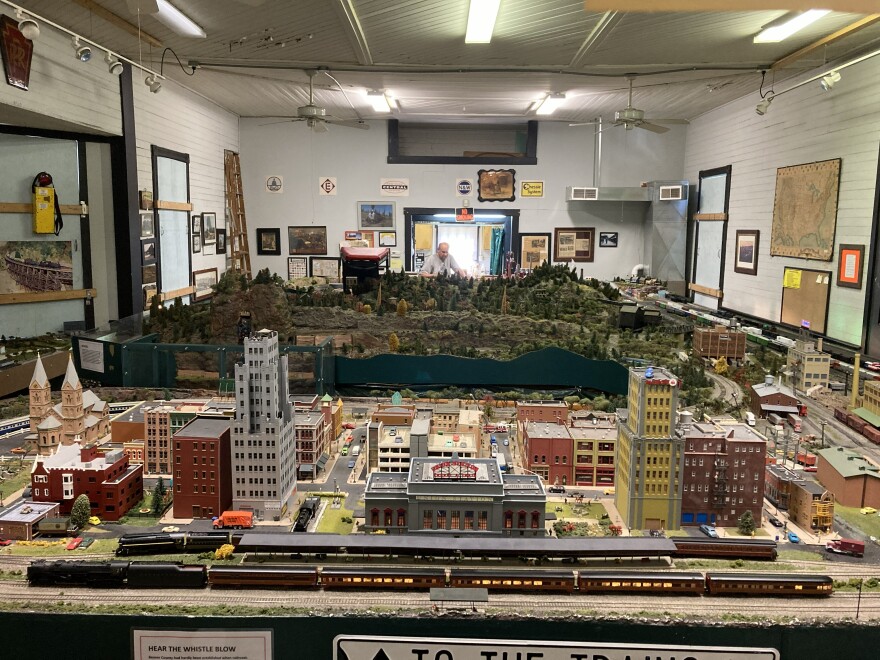
For train enthusiasts wanting more after Big Boy, Beaver County Model Railroad and Historical Society opens its doors to visitors on the weekends between Thanksgiving and New Year’s.
“You get to see a living, breathing artifact from the 1940s working just like it rolled out of the shop yesterday,” Kinney said. “There’s a certain romance to it — the smoke and the sound and the whistle.”
Big Boys were built in the lead-up to World War II, when the country needed a powerful locomotive to haul freight over the mountains of Wyoming.
It was never formally named Big Boy; Union Pacific said their name for it would be the Wasatch Series, after the Wyoming mountain range. But when it first rolled out of the factory in New York, someone took chalk to the front and wrote “BIG BOY,” and the name stuck in perpetuity.
Big Boy’s working life ended by the 1960s, when it was replaced by diesel-electric and gas-turbine locomotives. But their kind remained part of rail history and a favorite among train enthusiasts. Of the 25 ever built, only 8 remain today, and No. 4014 is the only one that still operates.
Before this tour, you could only see them on display in museums until Union Pacific refurbished No. 4014 in 2013.
“It’s cool that they exist as a memorial to that bygone era,” said Kinney.