
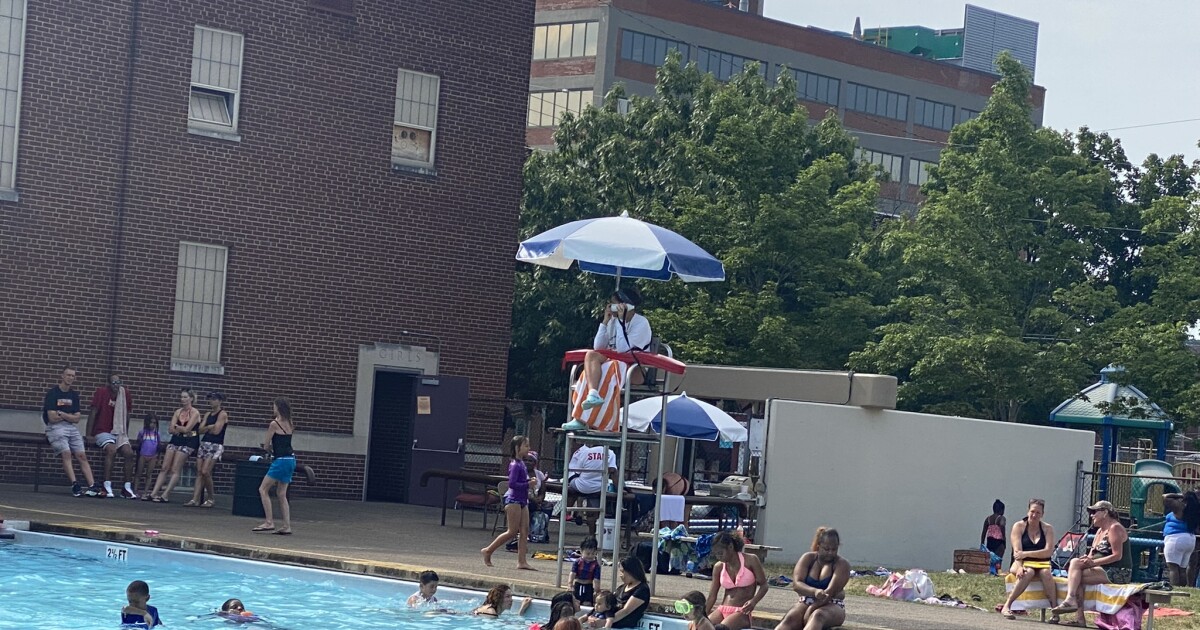
Young people under the age of 15 will now need an adult over 21 to accompany them to enter the city of Pittsburgh’s public pools during weekends and evening hours.
Starting on Monday, a “Family Swim” policy will be in place at all the city’s pools, according to a press announcement released Friday afternoon.
The program, which was last in place in 2019, sets aside weekends and the hours of 5 to 7 p.m. during the work week as “a dedicated opportunity for families to enjoy the pool together.”
Molly Onufer, a spokesperson for Mayor Corey O’Connor’s office, said an adult can accompany more than one child and need only be on the pool grounds to qualify, not necessarily in the pool next to their child. She said people whose age is not easily discernible will be asked to show ID. Adults without children will also be allowed in the pool during Family Swim hours.
Onufer said she did not have information on whether the policy change was prompted by concerns about youth gatherings. But the policy comes at a time when city leaders are expressing increased concerns about rowdy gatherings of young people.
Last week the city closed the Bloomfield and Highland Park pools, citing overcrowding and disruptive behavior by teens.
Earlier this summer, the Pittsburgh Downtown Partnership instituted its own chaperone policy for Market Square after businesses complained of disruptive behavior. The policy does not ban unaccompanied kids outright, but requires them to keep moving and not linger in the space. Several large gatherings of young people in recent weeks Downtown and in East Liberty have seen adults arrested and young people cited.
Onufer said the new approach was not a “sweeping chaperone policy” because it does not apply to all pool hours. (Some city pool locations in 2024 and 2025 did have full-time chaperone requirements.) The goal, she said, was to create a “time designated for adults and children.”
“The return of Family Swim encourages families to spend quality time together and enjoy a fun, active summer,” the announcement states.