
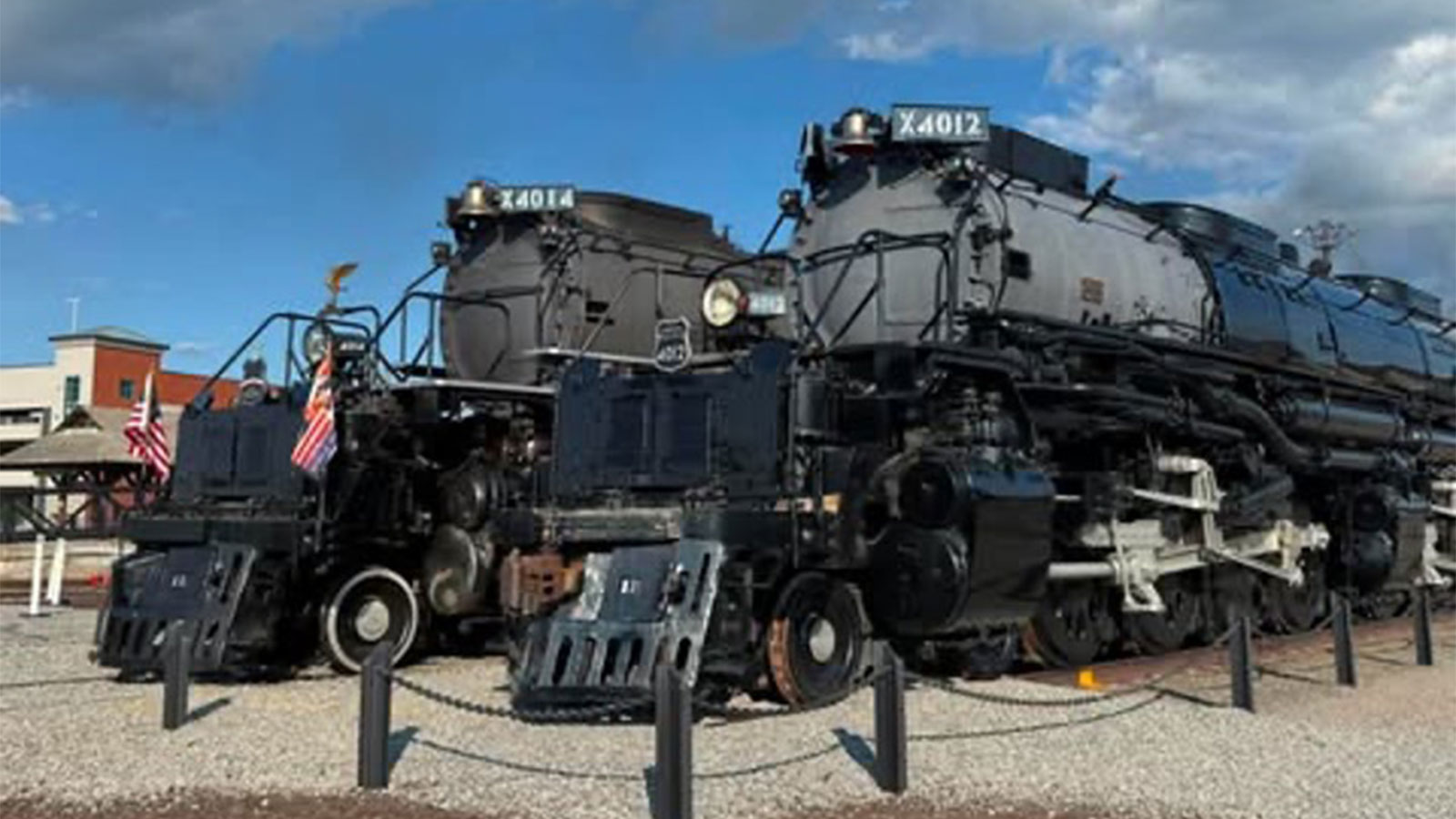
Whether you’ve lived in NEPA your whole life or you’re just passing through on vacation, there’s a good chance you’ve seen a steam locomotive. Maybe you’ve at least witnessed its unmistakable column of smoke, moving through Scranton on any given weekend. That’s Steamtown National Historic Site. It’s one of the only places left in the country where you can actually ride behind a real, working steam engine instead of just looking at one behind a fence.
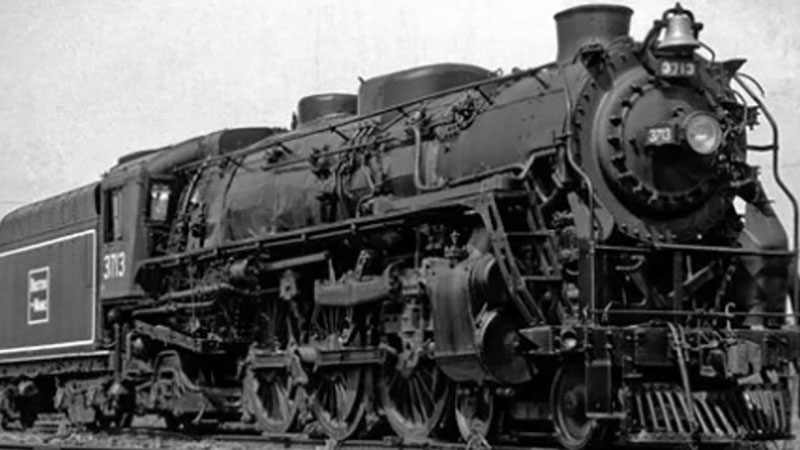 A steam locomotive at Steamtown National Historic Site in Scranton, PA. Photo courtesy of The Iron Horse Society.
Most years, Steamtown gets about 60,000 visitors
This summer, the Big Boy, the largest steam locomotive ever built, rolled through for a two-week visit. More than 110,000 people showed up to see it. Part of that was the reunion itself: Steamtown has its own Big Boy on-site. This, however, was the first time since the 1950s that two of these giant sibling locomotives stood side by side. People came out of the woodwork for it. That’s almost two years’ worth of normal visitation, in two weeks. Locals who’d driven past Steamtown for years finally stopped in. Families drove in from other states. People even flew in from overseas for the reunion.
This shows that people care, both locals and visitors alike. The question is whether Steamtown has what it needs to actually meet that interest: more train restorations, more programs for kids, more excursions people can actually ride. Right now, there’s a real gap between what people want from this place and what the Park can currently offer.
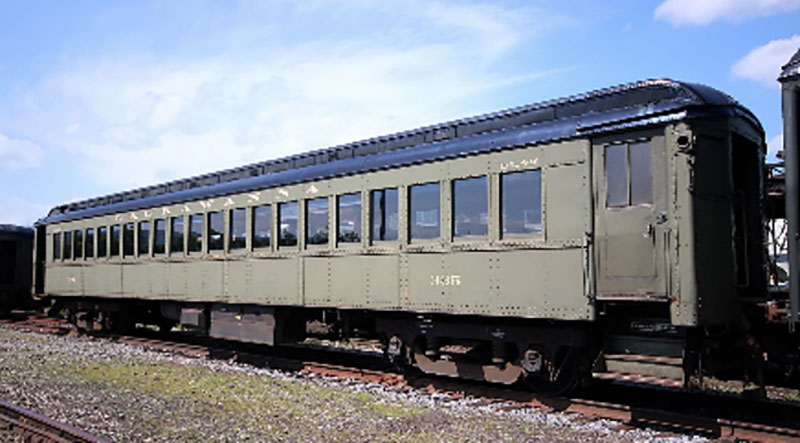 A vintage passenger rail car in the yard at Steamtown National Historic Site in Scranton, PA. Photo courtesy of The Iron Horse Society.
Wait — isn’t this a National Park? Doesn’t the federal government pay for it?
Sort of: Congress does fund Steamtown, and your tax dollars do help keep the place open every day. But it’s never been fully funded at the level it was supposed to be! When Steamtown was established, the General Accounting Office recommended around $6.5 million a year for museum operations and $12 million for restoration work. What Congress actually appropriated was closer to $5 million total. Funding has grown to a little over $6 million a year now, but it hasn’t kept pace with inflation.
So, the government is helping, and that help matters. It’s just that the help covers the basics: staff, keeping the lights on, keeping the buildings standing. It’s not designed to run mainline steam excursions, restore a century-old fleet of locomotives, or fund the kind of programming visitors keep asking for. That’s the gap Steamtown’s friends groups exist to help close.
Little known fact: National Park Service isn’t legally allowed to ask you for money. No corporate sponsorships, no direct fundraising asks – it’s just not allowed. That’s why almost every one of the 433 national parks has a “friends of” group working alongside it to raise the money the park itself can’t ask for.
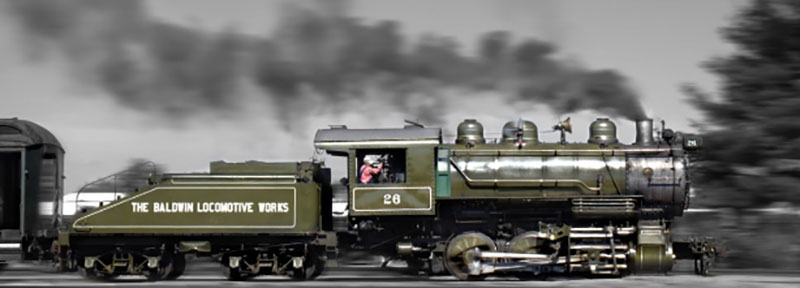 A steam locomotive chugs along the tracks at Steamtown National Historic Site in Scranton, PA. Photo courtesy of The Iron Horse Society.
So, does Steamtown have one of these “friends” groups?
It does! It’s called The Iron Horse Society. We’re the official philanthropic partner for Steamtown National Historic Site. The Iron Horse Society is a 501(c)(3) nonprofit. It is run by an all-volunteer group of people who just genuinely love railroad history, steam locomotives, and keeping them running for the next generation.
We fund Steamtown’s work through train rides, memberships, and by finding locals and visitors who care about locomotive history and about Northeast Pennsylvania.
What makes this a bit more challenging is that most friends, booster, and nonprofit-partner relationships build their base by sharing information with their partners. But we’re partnered with a federal agency, and their rules and regulations mean that it’s not possible for them to hand over information about their 60,000-plus yearly visitors. So, every supporter The Iron Horse Society has, we found, or they found us. If you’re reading this, that’s exactly how it works!
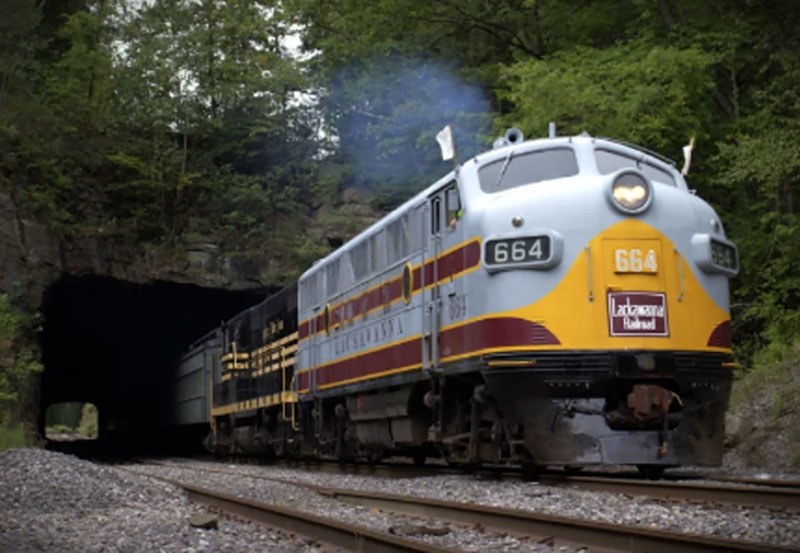 A diesel locomotive exits a train tunnel at Steamtown National Historic Site in Scranton, PA. Photo courtesy of The Iron Horse Society.
Okay, so what does that money actually go toward, and what’s the deal with all those rusty old train cars just sitting there?
Everybody asks this, locals who’ve watched them sit for years, and tourists seeing them for the first time. Why not just slap on some paint and call it done?
What looks like a little surface rust can be hiding real structural problems underneath, especially on something that’s been sitting for decades. Before anyone can touch these cars, specialized engineers have to inspect them first, potentially stabilize the equipment to allow workers on or in it, remove any hazardous materials like lead or asbestos, and that alone can run tens of thousands of dollars per car. There just aren’t many people left who know how to do this work.
And that’s before you even get to the actual restoration, rebuilding boilers, fabricating parts that nobody makes anymore, and passing a full safety inspection before that first wheel turns again. That’s exactly the kind of project IHS raises money for.
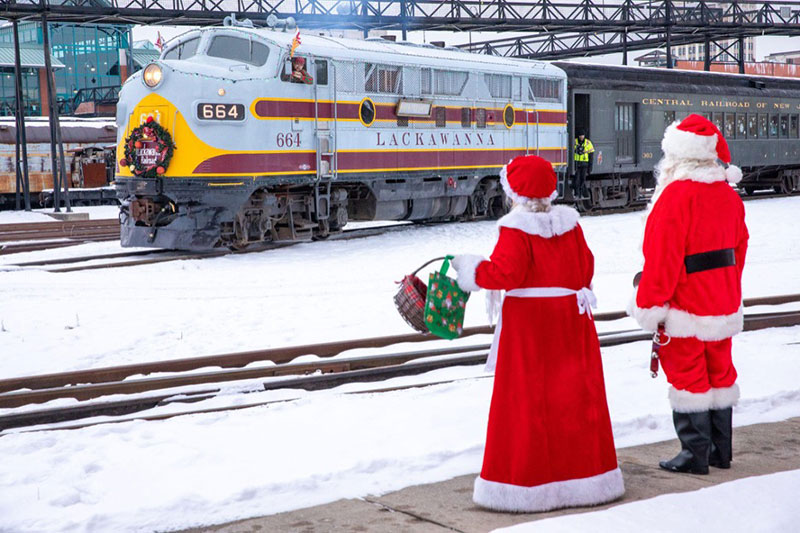 Santa and Mrs. Clause wait to board the North Pole Limited at Steamtown National Historic Site in Scranton, PA. Photo courtesy of The Iron Horse Society.
Why should this matter to me specifically?
If you live here: Steamtown puts an estimated $5 to $6 million into the regional economy every year. And that’s a normal year. The two-week Big Boy visit in June 2026 generated an estimated $16 to $17 million for the region, according to a Scranton Chamber of Commerce press release. That counts roughly $11 million in direct spending and another $5 to $6 million in indirect impact. That’s real money moving through local hotels, restaurants, and shops, in the span of two weeks, because a train showed up.
A stronger Steamtown means more of that, more often, more foot traffic for downtown Scranton, more reasons for people to visit NEPA, and one more thing this area gets to be known for.
If you’re visiting, you picked a good time to look us up. There’s a lot more to see around here than just the trains. Check out DiscoverNEPA’s itineraries if you want to make a full trip out of it. And if this visit is the first time you’ve seen a steam locomotive up close, there’s a decent chance it won’t be the last.
Either way, if you’re a railfan, a history buff, a parent whose kid won’t stop talking about trains, a Scranton local, or just someone who thinks this kind of history is worth keeping around, The Iron Horse Society is how you you help!
Reach out to [email protected] and we’ll take it from there.