
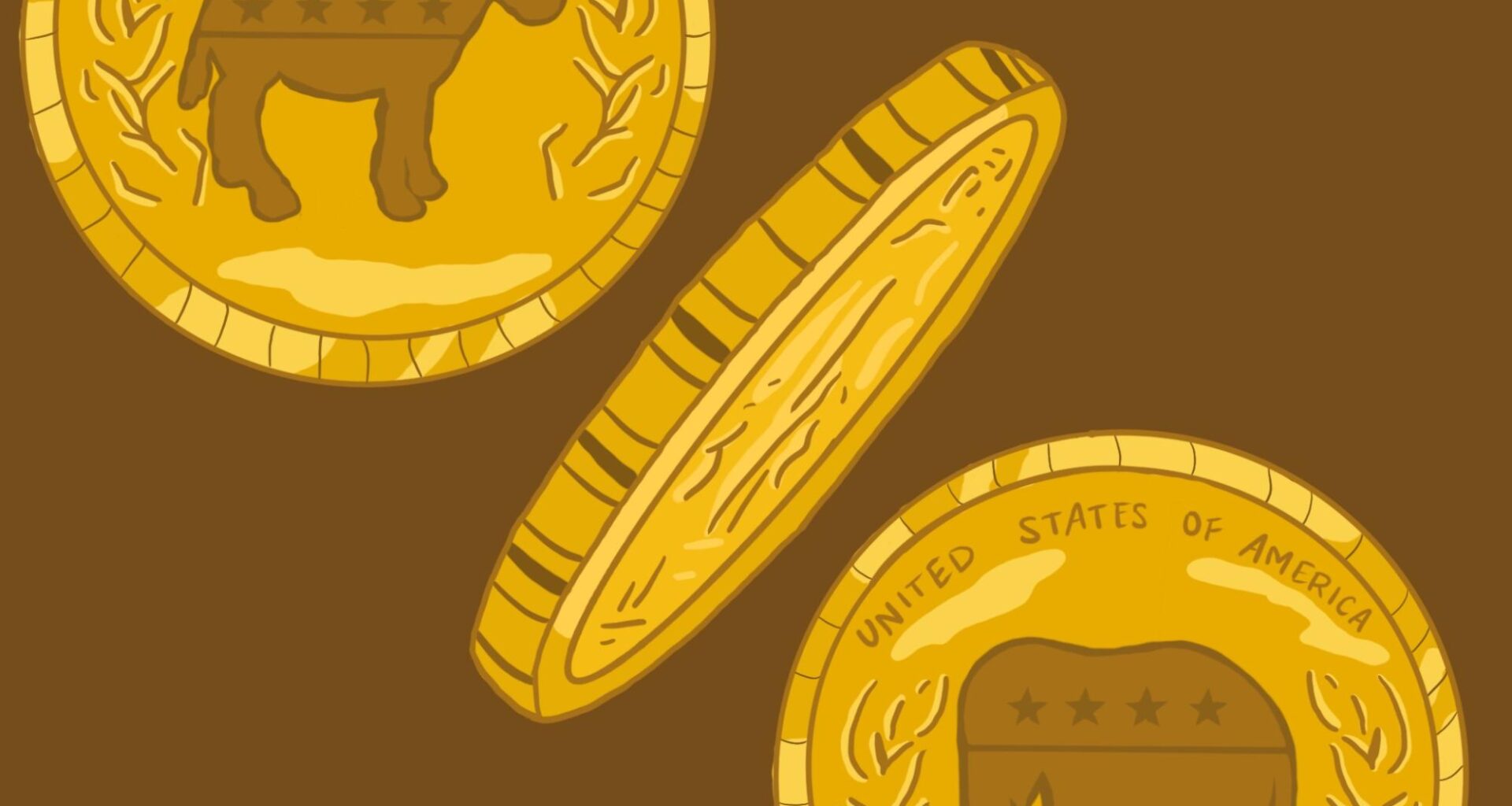
Student organizations at Pitt are working to foster civil, nonpartisan dialogue amid rising concerns over campus polarization.
Following Pitt’s failing grade in the 2026 FIRE College Free Speech Ranking, students called for the University to encourage more civil political discourse across campus. Clubs like BridgePittsburgh and Stuff You Should Care About are working to make political conversations more approachable and informed regardless of party affiliation.
BridgePittsburgh, Pitt’s chapter of Bridge USA, is a nonpartisan organization for students seeking meaningful political discussion without hostility. Cole Belling, BridgePittsburgh’s president and a senior politics and philosophy major, said the organization isn’t affiliated with a party, “but we’re also not centrist.”
“We try to bring everyone together. It’s not about, ‘You have to agree with people,’” Belling said. “It’s about how you can disagree with them civilly.”
Rachel Pronesti, vice president of BridgePittsburgh and senior political science major, said the organization welcomes all levels of participation.
“Bridge[Pittsburgh] is about creating a space where people from all over, from all different backgrounds, can come together and talk about politics in a way that is safe, respectful and, at the end of the day, educational,” Pronesti said.
After a respectful back-and-forth dialogue in 2022 about now-President Donald Trump with a classmate in a politically focused class, Pronesti was encouraged to join the club. Three years later, Pronesti credits the organization with teaching her how to separate personal emotions from political discussions.
“I learned how to fight the battles I needed to fight and stand on the morals I needed to stand on,” Pronesti said. “You have to be able to take yourself out of the conversation to talk about the core issues.”
While BridgePittsburgh focuses on facilitating dialogue, SYSCA, another campus nonpartisan club that advocates for fact-based discussions, aims to provide students with unbiased, verifiable information.
Alex Herron, SYSCA’s social media manager and a sophomore political science and psychology major, said that the club was born from the realization that many students are still “unsure of how the government, and certain roles within it, works.”
“[SYSCA] realized there’s a problem on campus — too many students are affected by misinformation about politics,” Herron said.
Founded in October 2024, SYSCA implements a three-step bias check for all of the content it publishes. The organization relies heavily on the Ad Fontes media bias chart to identify sources that rank high in reliability and low in partisan lean, according to Herron.
“Politics is just part of the world we live in,” Herron said. “We’re trying to make that world a little less confusing for everybody, so that they can understand how different government decisions might affect their day-to-day life.”
SYSCA conducts man-on-the-street interviews with students, posts informative Instagram graphics on current topics and hosts tabling events at the Petersen Events Center and Towers Lobby. During these interviews, Herron found that many students don’t have enough foundational political information to begin forming questions.
“We’ll ask students, ‘What do you have a question relating to politics?’” Herron said. “They’ll be like, ‘I’m not really too sure. I don’t know anything about politics that I could form a question off of.’”
Pronesti cited “political exhaustion” and “the dismissive nature of politics” as two factors that push students away from current political involvement.
“Government and politics is made to seem like an elusive concept,” Pronesti said, “I think people are exhausted by feeling like, ‘If you don’t get it by now, you won’t get it.’”
By encouraging open, judgment-free conversations, both SYSCA and BridgePittsburgh hope to remind students that political engagement doesn’t have to mean picking “a side.”
“A lot of students are like, ‘I don’t really have a side,’” Pronesti said. “You don’t have to fall under a label. You still deserve to be involved in politics and your government.”
Bellings encouraged students to confront divides with in-person conversation.
“When you’re talking with someone face-to-face, things don’t seem that bleak,” Bellings said. “You’re more aware of each other’s humanity.”