
Thomas Dillon started experimenting with art when he was 7 years old. His mother studied art at New York State College in the 1940s. One day, when she was painting, he walked up alongside her and was handed a paint brush.
In the years following, he started taking art more seriously, studying different artists, especially Albrecht Dürer.
Dillon never pursued a career in art, but now, many decades later, still has an affinity for it.
“It can help you, in my case, to get through extremely dark times in my life,” Dillon said.
Many years ago, he was severely injured in an automotive accident. Dillon’s body was thrown from the vehicle and found 100 yards away by first responders. He broke his spine, damaged his lungs, and severed his spleen and several fingers.
His decade-long career, mainly in facilities operations, was effectively over.
Following the accident, Dillon was in a dark place. He had lost everything. He was left homeless, he lost his job, and his career. He had lost his identity.
“When you lose that identity, you lose your self worth,” Dillon said.
Over time, Dillon’s body and mind would start to heal. He said the accident left him in a bad place, but art helped ground him.
“I’ve lost my career, but as an artist, I didn’t lose my sense of self worth,” he said.
Now, when making art, Dillon appreciates getting lost in his work, making, creating and experimenting. Dillon said it doesn’t matter if the product is any good, because it buys a person time to occupy their mind. To him, art is therapy.
“You could spend an hour or two not in your own mind, but creating something that could take you away from that pain,” Dillon said. “Whatever that darkness is, it can help you get past it.”

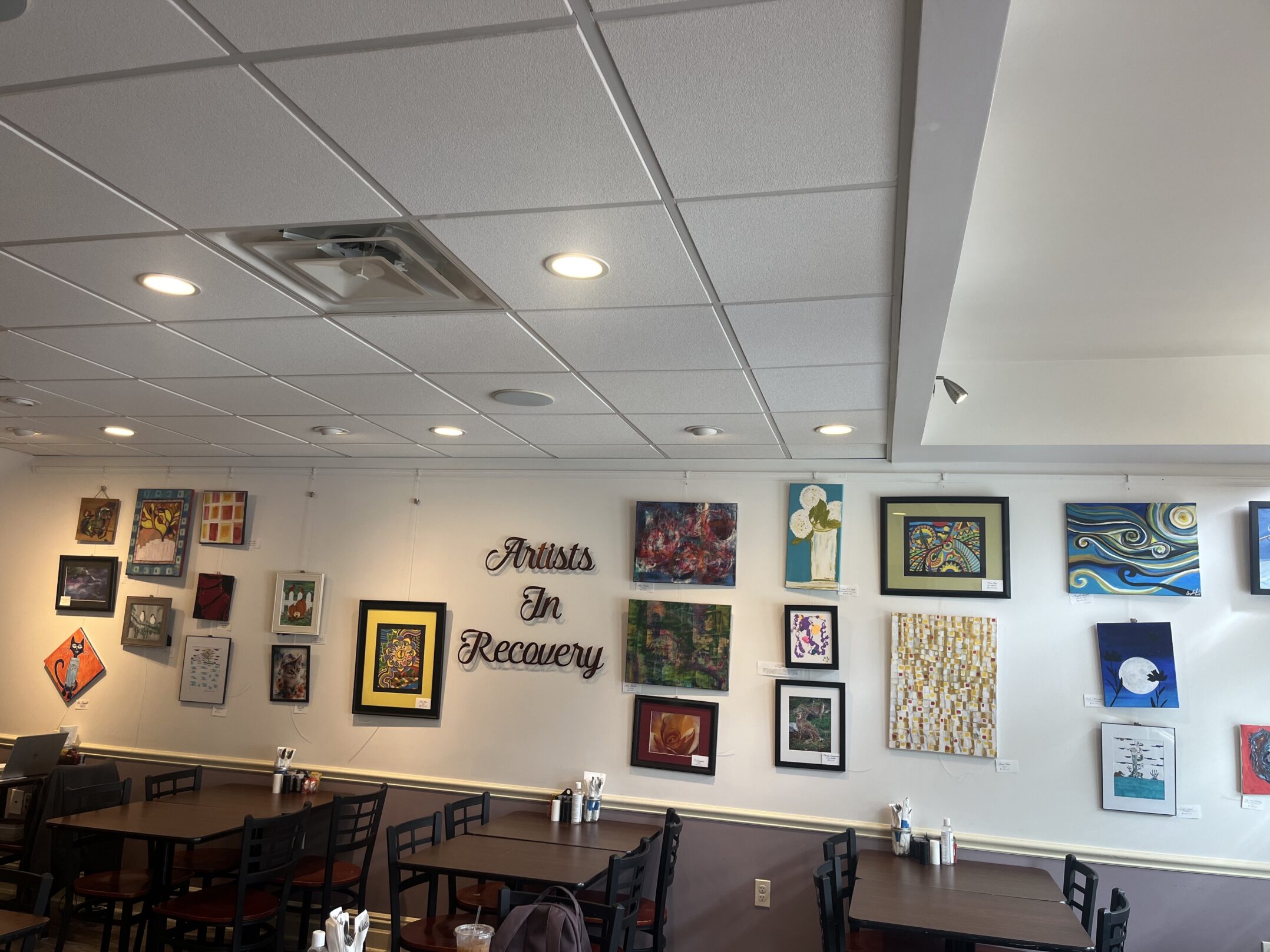
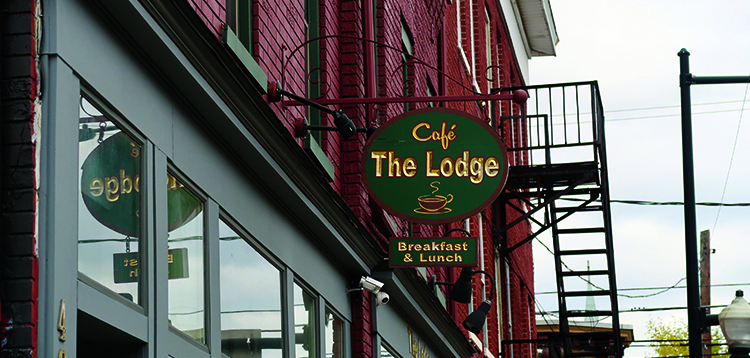
Now, he’s a professional artist in the Artist in Recovery Program at Cafe the Lodge, which offers transitional housing and employment to adults living with and recovering from persistent mental illness. Aside from housing and employment, they offer various programs to support mental health, as well as supporting community members.
The Artists in Recovery Program is one of many different programs offered at Cafe the Lodge. The cafe serves coffee and food to community members, as well as providing job opportunities to individuals with mental health diagnoses. Through its job training and employment opportunities, the cafe allows individuals to gain valuable work experience.
The Lodge also hosts various community events, art exhibits and workshops — a space for creativity, recovering and personal development.
The Artists in Recovery program is open to anyone who identifies themselves as in recovery, said Ian Panico, the program director at Cafe the Lodge. As program director, Panico oversees all the services offered by the cafe.
Panico started the Artists in Recovery program in 2012.
“I always felt like art always helped my mental health when I was younger, and in high school,” he said.
He said recovery is about teaching someone to express themselves, whether through art, or just through a conversation.
“Just supporting the expressions of oneself is really where the art comes out,” Panico said.
He said anyone in the community can apply for the program. Artists go through an application process, and if their application is successful, they join the artists community that meets weekly to work on their projects and learn from one another.
“Anytime that you’re able to get a gathering of people that are like-minded, or have gone through similar things, or maybe suffer from something, it helps people realize that they’re not alone in their struggles,” Dillon said. “If you’re seeing another artist do something, and you could learn what they’re doing.”
Since the beginning of the program, Panico said there have been 40 to 50 artists, some of whom have been there since the start, and others who are newer.
Art produced by artists accepted in the program hangs on the walls of Cafe the Lodge’s dining area. There’s no outreach or advertising. Panico said all the art is for sale, and patrons can purchase anything that strikes their fancy at any time.
Eighty-five percent of the proceeds of a piece go directly to the artists, and the other 15% goes to Cafe the Lodge to help with overhead.
Panico said the program is a way for people to directly financially support individuals in recovery, while also getting something in return.
Panico worked in food services right out of college, but then went back to school to receive his degree in clinical counseling psychology.
In 2011, he was hired by Cafe the Lodge as a recovery coach. He progressed to a recovery coach supervisor, assistant director and finally his current role as program director.
When appointed program director, Panico said he wanted to change the atmosphere of the cafe.
“It was very sterile,” he said.
Panico said it was clean, dark, and didn’t feel very welcoming. He introduced the Artists in Recovery program as a way for people to engage with and support mental, while also adding some life to the atmosphere inside the cafe.
Natalie Sysko grew up in Nazareth and has been a regular customer at Cafe the Lodge for the past several years. In high school, Sysko was an art student, and always enjoyed coming to the Lodge to admire the work on the walls.
“I love the art,” she said. “I love that they change up so often too.”
Sysko attends college at Worcester Polytechnic Institute, but said every time she’s home she makes a point to stop at the Lodge. She also brings her college friends by when they visit her in Bethlehem.
“I take everyone from Massachusetts here to come and just see this area,” Sysko said. “I definitely still feel very connected with it.”
When it comes to food services and the company as a whole, Panico recognizes that they’re not a competitive business but their goal is to spark conversations and support the community.
“We are very much just people helping people,” Panico said.
He recognizes the importance and progress of the program he’s built, but the main barrier the Artist in Recovery program faces is a lack of adequate and ongoing funding.
As a human services provider, Cafe the Lodge and its programs are funded through county-based dollars earmarked for community-based social services. Their budget comes out of a pot of funds for Northampton County-based services, including mental health programs, services for children and youth, as well as drug and alcohol counseling.
There are significant needs across the county, and Panico said it sometimes feels like there’s not enough money to help everyone who needs it. Still, Panico and his staff try to be flexible and meet as many needs as they can.
“So much of recovery is not about mental health, it’s about community integration,” he said, “We really see the benefit of being able to just do what’s necessary.”
Still, Panico said the Lodge is largely dependent on state and county funding to provide services, and mental health is often a lower priority when decisions are made about annual budgets.
“If the system itself is barely maintaining, how are we going to be helping the people that really need the help?” Panico said.
In the meantime, Panico and his team will continue to support the people who rely on the Lodge. He said Artists in Recovery program has been important for bringing mental health awareness to the local community, especially as it helps destigmatize mental health recovery and treatment.
“We need to have those conversations to show people it’s okay,” he said. “It’s okay to live with this. It’s okay to be moving forward. And we’re all going to do it together.”