
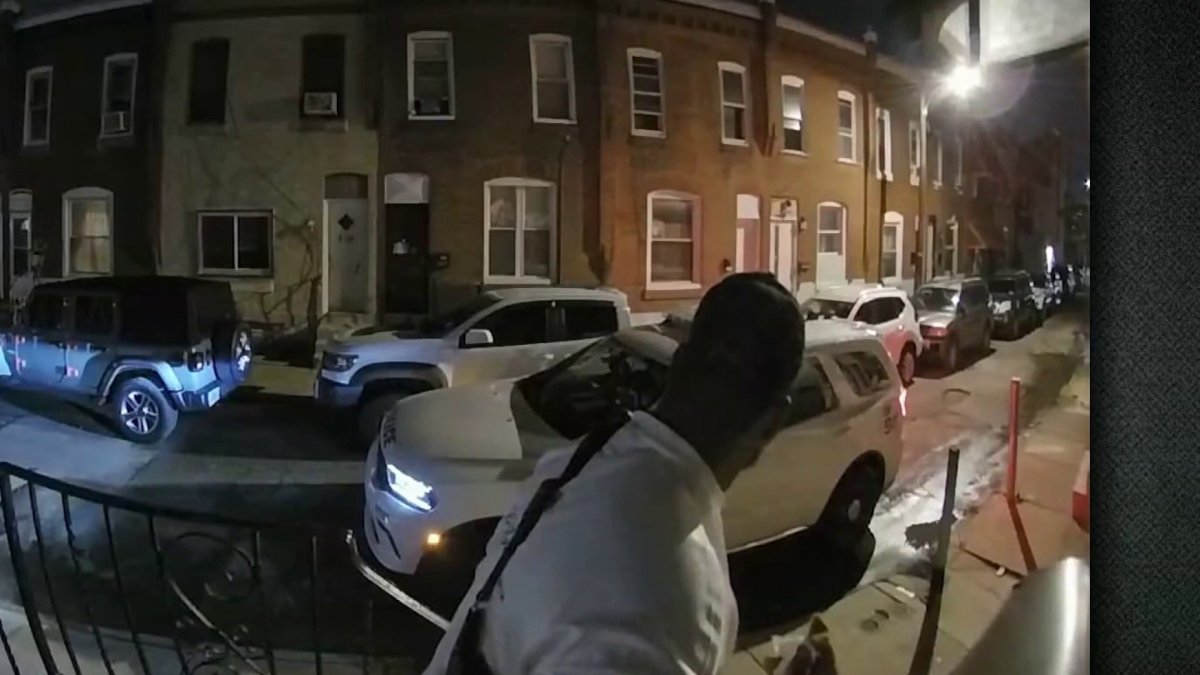
The Citizens Police Oversight Commission is investigating how Philadelphia police officers are using what’s known as a “mere encounter,” a type of interaction that police policy describes as a voluntary, consensual conversation.
The review comes as the commission seeks to better understand how often these encounters occur, how they are conducted and what impact they have on members of the public.
Dennis Jones’ doorbell camera captured one mere encounter in June as he was returning home from a night out.
“I’m walking up the steps, I try to get in the house. I’m eating ice cream,” Jones said.
“Mere Encounter: This is a consensual interaction where the officer may ask the citizen
questions and generally engage the citizen in conversation. In this interaction, the
police officer may ask for identification from the citizen, but the citizen is under no
obligation to engage the officer or provide identification. Refusal to comply with
requests and conversations DOES NOT provide the officer with any additional
suspicion to detain the individual.”
Philadelphia Police Department memorandum
Video shows Jones dropping his keys near his front door, drawing the attention of two officers. The officers exited their SUV and began speaking with him.
“You come off a little nervous. Are you alright?” one officer asked Jones.
“Why would I be nervous?” Jones replied.
“No guns or anything?” an officer asked.
Video shows officers shining a flashlight toward Jones’ waist and asking him to adjust a bag he was wearing across his chest. When Jones declined, the officers ended the interaction and left.
“I was confused on if they were serious, but then once it clicked that they were serious, instantly I felt attacked,” Jones said.
Philadelphia police classify “mere encounters” as voluntary conversations between officers and members of the public.
According to an internal police memo released this month, the department defines a mere encounter as a consensual interaction “where the officer may ask the citizen questions and generally engage the citizen in conversation.”
Department policy states that a person’s refusal to answer questions or comply with requests during a mere encounter does not, by itself, provide officers with grounds to detain someone or continue the interaction.
Mere encounters provide officers with an important opportunity to engage with
community members in a respectful, non-intrusive manner. These brief, voluntary
interactions build trust, foster positive relationships, and enhance community policing
efforts. By increasing officer presence and communication, mere encounters help
identify concerns early, promote transparency, and prevent potential issues from
escalating while safeguarding individual rights. A mere encounter does not involve
reasonable suspicion or probable cause. If the person refuses to engage, walks away,
or flees, these actions, without more, do not establish legal justification to pursue
or detain.
Philadelphia Police Department memorandum
Unlike a traffic stop, stop-and-frisk or an arrest, a mere encounter does not require police to have reasonable suspicion that a crime occurred, according to the policy. During a mere encounter, policy dictates officers shall “activate their body-worn camera,” “notify police radio,” and record the encounter in the patrol log.
After receiving a number of complaints about the encounters, the Citizens Police Oversight Commission announced Wednesday that it was launching an investigation.
Tonya McClary, the commission’s executive director, said the commission wants to better understand whether these interactions are occurring as intended.
“Just because it’s in policy, it doesn’t make it right,” McClary said.
McClary questioned whether residents fully understand their rights during these interactions.
“If an officer can walk up to you and say, ‘How are you doing?’ and, ‘Do you have a gun?’ What does that look like?” McClary said. “Should they also add phrases like, ‘Well, sir, you don’t have to answer that,’ or, ‘You are free to walk away from me right now?'”
According to preliminary data reviewed by the commission, mere encounters account for approximately 6% of police incidents.
Jones believes the encounter outside his home crossed a line.
“They didn’t ask me, do I live here? They didn’t say, ‘Whose house are you going in?’ They didn’t say none of that,” Jones said. “You dropped your keys, that’s given us the right to get out, to interrogate you, harass you, and bother you.”
Philadelphia police were unable to provide an in-person interview Wednesday but provided a statement saying the department continues to train officers on constitutional policing standards.
“The Philadelphia Police Department has devoted significant time and resources to ensuring officers understand and comply with constitutional policing standards, including the distinction between mere encounters, investigative detentions, and lawful searches,” the statement said. “Long before this report, the Department had already identified opportunities to strengthen training and policy in this area through our own review processes, including supervisory oversight, body-worn camera review, and ongoing policy evaluation. Those efforts have led to a fundamentally new approach to policy implementation, pairing policy revisions with comprehensive training, scenario-based instruction, and interactive testing to ensure officers not only understand policy changes, but can apply them in the field. This represents a significant evolution in how the Philadelphia Police Department develops, implements, and reinforces constitutional policing, and it will remain the model moving forward. We remain committed to protecting both public safety and the constitutional rights of every Philadelphian.”
The Citizens Police Oversight Commission plans to review body-camera footage and incident reports related to mere encounters as part of its investigation.
The commission has also posted a survey on its website seeking feedback from residents about their experiences with these interactions.
NBC10 investigative reporter David Charns can be reached at david.charns@nbcuni.com.