
To the west of Pennsylvania, thousands of people have been sickened by a parasite that causes explosive diarrhea amid a national outbreak, with Michigan’s cases growing by nearly 1,000 to a total of 2,640 over the weekend.
New York and Ohio were reporting the second and third highest number of cases in the country. In New York, there were 470 reported cases as of July 10, while Ohio was reporting 364 cases as of July 9.
But cases in the Keystone State aren’t uncharacteristically high compared to previous years, according to data from the Centers for Disease Control.
Here’s how many cases have been reported, and what to know about how to protect yourself from the parasite.

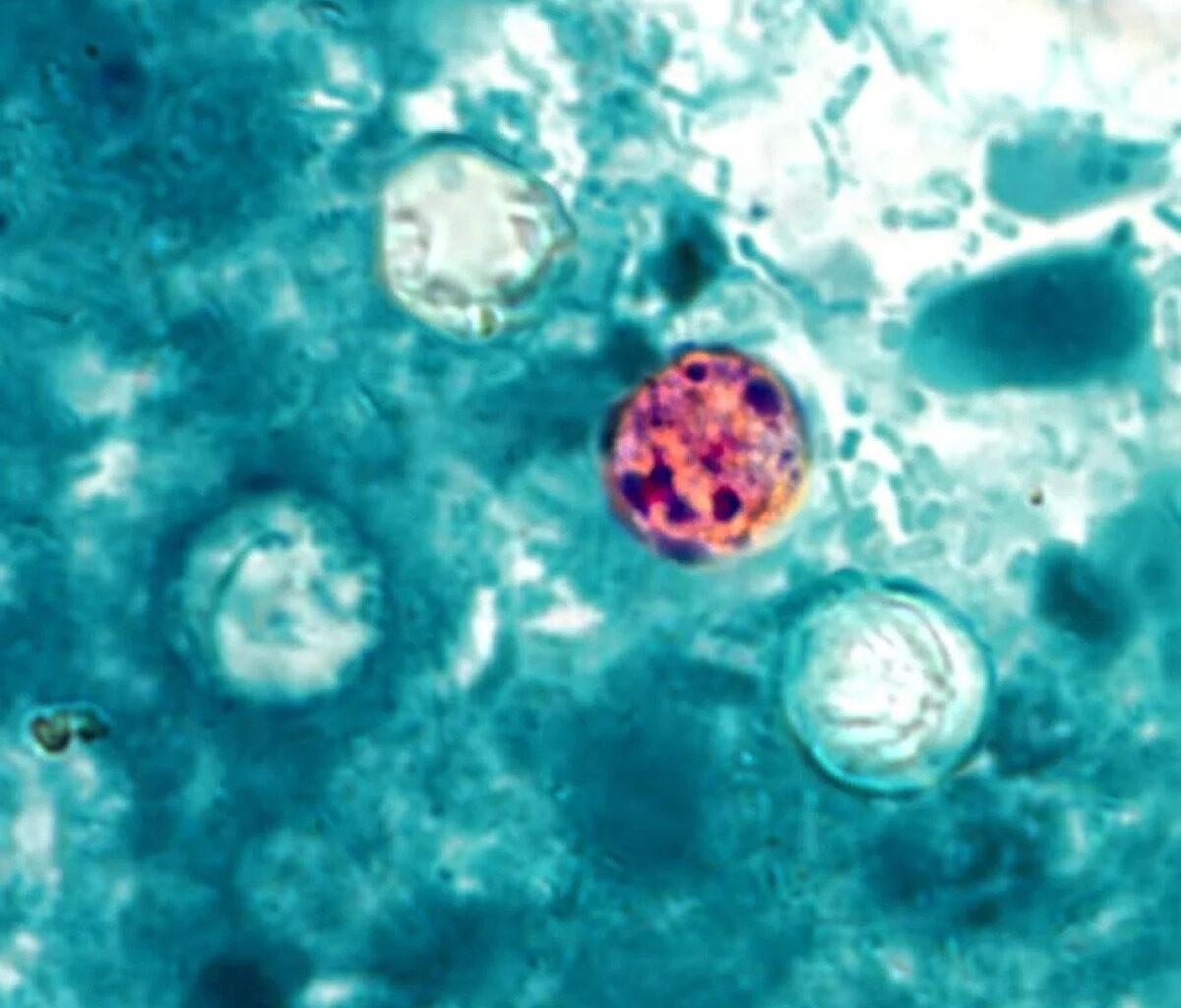
In this image taken of a stool sample from a person with cyclosporiasis, a parasitic gastrointestinal illness that causes watery, sometimes explosive diarrhea, four microscopic oocysts of cyclospora cayetanensis can be seen.
How many cases of cyclosporiasis are there in Pennsylvania? How many near Pittsburgh?
As of July 14, the CDC was reporting 11 to 30 cases of documented cyclosporiasis in Pennsylvania, with Axios reporting there were 28 cases as of July 9. The CDC noted that the actual number of cases is likely higher than the number reported since not everyone gets tested for the parasite or needs treatment.
Three cases had been reported this summer in Allegheny County as of July 9, with 11 in Western Pennsylvania, Axios reported.
In 2025, the state had 40 reported cases of cyclosporiasis, and the previous year, there were 87 reported cases. Cases are reported voluntarily and tracked on the CDC’s website.
What is cyclosporiasis? Illness from cyclospora cayatenensis parasite causes explosive diarrhea
Cyclosporiasis is an intestinal illness caused by the microscopic parasite cyclospora cayetanensis, also known as cyclospora, according to the CDC. The illness is not usually life-threatening.
The parasite spreads when people eat food or drink water that was contaminated with feces. People may be at an increased risk for infection when living or traveling in tropical or subtropical regions of the world where cyclosporiasis regularly occurs.
In the U.S., outbreaks of cyclosporiasis have been linked to various types of fresh produce.
 How do I know if I have cyclosporiasis? Symptoms, testing
Symptoms of cyclosporiasis may include:
Explosive, watery diarrhea (most common)
Less common symptoms may include:
Symptoms begin about a week after being infected and can last anywhere from a few days to a month or longer without treatment. Some symptoms, such as diarrhea, may go away and then return.
The illness is diagnosed by testing stool samples, according to the CDC.
How is cyclosporiasis treated? Does it clear up on its own?
According to the CDC, Trimethoprim-sulfamethoxazole (TMP-SMX), which is sold under the brand names Bactrim, Septra or Cotrim, is the treatment of choice for the illness caused by the parasite.
Sulfamethoxazole and trimethoprim are types of antibiotics used to treat bacterial infections, according to the Cleveland Clinic. Available as a tablet, it belongs to a group of medications called sulfonamide antibiotics.
A cyclosporiasis infection can often clear up on its own in healthy individuals, though symptoms may last several weeks.
How to protect yourself from cyclosporiasis
The CDC says the best way to prevent cyclosporiasis is to avoid food or water that may be contaminated with feces.
And to help do that, the agency recommends safe food-handling practices when dealing with produce, including:
Wash hands with soap and water before and after handling or preparing raw fruits and vegetables.
Wash all fruits and vegetables thoroughly under running water before eating, cutting or cooking.
Scrub firm fruits and vegetables, such as melons and cucumbers, with a clean produce brush.
Cut away any damaged or bruised areas on fruits and vegetables before preparing and eating.
Refrigerate cut, peeled, or cooked fruits and vegetables as soon as possible (within two hours).
Matthew Cupelli and Kristen Jordan Shamus contributed to this report.
Finch Walker is the Pittsburgh Connect Reporter for the USA TODAY Network. Contact Walker at FWalker@usatodayco.com. Instagram: @finchwalker_. X: @_finchwalker.
This article originally appeared on USA TODAY: Pennsylvania explosive diarrhea outbreak case numbers, prevention tips