
The birth of a mall in downtown Scranton over 30 years ago replacing about two dozen razed buildings produced another offspring: an Historical Architecture Review Board.
An advisory gatekeeper over exterior changes to buildings and signs mostly in the downtown, HARB reviews such applications and makes recommendations to Scranton City Council of whether changes are appropriate.
The board plays a pivotal role in attempting to preserve architecture downtown, as well as of several other historic sites and landmarks elsewhere in the city. Rejections can become sources of conflict as appeals go to council for upholding or reversal. Applicants can further appeal adverse decisions to Lackawanna County Court.
Prior debates decades ago surrounding demolitions downtown at times questioned whether preservation advocacy amounted to obstruction of progress. Similar sentiments have arisen occasionally in more recent years during some of the more contentious applications that came before the board.
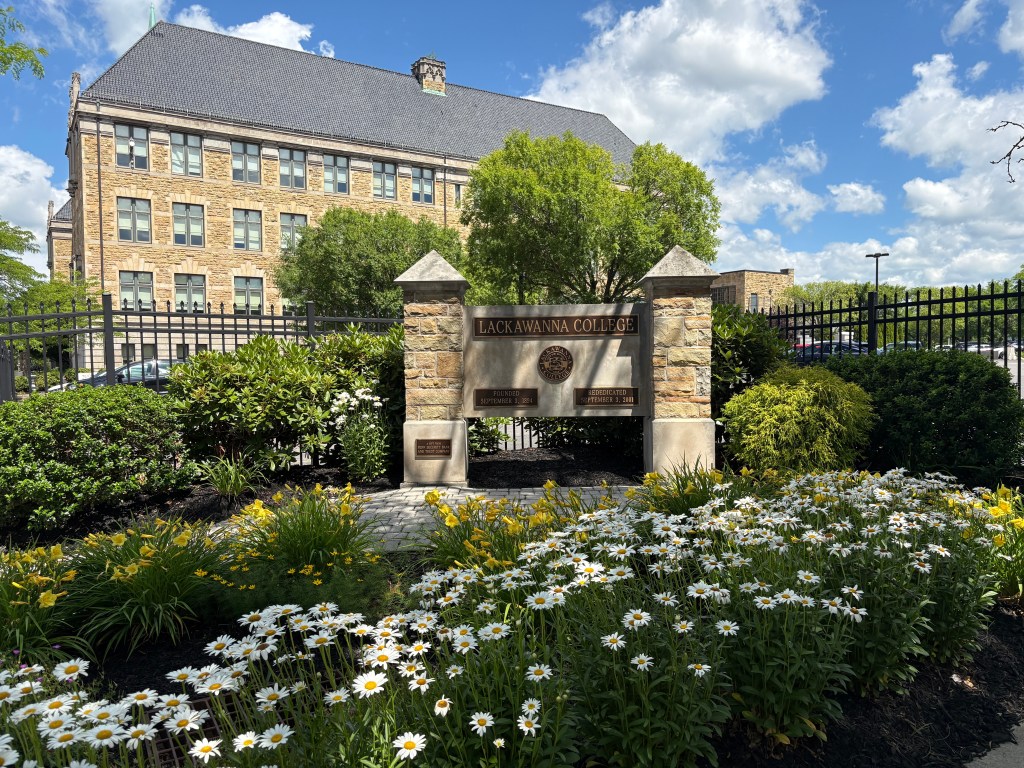
In that vein, the board earlier this year found itself on the defensive in two unrelated instances. In March, council overturned a board recommendation against allowing Fidelity Bank to demolish a condemned building at 324 N. Washington Ave. for parking for the bank’s new headquarters nearby. Also in March, the board disliked and tabled an application by Lackawanna College to replace a pair of 20-year-old signs with new ones featuring a new college logo. This application came back In June, when a college attorney contended the board was straying out of its purview and into sign design aesthetics, prompting a member to defend the board.
Work it out
To head off such disputes, the board in June also agreed to hold — for the first time in 30 years — informal monthly work sessions a week before regular monthly meetings. The hope is that work sessions will allow the board to better digest applications and flag omissions of relevant information or details; and that applicants will come to the table with more-complete proposals at regular meetings when the board renders decisions.
Instituting work sessions reflects continuing efforts to streamline the HARB process and for the board to become more proactive in reviewing submissions, board Chairwoman Katie Gilmartin said. She became HARB chairwoman on June 11.
A former member of the Scranton School Board, Gilmartin raised the idea last month of HARB holding worksessions. School board work sessions had been productive and helpful to her, and she thought she and HARB members could benefit from them, too. Her colleagues agreed. They set monthly work sessions for first Thursdays through December at 6:30 p.m. in the first floor conference room at City Hall, with the understanding that a session could be canceled if not needed.
HARB held its first work session July 2. Work sessions are not broadcast or recorded by Electric City Television. The board’s regular monthly meetings held monthly on second Thursdays in council chambers at City Hall at 6 p.m. are simulcast by ECTV and posted on its YouTube channel.
“I really think this is a good practice. You have a minute to absorb it (an application) and think about it” before having to vote on it, Gilmartin said in an interview Wednesday.
During the June 11 meeting, member Katie Kearney also said work sessions are a great idea, particularly regarding proposed demolitions and “having those few days to go through an application so that we don’t run into a Fidelity problem again,” according to an ECTV recording of that meeting.
Overruled
The Fidelity matter had HARB in February rejecting the bank’s request to raze the former Mattes & Mattes attorneys’ building at 324 N. Washington Ave., which was a condemned building the bank bought to tear down and make way for parking for bank employees relocating to the Scranton Electric Building.
But HARB members said they were learning for the first time the Mattes building had been condemned by the city and Fidelity did not demonstrate it was beyond repair. They also did not want to see a larger gap in the streetscape of North Washington Avenue that would result from the demolition, and there also already was ample parking available in the Linden parking garage across the street.
At a council hearing on the matter in March, Lackawanna County Commissioner Thom Welby criticized HARB for creating unnecessary roadblocks for developers downtown, saying, “With all due respect, I don’t know if council needs to have a discussion with HARB or what it is.” Saying safety was paramount and demolition was unavoidable, council members unanimously overturned HARB’s recommendation.

The former Mattes and Mattes Attorneys building, far right, is now condemned on N. Washington Ave. in downtown Scranton Friday, February 20, 2026. (SEAN MCKEAG / STAFF PHOTOGRAPHER)

SCRANTON — Fidelity Bank has demolished the former Mattes & Mattes attorneys’ building at 324 N. Washington Ave. downtown to make way for a bank parking lot there. Wrecking crews in recent days razed the structure, exposing the former basement and foundation and leaving piles of rubble for removal, as shown here on Wednesday, April 1, 2026. Fidelity Bank is renovating the iconic Scranton Electric Building at 507 Linden St. into a headquarters, completion of which is expected soon. As part of the Scranton Electric Building renovation project and move, Fidelity bought the Mattes & Mattes building at 324 N. Washington Ave. to raze it to make way for parking there for bank employees relocating to the Scranton Electric Building. Fidelity already owned the parking lot off North Washington Avenue between the former Mattes building and the building at 312 N. Washington Ave., as well as the parking area behind Abe’s Deli at 326 N. Washington Ave. Fidelity also owns the parking area behind the Scranton Electric Building. Those parking lots are accessed via Dix Court. (JIM LOCKWOOD / STAFF PHOTO)

SCRANTON — Fidelity Bank has demolished the former Mattes & Mattes attorneys’ building at 324 N. Washington Ave. downtown to make way for a bank parking lot there. Wrecking crews in recent days razed the structure, exposing the former basement and foundation and leaving piles of rubble for removal, as shown here on Wednesday, April 1, 2026. Fidelity Bank is renovating the iconic Scranton Electric Building at 507 Linden St. into a headquarters, completion of which is expected soon. As part of the Scranton Electric Building renovation project and move, Fidelity bought the Mattes & Mattes building at 324 N. Washington Ave. to raze it to make way for parking there for bank employees relocating to the Scranton Electric Building. Fidelity already owned the parking lot off North Washington Avenue between the former Mattes building and the building at 312 N. Washington Ave., as well as the parking area behind Abe’s Deli at 326 N. Washington Ave. Fidelity also owns the parking area behind the Scranton Electric Building. Those parking lots are accessed via Dix Court. (JIM LOCKWOOD / STAFF PHOTO)

Fidelity Bank’s improvement to a parking lot in the 300 block of North Washington Avenue in downtown Scranton progresses on May 28, 2026. (JIM LOCKWOOD / STAFF PHOTO)

Fidelity Bank’s improvement to a parking lot in the 300 block of North Washington Avenue in downtown Scranton progresses on June 4, 2026. (JIM LOCKWOOD / STAFF PHOTO)
Show Caption
1 of 5
The former Mattes and Mattes Attorneys building, far right, is now condemned on N. Washington Ave. in downtown Scranton Friday, February 20, 2026. (SEAN MCKEAG / STAFF PHOTOGRAPHER)
Expand
Sign of the times
Meanwhile, on March 12, HARB tabled Lackawanna College’s application to replace two signs on Vine Street, one at Adams Avenue and the other at Wyoming avenue. The college wanted to install two identical, internally illuminated signs displaying the college name and an updated college logo, the falcon mascot in a large L. HARB members gave a collective thumbs-down to the proposed new signs. “I’m troubled by this,” Gilmartin said at the March 12 meeting, according to an ECTV recording. “I would prefer to see it incorporate some of the original design of the (existing) sign. I think something erected out of real stone should be adapted. I can certainly understand wanting to accommodate a more updated logo, but I don’t care for this. And I don’t know if simply not caring for it is the best way to convey what I’m trying to say here.”
The college returned to HARB on June 11, when college attorney Jamie Hailstone explained how the college wanted to replace the old signs with new one for campus branding purposes. The growing institution owns several buildings downtown and elsewhere in the state. The sign location at Vine and Wyoming is not even in the historic district and should be off the table, Hailstone said, and the board agreed on that point. As for the other sign at Angeli Hall at the corner of Vine Street and Adams Avenue, Hailstone contended HARB was straying out of its lane because aesthetics of the design of the signs is not under HARB’s purview. Hailstone also made a lengthy argument contending the new signs comport with HARB guidelines and the college’s history and changes over decades, including the college having saved and preserved the former Scranton Central High School, which is now Angeli Hall. The new signs and logo are part of the college’s evolution and not inappropriate in any way, he said. Both sides reached a compromise on the sign at Angeli Hall to contain the new logo but also incorporate real stone in the base, not cultured stone, that matches the West Mountain stone of Angeli Hall.
Kearney defended the board, saying, “The HARB is not out to hurt the city of Scranton We’re not out to hurt the historic accuracy of the city. We’re here to protect it. So I understand that you’re here to obviously protect Lackawanna (College) and the story that they’re trying to tell, but we also have a due diligence to protect the historic preservation of the city.”
The board voted 4-1 to deem as appropriate the proposed sign at Angeli Hall with the new logo and incorporating real stone in the base. Gilmartin cast the lone dissent, while Kearney and members Conrad Bosley, William Lesniak and Michael Muller voted yes.
After that vote, the board discussed holding monthly work sessions, partly to avoid such disputes in the future.
“Nobody is trying to be an obstructionist,” Gilmartin said. “But we have such as opportunity here with such a vast array of architectural gems here in city to really make it a focal point. It can be an economic development driver, a tourism driver.

A Lackawanna College sign at the corner of Vine Street and Adams Avenue in downtown Scranton on June 24, 2026. (JIM LOCKWOOD / STAFF PHOTO)

A Lackawanna College sign at Vine Street and Adams Avenue in Scranton on April 1, 2026. (JIM LOCKWOOD / STAFF PHOTO)

A rendering of a design for a new sign that Lackawanna College wanted to install at two locations on Vine Street, at the corners of Adams and Wyoming avenues, to replace a pair of identical signs at those locations. (SCREENSHOT FROM VIDEO / HARB VIA ELECTRIC CITY TELEVISION)

A rendering of a design for a new sign that Lackawanna College wanted to install at two locations on Vine Street, at the corners of Adams and Wyoming avenues, to replace a pair of identical signs at those locations. (SCREENSHOT FROM VIDEO / HARB VIA ELECTRIC CITY TELEVISION)
Show Caption
1 of 4
A Lackawanna College sign at the corner of Vine Street and Adams Avenue in downtown Scranton on June 24, 2026. (JIM LOCKWOOD / STAFF PHOTO)
Expand
Long history
Concepts underlying HARB’s formation go back decades.
Urban development in the 1970s took hold throughout the nation and the city, replete with examples of stunning architecture, was not immune to a rise in grassroots preservation efforts here and the city in 1976 created an architectural review commission.
It appears to have become inactive at some point. It also was toothless.
It could review requests regarding historic buildings but the city had no power or mechanism to stop or prevent work or changes to structures that were deemed as inappropriate.
Scranton, and particularly its downtown, retained many architecturally distinctive buildings stemming from the city’s inception in the 1800s as a cradle of the Industrial Revolution. Preservation also was taken up by an advocacy group called the Architectural Heritage Association (AHA).
Redevelopment in the ’80s and ’90s, including construction of The Mall at Steamtown, produced mixed emotions and opinions. The local preservation movement grew in response to demolition threats to the city’s heart and soul — its significant and defining landmarks, according to a 2015 report by a Leadership Lackawanna project highlighting HARB and the historic architecture of Scranton.
In the late 1980s, AHA sued the city over demolitions on Lackawanna Avenue after city deemed as too costly saving buildings in the 200, 300 and 400 blocks of Lackawanna Avenue, which were in a nationally registered historic district. The city and AHA reached a settlement in 1989 that called for various measures, including reviving the historic architecture commission.
But it took years to fully implement the settlement. Meanwhile, around two dozen buildings gave way to the construction of the $101 million mall along Lackawanna Avenue
In the early 1990s, the city began steps to revive the commission, but it would take until 1996 for an ordinance to get enacted, and until 2004 for members to be appointed. The panel also was given a limited scope of a select few streets and blocks downtown.
Expanding and streamlining
In November of 2019, Mayor Wayne Evans, who had long been a preservation proponent, and Scranton City Council amended the HARB ordinance to expand the downtown historic district to include the entire downtown coming under the purview of the board. Council members Mary Walsh Dempsey, Kyle Donahue, Bill Gaughan and Tim Perry adopted that ordinance. The council president at that time, Pat Rogan, was absent during the final vote but had expressed opposition to it beforehand. Rogan believed having the historic district encompass the entire downtown was too broad and HARB jurisdiction should focus only on the older, truly historic structures.
HARB’s jurisdiction also came to include several other historic buildings, properties or sites existing outside of the downtown.
This past December, Mayor Paige Gebhardt Cognetti and council amended the HARB ordinance to clean up some language, eliminate term limits and reduce the board from nine members to five. Previously, the nine members fit specific requirements, such as one each being an architect, real estate broker, historian, AHA member, property owner and other categories. Now, the board would have five members and two alternates, with the only requirement being a city resident. Along with Gilmartin, Kearney, Muller, Bosley and William Lesniak, HARB’s two alternates appointed in December are Vito Scocozzo and Jodi La Coe.
Win some, lose some
Some recent examples of HARB recommendations getting upheld or reversed include:
• In December, council overturned HARB’s rejection in November of a fence at a parking lot at the former Plotkin shoe store at 301-303 Penn Ave. HARB’s denial was based on procedural concerns and a lack of details in an application that differed from the fence that already had been erected. Property owner Don Mammano installed the fence without HARB approval because he did not know he needed it and belatedly submitted an application to HARB of the fence and remanded the matter back to the board. It then approved the fence with a suggestion that Mammano try to incorporate vegetation as decorative screening, if possible.
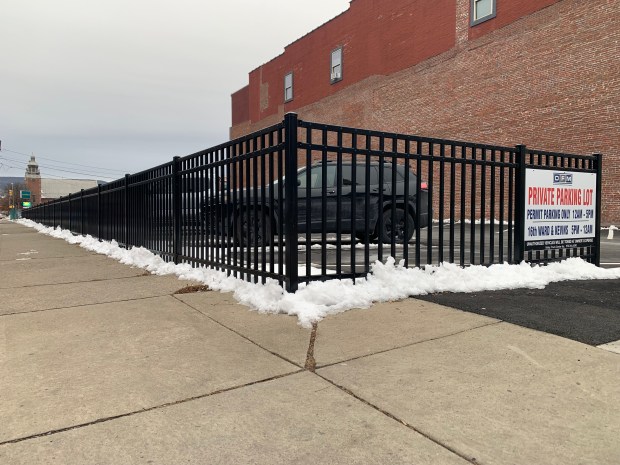 A parking lot and fence owned by Don Mammano at 301-303 Penn Ave. in Scranton on Friday, Dec. 5, 2025. (JIM LOCKWOOD / STAFF PHOTO)
• In October, council upheld HARB’s rejection of a digital billboard on a side wall of the former Rocky’s Lounge on Jefferson Avenue. HARB recommended nixing property owner Bill Rosado’s proposal for a digital billboard of 8 feet tall and 25 feet long on a side wall of the building facing Biden Street. An unrelated digital billboard across the street from Rocky’s was erected before HARB jurisdiction in that area was established. “If we were to allow more of the digital billboards, it would be a slippery slope in that more and more people would be seeking digital billboards downtown,” Councilwoman Jessica Rothchild had said.
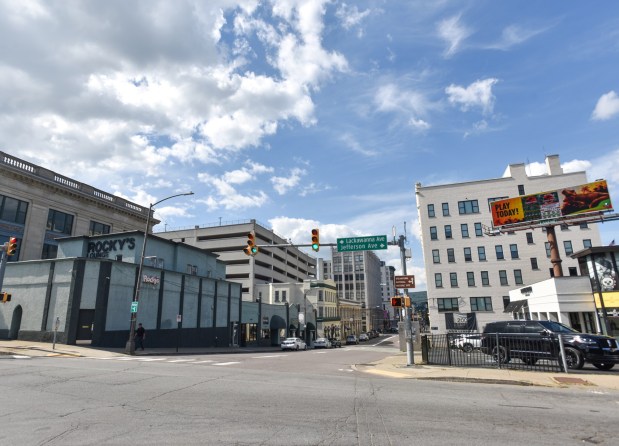 The building of the former Rocky’s Lounge on Jefferson Ave. and Biden St. in downtown Scranton Monday, Sept. 15, 2025. (SEAN MCKEAG / STAFF PHOTOGRAPHER)
• In May, council upheld HARB’s denial in March of Kegerreis Outdoor Advertising’s proposal to convert a two-sided static billboard at 320 Mulberry St. to digital displays. Kegerreis sued the city in July to overturn those actions. The lawsuit claimed the city missed its own deadline for council to uphold HARB’s advisory opinion rejecting the digital displays; and the untimely action by council created a “deemed approval” of the digital billboards. Earlier this year, the city settled the Kegerreis lawsuit and issued permits for that billboard. But the owner of the building where that billboard is erected, Don Mammano, opposes the digital billboard and would not allow an electrical connection. Kegerreis then sued Mammano’s firm to get the connection and that suit remains pending.
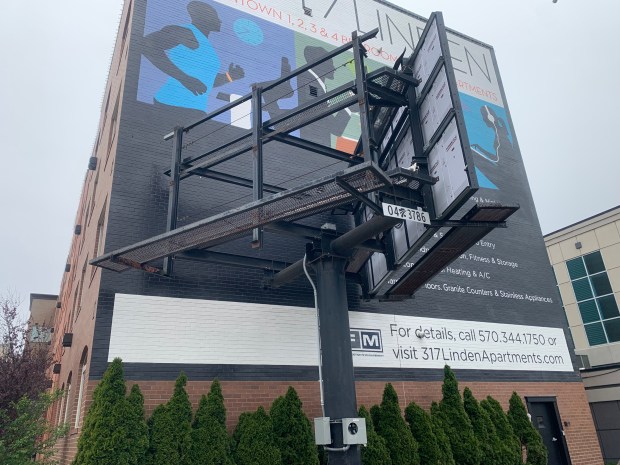 A two-sided billboard sign structure at 320 Mulberry St. in downtown Scranton, shown here on Tuesday, April 28, 2026, is at the crux of a lawsuit by the billboard owner suing the owner of the adjacent building for access to electricity to convert the signs from static to digital displays. (JIM LOCKWOOD / STAFF PHOTO)
• In 2024, Scranton City Council overturned a HARB rejection of the University of Scranton’s plan to demolish an old carriage house building at 336 Moir Court that dated to the 1890s. Councilman Tom Schuster, who cast the lone dissent against allowing the demolition, said he felt council did not have a chance to learn whether there were any groups that might have ideas for revitalization. “We have a building from the 1890s,” Schuster had said. “I would have liked a little more time to digest what has occurred, but I feel like it’s been rushed through.”
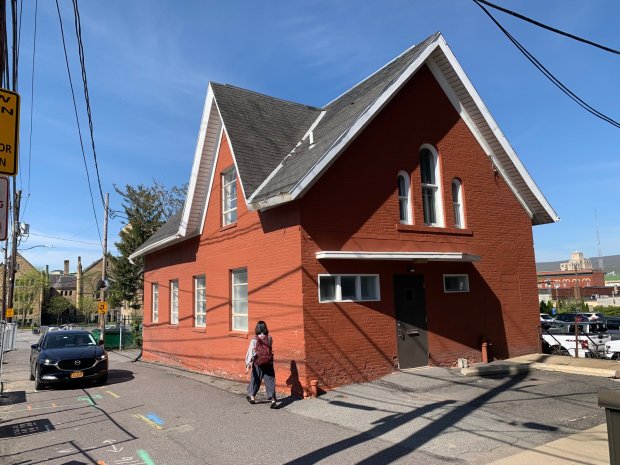 A carriage house owned by the University of Scranton on Moir Court scheduled for demolition. Photo taken Thursday, May 2, 2024. (JIM LOCKWOOD / STAFF PHOTO)
Looking to the past to look ahead
Gilmartin said HARB members try to do their best to preserve architecture without blocking progress. It’s far from a cookie-cutter process because no two applications are alike.
She intends go back and take a closer look into HARB’s roots to get a deeper understanding of how it came about and has evolved. She thinks this is a good moment in time for the city having a renewed focus on HARB and how it fits into the bigger picture of the city’s history and growth going forward.
Streamlining and improving the review process will be key to ensuring consistency in acting upon all of the disparate applications to come.
“I just think we have the right people in the right roles all trying to move this ship in the right direction right now. We are trying to consider the information in front of us (in applications), with our allegiance to historic preservation as our guiding principle to make sure in every instance the process is as consistent as it can be,” Gilmartin said. “It’s important work. We are very lucky to live an city with this rich history and architecture.”