
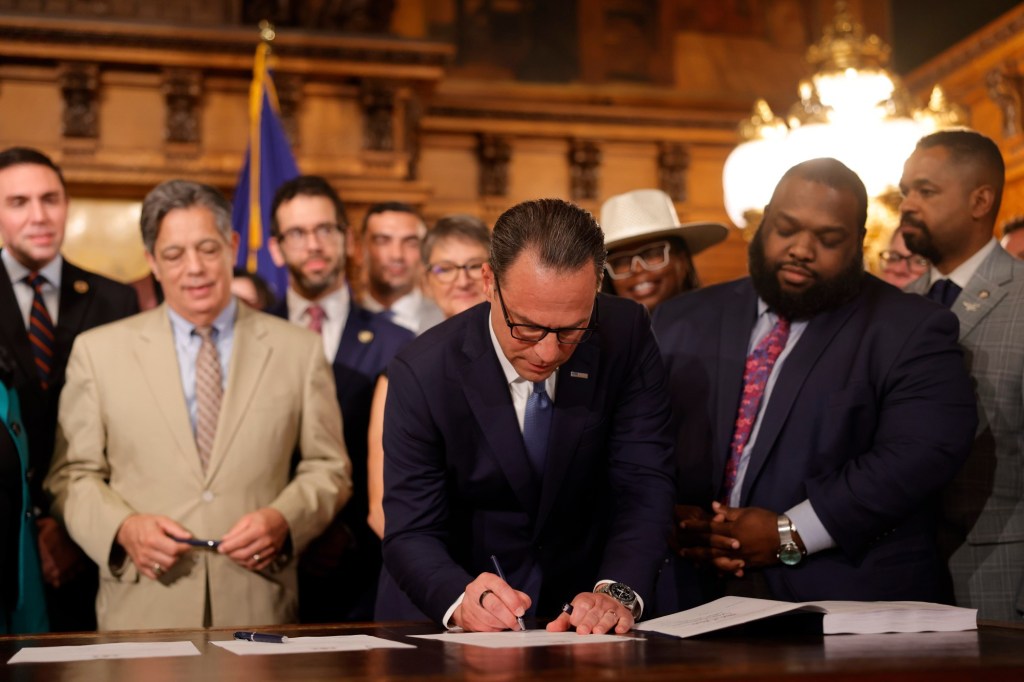
When Josh Shapiro was campaigning to become governor of Pennsylvania back in 2022, the Montgomery County Democrat vowed that he would make public education a priority.
Over his four years in office, he has kept that promise.
With his signing of the state’s 2026-27 budget this week, Shapiro secured a fourth consecutive financial boon for education. The $50.85 billion spending plans includes a total of $11.85 billion for schools.
The new budget adds over $670 million to education funding, hiking the total amount of increased investment during Shapiro’s tenure to more than $3 billion.
“On the day I took office, Pennsylvania was investing $8.81 billion in K-12 education — now we’re investing $11.85 billion,” Shapiro said in a statement posted to social media on Tuesday. “That’s nearly a 35% increase in funding. This budget continues to make sure our kids have the tools they need to succeed and thrive.”
The largest piece of the education funding increase comes through the bipartisan adequacy and tax equity formula, a method of providing state dollars to schools that need them the most. That funding is provided to public school districts through the state’s Ready to Learn Block Grant program.
The new budget adds $565 million to that program.
School districts’ largest stream of state support, basic education funding, was increased by $58 million. Special education funding also saw a rise, getting upped by $55 million.
The new state budget also maintains $125 million for school infrastructure improvements to create safe, healthy learning environments; $100 million for mental health and school safety funding; funding for universal free breakfast and free menstrual hygiene products for students; and increases for pre-kindergarten programs.
Regional basic funding distribution
Reactions
Dr. Jill Hackman, Berks County Intermediate Unit executive director, applauded the passage of the budget and the impact it will make on students throughout their educational journey.
“The increased funding for Pre-K Counts, Head Start Supplemental Assistance, Early Intervention services and K-12 education will help ensure that children and families have access to high-quality learning opportunities and essential services that support their growth, development and long-term achievement,” she said. “These investments will provide schools and educational agencies with critical resources to address students’ diverse needs, strengthen educational outcomes, expand workforce-readiness opportunities and prepare learners for long-term success.
“We appreciate the commitment of the Pennsylvania General Assembly and Gov. Josh Shapiro to supporting education and recognizing the positive impact these investments will have on learners, families, educators and communities throughout Pennsylvania. Sustained support for education strengthens both our local communities and the future of the commonwealth.”
State education leaders likewise lauded the new spending pact.
“The $50.85 billion spending plan continues the commonwealth’s commitment to Pennsylvania’s students and schools through continued funding for the adequacy supplement, which drives additional state resources to schools found to have been underfunded, increased basic education and special education funding to help schools offset increases in mandated costs and investments in school safety to help keep students safe,” a statement from the Pennsylvania School Board Association said. “The budget also includes several notable victories for public education, including continuing universal free breakfast, providing funding to help schools implement structured literacy initiatives and further investments in the Solar for Schools and student teacher stipend programs.”
The PSBA statement said the organization views the budget as “another important step in the commonwealth’s ongoing effort to strengthen and promote public education.”
Pennsylvania State Education Association President Aaron Chapin commended a bipartisan group of state lawmakers and Shapiro for agreeing to a budget that increases key investments in public education.
“This state budget reflects a remarkable commitment to K-12 public education in Pennsylvania and reminds us how important it is to elect pro-public education leaders,” Chapin said. “The budget continues a multiyear plan to improve school funding adequacy and equity, helping more students in more communities reach their full potential. It also invests more in the Student Teacher Support Program, ensuring that nearly every student teacher eligible for a stipend will receive one in the coming school year.”
In particular, Chapin praised the continued increases of adequacy funding.
“We have seen what our public schools have been able to achieve over the past two years with targeted adequacy funding,” he said. “More schools are reducing class sizes, investing in STEM teachers and expanding math and literacy coaching, among other things.
“With more funding coming from the state, public schools are able to allocate resources to addressing much-needed repairs to aging school buildings. We are pleased to see policymakers building on this progress.”
Regional special education funding distribution
Regional Ready to Learn block grant funding