
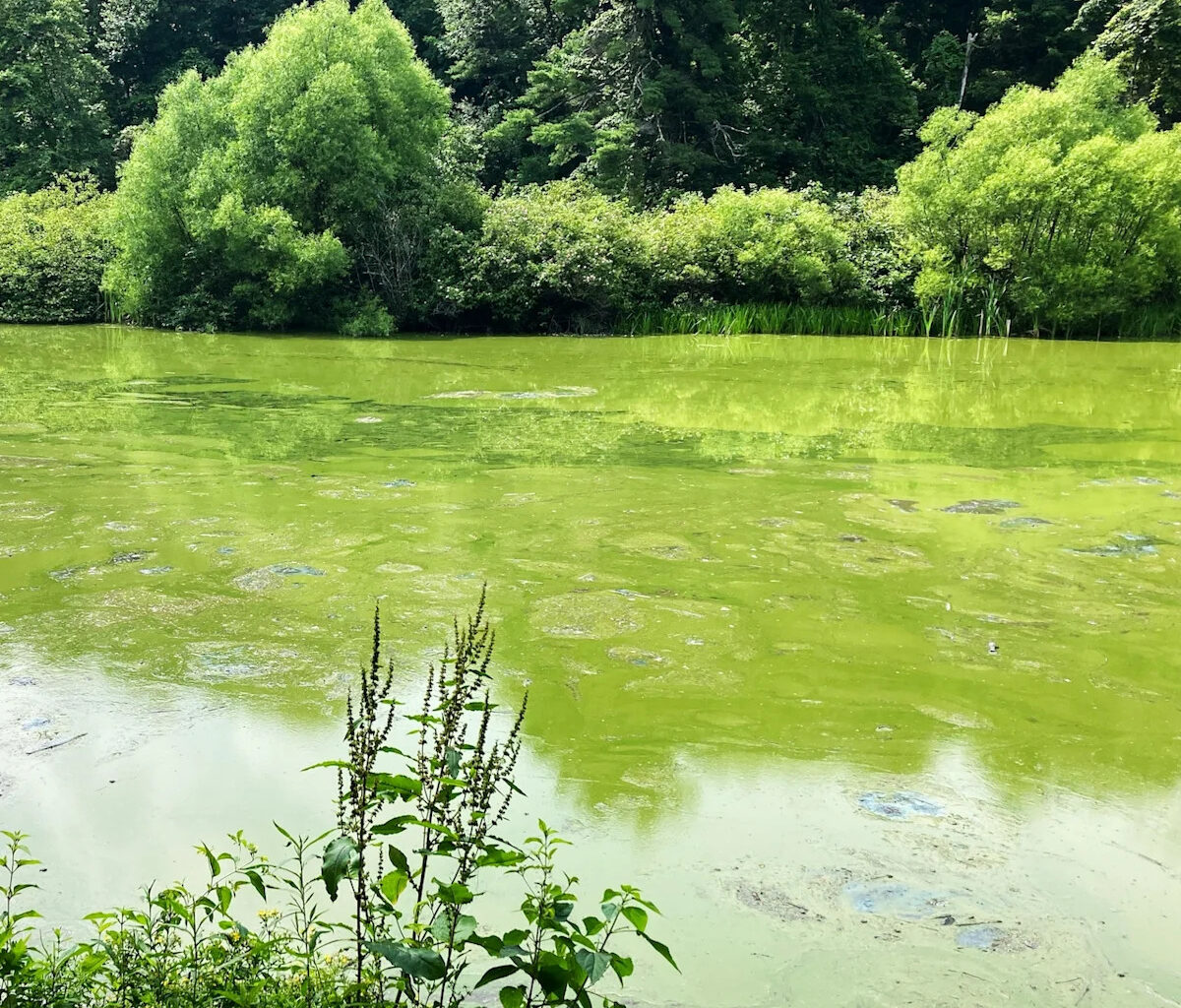
Harmful algal blooms — HABs — can form any time of year in bodies of water but occur most often in late summer or early fall.
They pose a potentially deadly health risk to people, pets and livestock when microscopic organisms multiply in waterways and produce dangerous toxins.
Laboratory testing is required to determine whether that discolored water you might encounter is indeed harmful, and Pennsylvania officials offer a reporting form at pa.gov for follow-up on waters that appear suspect.
The Pennsylvania Department of Health also maintains a dashboard showing waters that have been sampled for HABs and the test results.
The blooms occur when cyanobacteria, commonly known as blue-green algae, grow rapidly under certain conditions including high nutrients and warm temperatures. While cyanobacteria naturally exist in many aquatic ecosystems, some types produce cyanotoxins that can cause severe illness or death in high enough concentrations.
Green water does not necessarily indicate that a harmful algal bloom is occurring, but it can be one of several visual clues — especially if the water is not usually green. Other visual indicators of a HAB include blue-green clumps at or near the water’s surface or a scum that resembles spilled green paint or pea soup.
The location and toxicity of a HAB can change rapidly throughout the season.
People and animals encounter the harmful blooms through swimming, boating, fishing and drinking from contaminated water sources. Dogs and livestock face additional exposure by eating scum or algae and licking their fur after swimming in affected waters.
Health effects from exposure range from vomiting and diarrhea to neurological symptoms and irritation of the skin, eyes, nose or throat. In severe cases, the toxins can be fatal.
Pennsylvania formed a HABs Task Force to coordinate monitoring, response and public communications about the blooms.
The task force comprises representatives from seven state agencies and commissions: the departments of Health, Environmental Protection, Agriculture, and Conservation and Natural Resources, along with the Fish and Boat Commission, Game Commission and Emergency Management Agency.
The interactive dashboard displays water sampling data from 2018 to present, integrating field and laboratory data to help the public make informed decisions about recreational water activities.
Pennsylvania also offers online training about harmful algal blooms that covers response strategies employed by state agencies. The course details how commonwealth agencies coordinate to minimize public exposure and reduce the negative impact of the blooms.
The U.S. Centers for Disease Control and Prevention’s Environmental Health Capacity Grant funds the state’s harmful algal bloom activities through the Division of Environmental Health Epidemiology.
more outdoors news
Read the original article on lehighvalleylive.com. Add lehighvalleylive.com as a Preferred Source by clicking here.