
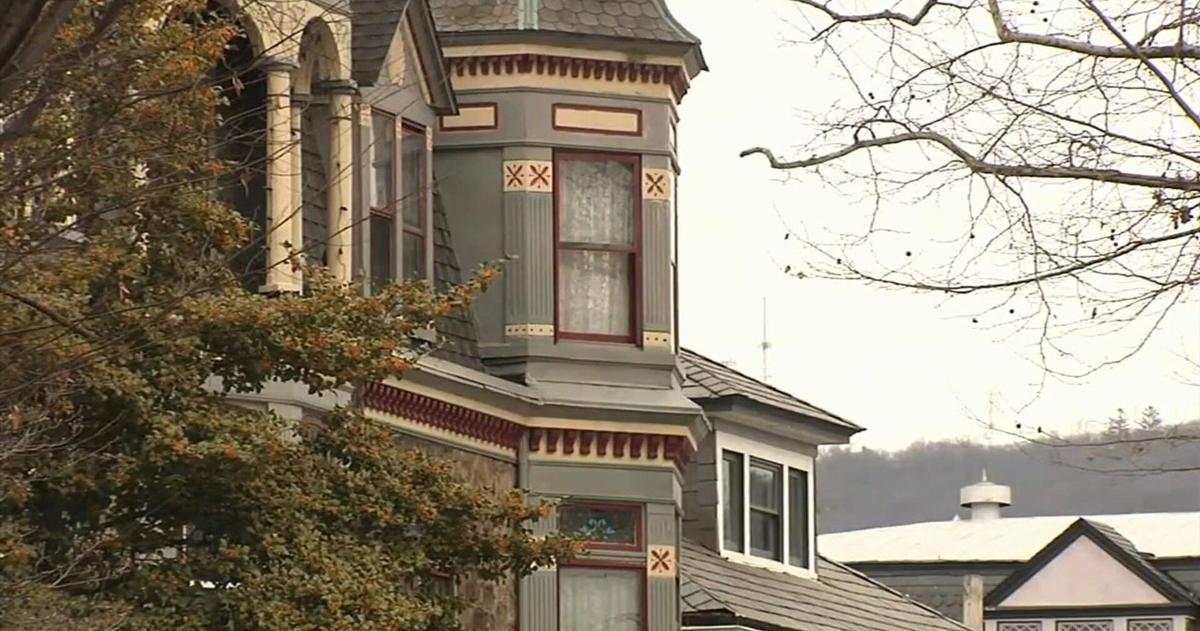
READING, Pa. – The official history agency of the state of Pennsylvania offered some recommendations to Reading Monday night.
During its Committee of the Whole meeting, Reading City Council heard from a representative of the Pennsylvania Historical and Museum Commission on actions the city should take to reestablish its Historical Architectural Review Board.
In February of this year, all existing members of the HARB abruptly resigned.
The HARB is an advisory citizens group composed of volunteer professionals and residents which are appointed by council.
The city has five historical districts: Centre Park, Callowhill, Prince, Penn’s Common and College Heights.
Whenever property owners in those districts wish to make any alterations to the exteriors of their buildings, they must apply to the HARB, and if any alterations are outside the HARB guidelines, property owners must appear before the HARB during a public hearing.
In April, City Council authorized delaying appointments to the HARB to give the city time to reevaluate and consider the resources, capacity and management of historic preservation.
Council also authorized the historical preservation officer to issue certificates of appropriateness for construction, demolition or alteration projects within the historic districts.
Council made the authorization for a period of 180 days, which will expire in October.
Megan McNish, the eastern region community preservation coordinator for the Pennsylvania State Historic Preservation Office, said the mass resignations did create an opportunity for the city.
“In conversations with city staff following the resignation of the HARB, we all agreed that this was a good moment to talk through and take a look at the city’s historic preservation program to evaluate it, both based on the ongoing performance standards that we established, but also looking for ways to help rebuild the program and continue it moving forward,” McNish said.
McNish said her evaluation was broken down into four categories which included recommendations for the immediate term, the short term, the medium term and the long term.
For the immediate term, McNish recommended a rewrite or revision of the city’s historic preservation ordinance.
“I would recommend the city consider whether the Historic District Act is really the best fit for the city’s goals and needs at this time, or whether use of the [Pennsylvania] Municipalities Planning Code to regulate preservation, or using those two pieces of enabling legislation in conjunction with one another really makes the most sense again to accomplish the goals of the program,” she said. “The Historic District Act does have specific required positions for the makeup of the HARB, while the municipal planning code is significantly less specific on that topic.”
McNish said the ordinance update could be funded through a 2026 Certified Local Government Project Grant or Keystone Historic Preservation Grant, for which she offered to assist the city staff in making applications for those grants.
During this time, McNish said the ordinance should be translated into Spanish.
In the short-term recommendations, McNish said the city should assess current staffing responsibilities and reassign responsibilities based on the number of permits being reviewed.
“The idea with this recommendation is to make sure the workload is distributed equitably across staff so that everyone is not overwhelmed,” she explained. “The next recommendation is to integrate historic preservation into the digital permitting process, which can provide tremendous access to information to understand the workload and to keep track of records in an effective and efficient way.”
During this phase, McNish said, the city would adopt bylaws for the preservation review board to reflect the updated ordinance.
In the medium term, the city would develop and adopt design guidelines for each of the city’s historic preservation districts,” McNish said.
“Each of the city’s historic districts would have its own set of design guidelines which speak to the character defining the history of the districts,” she said.
The new preservation review board would have continuing education and training requirements to comply with the standards.
“The next recommendation is to develop a survey plan to complete surveys of existing historic districts and comprehensively survey the rest of the city to comply with the ongoing performance standards,” McNish added.
In the long term, she said, the city would begin to implement the survey plan.
McNish said her plan is only a draft and that she will work with council to update it as needed.
Community Development Director David Barr said the complete evaluation was excellent and said he would welcome the recommendations.
Barr estimated that the entire process could take until early 2029, which would require council in October to extend the resolution to allow the historical preservation officer to issue certificates of appropriateness, which Barr said has operated very well.
Councilmember Jaime Baez Jr. said that during exit interviews of former HARB members, it was stated that some applications were being permitted to go through while others were not, based on who was making the application.
Amy Johnson, the city’s longtime historical preservation officer, responded to the accusation.
“From my standpoint, I can tell you that’s absolutely not true,” Johnson stated. “All applicants are treated fairly and evenly and are put before the HARB, as long as they have submitted a completed application.”
Council President Donna Reed said she believes it is extremely important that the HARB be reconstituted as soon as possible.
“It goes sort of with the American process of a jury of your peers,” Reed said. “People who are seated are either homeowners, architects or have a vested interest.
Reed questioned the legality of City Council temporarily acting as the HARB.
City solicitor Fred Lachat said he would need to research the matter.
Reed asked that council be supplied with a log of projects that have been approved or denied for transparency purposes.