
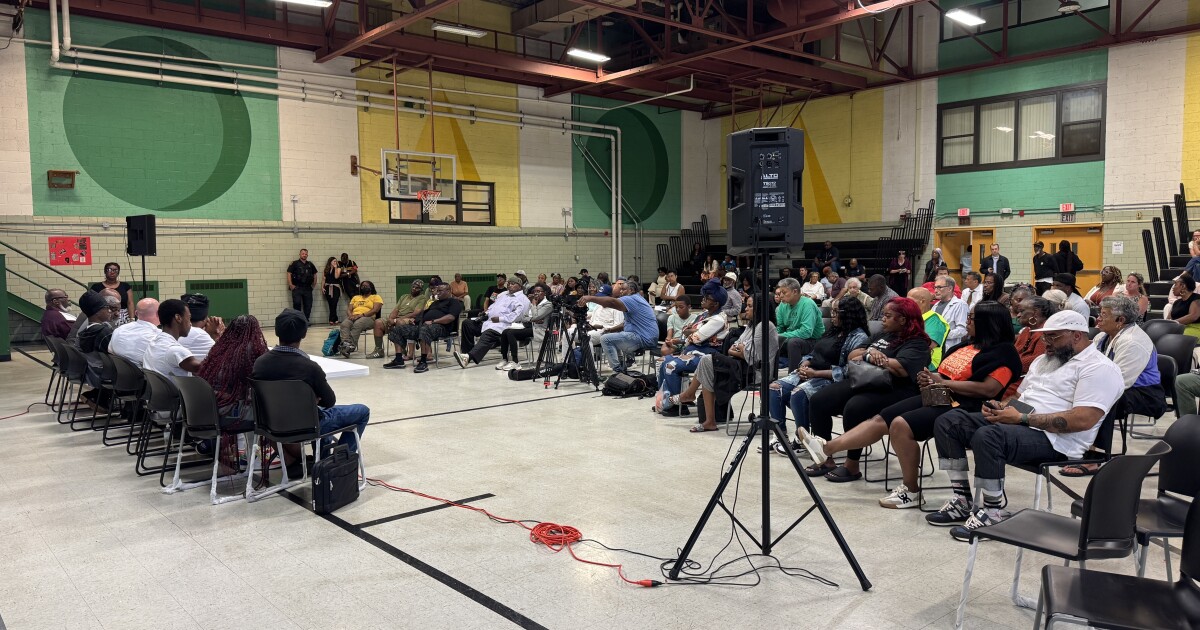
Adults, youth, and City of Pittsburgh officials alike sat down at a town hall meeting Wednesday evening to talk about “teen takeovers” — the large, sometimes-disruptive gatherings of young people that have garnered concern and debate in recent months.
Dozens of people gathered at a gymnasium in the Homewood headquarters of the Community Empowerment Association, asking city leaders what’s next — and talking with one another about how the community should proceed.
Youth gatherings have been a hot topic in the city. The Pittsburgh Downtown Partnership began requiring chaperones to accompany kids at certain times in the city’s Market Square after businesses complained of disruptive behavior. The city instituted another chaperone policy for weekends and evenings at its public pools earlier this month.
While many of the gatherings of young people have not involved violence, in recent weeks large gatherings Downtown and in East Liberty have involved altercations and subsequent arrests.
A previous town-hall meeting on the subject at Point Park University saw tensions flare between audience members and officials. But attendees and panelists at Wednesday’s gathering struck a tone of listening and communication.
“If we can take the scariness and the boogeyman out of the word ‘takeover,’ then we can find a way to see [teens] as they are: beautiful young people who just want to get together and have a good time,” said Dr. Sheila Beasley, who works with the city’s REACH program.
Attendees at the meeting split up into breakout groups to answer questions about what they wanted to see moving forward. Several young people in one group cited stress, boredom and a lack of activities and spaces for youth as reasons why many participate in “flash mobs” or takeovers.
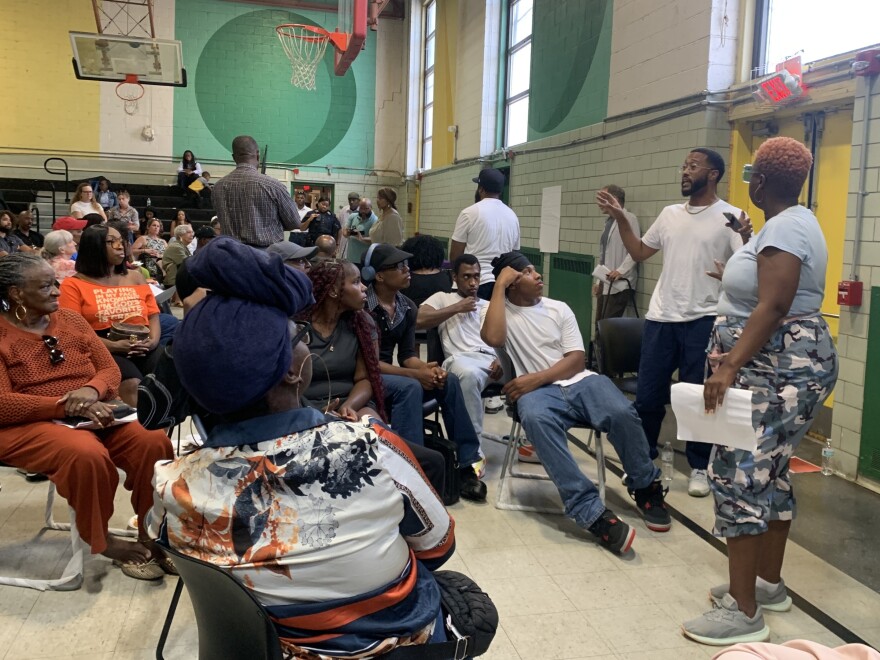
Community members talk about how to work with young people at a town hall gathering on the topic of “teen takeovers” at the Community Empowerment Association in Pittsburgh’s Homewood neighborhood on July 22, 2026.
“What we’re trying to communicate the most is that we want to be heard,” said Sakiyah Valentine, 19, of Wilkinsburg.
Some young people are dealing with unstable home lives in which their parents, too, are struggling, she said.
“Sometimes trauma dumping does become a lot for us,” she said. “Now we’re taking on two people’s emotions and that’s making it even harder to feel our own.”
Valentine noted that even playing football or tossing water balloons can be “looked at as bad” by adults.
“We want [to] stop having this narrative on us that we’re just terrible,” she said. “I want to see our elders and other things get involved in what we’re doing and try to understand what we’re doing.”
Michael Day, a pastor at Legacy International Worship Center on the North Side, said youth are seeking “help” in one way or another.
“There are some real deep-rooted issues in our homes that they don’t know how to express,” he said. “We really, as the adults, need to say, ‘Hold up, where’s my part in this? And how can I serve our youth?’ These are our babies, and these are our next generation.”
KeShawn Brooks, who also works with REACH, said he’d attended several “teen takeovers” and in his experience, they were “just kids being kids.” He noted that many young people are creating social media videos and streaming content at the gatherings, and suggested adults make more spaces for kids to participate in those kinds of activities that won’t be as disruptive.
“We’re looking at it as, they’re being a nuisance, but they’re trying to find a way to have fun,” he said. “We gotta find a new avenue to understand them. I don’t think we understand them.”
Officials speak to public
City officials answered questions from the audience during a panel discussion. Police chief Jason Lando said he hopes to invite youth representatives to a Chief’s Community Advisory Board he is working on assembling.
“The last thing we want to do is have to arrest kids,” Lando said. “We want to … help find positive things for kids to do in the community, help give them resources.”
Public safety director Sheldon Williams noted that his office cannot handle all youth issues by itself.
“We can’t expect Public Safety to do something it wasn’t designed to do. They are only there to respond to things,” he said.
He noted he hopes to recruit young people to be “dual influencers,” who would set a good example for their peers while also communicating with the city about their experiences.
“We need a multilayered, comprehensive approach,” said City Councilor Khari Mosley, who represents the Homewood area and helped organize the meeting.
“I want us to be as focused on opportunities for redemption, and [on] better opportunities for our young people, as much as some folks want to focus on measures of accountability.”
T. Rashad Byrdsong, who leads the Community Empowerment Association, said he wants to see more people working together on these issues instead of “in silos.”
“The community, the parents, the grandparents, the uncles, the brothers – we have to be involved. So don’t be crying when policies come out and you’re not part of the process,” he said. “This is the beginning of a process.”
He noted that “teen takeovers” are only one facet of larger challenges facing the city.
“There’s some deep-seated, systemic, systematic structural issues in this city that have to be addressed. And we can’t be afraid to talk about that,” he said.