
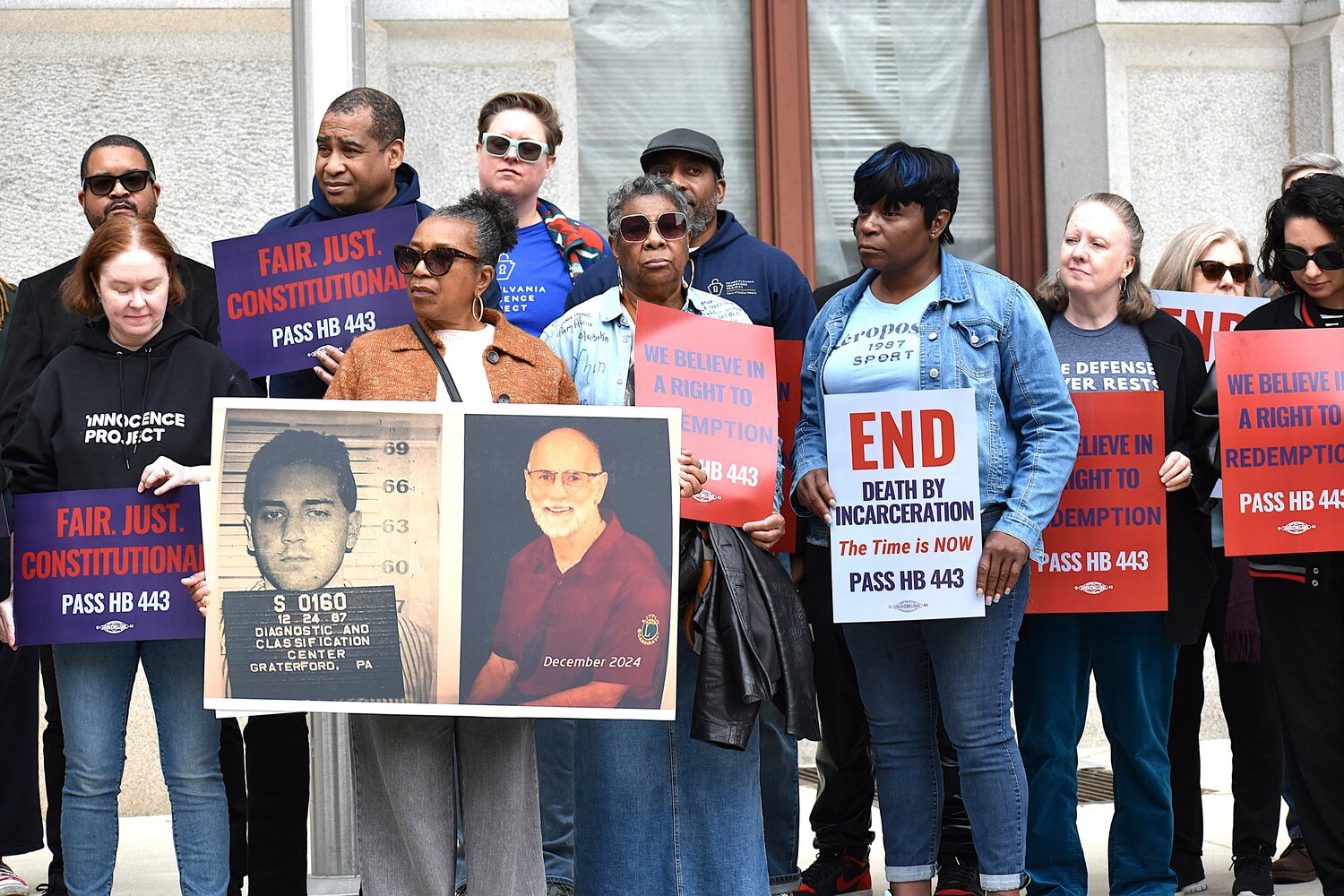
State legislators missed the deadline to rewrite Pennsylvania’s second-degree murder law, after the commonwealth’s highest court ruled that imposing a mandatory life sentence was unconstitutional.
Someone is charged with the crime, also known as felony murder, when they are accused of participating in a serious felony that results in a person being killed, even if they did not pull the trigger. Unlike first-degree murder, prosecutors do not need to prove an intent to kill.
In a landmark decision on March 26, the state Supreme Court found that the commonwealth’s longstanding punishment – life behind bars without the possibility of parole – violated the Pennsylvania Constitution’s prohibition on “cruel punishments.”
Chief Justice Debra Todd, in the majority opinion, wrote that individuals incarcerated for second-degree murder “must receive a meaningful consideration of release, based upon their individual culpability and circumstances surrounding their crime.”
The justices paused their ruling for four months to give lawmakers time to come up with a solution; that window expired Friday.
Prosecutors on Thursday asked the Supreme Court for another 120 days for the legislature and Gov. Josh Shapiro to consider a remedy. Attorneys representing Derek Lee submitted a brief in opposition. As of Sunday, the court had not decided on the motion.
Lee was convicted of second-degree murder in connection with a deadly robbery 12 years ago in Pittsburgh. His appeal, backed by the Abolitionist Law Center and Amistad Law Project, among others, reached the high court.
Barring a deadline extension, those incarcerated for felony murder could request that the justices apply their ruling retroactively and petition for individual resentencing hearings. The process may resemble the aftermath of court decisions in 2012 and 2016 that compelled the reconsideration of sentences for juveniles serving mandatory life without parole sentences.
About 1,100 people are locked up in Pennsylvania for second-degree murder, including roughly 500 from Philadelphia.
The Defender Association of Philadelphia has estimated that it would need an extra $24 million to handle the resentencings. Chief Defender Keisha Hudson told Spotlight PA last week that getting through such a caseload would take “over a decade.”
Most stakeholders seem to prefer that process go through the Pennsylvania Parole Board, rather than the time-consuming, expensive effort of litigating cases in court. However, Harrisburg lawmakers have yet to agree on a new sentencing statute.
The Democratic-controlled state House of Representatives on Thursday passed legislation that would allow those convicted of second-degree murder to seek parole after 30 years in prison. It instructs the Pennsylvania Commission on Sentencing to develop guidelines for current and future cases.
In addition, the bill would expand medical release opportunities for incarcerated people and give them a chance to earn a limited sentence reduction by obtaining educational credits.
Attorney General Dave Sunday, a Republican, wrote a letter urging lawmakers to vote against the legislation, and GOP majority leaders in the state Senate referred to the move as “political theater.” They have supported efforts to codify a sentencing range of 35 years to life imprisonment for felony murder, a proposal advocates and public defenders have characterized as too punitive.
Both chambers of the legislature are on summer recess and are slated to return to Harrisburg in September.
More: Proposed ICE detention centers in Pennsylvania scrapped
Keywords
Pennsylvania,
Pennsylvania Supreme Court,
second-degree murder,
felony murder,
sentencing reform,
criminal justice,
Josh Shapiro,
Harrisburg,
parole,
Pennsylvania legislature