
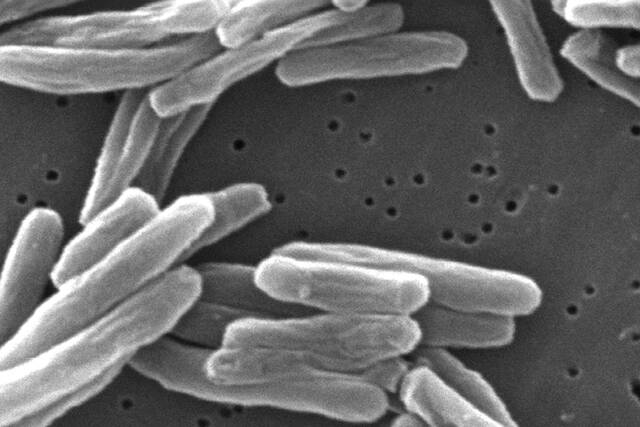
A disease once considered a romantic affliction has made a comeback in the U.S. on the heels of the covid-19 pandemic.
Since multidrug treatments became widely available in the mid-20th century, tuberculosis has been largely manageable where organized health care is available. After decades of decline in the U.S., however, cases rose each year after the 2020 pandemic (except in 2025) and remain above pre-pandemic levels.
That rise occurred primarily due to health care gaps generated by the pandemic combined with the rise of antibiotic-resistant tuberculosis, which was found in more than 1 in 10 cases in the U.S. in 2023, according to the Centers for Disease Control and Prevention.
“While the reasons behind this increase are complex and multifactorial, public health experts point to factors such as disruptions in health care access, delayed diagnosis and treatment, increased travel and population mobility and ongoing transmission among individuals with untreated active TB disease,” said Lauren Brungo, Pulmonary Clinic public health nurse supervisor at the Allegheny County Health Department.
Cogs of a comeback
Dr. Philana Ling Lin, director of the University of Pittsburgh’s division of infectious diseases, agreed that public health and socio-economic factors have played the largest role in the U.S.
The rate of U.S. tuberculosis cases per 100,000 people dropped from 2.7 to 2.2 in one year with the advent of the pandemic in 2020 — but that wasn’t necessarily because fewer people were getting sick.
“Many factors that influence TB transmission and outcomes are related to health care access and healthcare-seeking behaviors rather than the disease itself,” said Brungo.
Diagnosis, containment and drug resistance are complicated by latent TB, a noncontagious infection with no symptoms. In latent cases, protective cells wall off infected lung tissue, trapping live bacteria inside. Because patients feel well, some may skip or stop the standard 12-week, two-drug treatment, which Brungo said can significantly reduce the risk of active disease.
“If I were to infect 10 people with [tuberculosis], only one of them will become symptomatic,” said Lin. “The rest of them become infected, but their own immune system is able to contain that infection, so they have no symptoms. And unless they were told that they were exposed to someone with tuberculosis, they might not get tested on a regular basis to know.
“The testing isn’t perfect — it probably misses a quarter of people who are infected.”
If another disease or medication suppresses the immune system of a latent TB carrier, the disease becomes active. In some impoverished areas, the triggering disease is often HIV. Active TB can often occur immediately after an initial infection, months or years removed from latent infection, or never. But the result is a contagious condition (that can be spread for the first two to three weeks, according to the Mayo Clinic) presenting a range of symptoms including cough, coughing up blood or mucus, chest pain, labored breathing, chills, night sweats, weight loss, loss of appetite and tiredness that is transmitted via aerosol.
Active tuberculosis antibiotic regimens featuring four drugs typically last at least six months, according to the World TB Center.
The complexity of treatment can be problematic for curtailing its spread and evolution.
“What happens is, especially for people who don’t have access to health care, they stop treatment once they start feeling better and then the condition relapses,” said Lin. “And that, unfortunately, is very common if you have limited access to health care.”
If left untreated, globally, tuberculosis is fatal around 50% of the time, according to the World Health Organization. When treated, lethality drops to 12%.
Issues of access
Covid made control more problematic.
“Tuberculosis is one of those diseases where politics plays a huge role in public health care,” said Lin. “When there’s political turmoil, then public health can’t really be delivered. You can’t make the diagnosis and you can’t provide treatment.”
Due to the progression of latent tuberculosis, tuberculosis cases are treated with care at the county level by Health Department officials to differentiate between drug-susceptible and resistant forms, make efforts to contain and track cases and report numbers to the state and the CDC.
“[The County Health Department] will actually provide medications for those people who need it. They will go to the home, and if they find a case of tuberculosis, they do a contact investigation,” said Lin. “They will basically interview everyone in the household and everyone that person has been in close contact with and test them to make sure that they’re not infected.”
They don’t stop there.
“They will bring the medications to them. They make every investment to try to make sure that those patients have been provided for, regardless of what kind of access to health care they have,” Lin said.
Additionally, the directly observed therapy the department employs, wherein a professional watches a patient complete their regimen, is the standard of care in the U.S.
“With covid, basically we lost that ability to keep track of patients and their treatments, making the diagnosis,” said Lin. “And so this is the first increase we’ve seen in decades.”
From 2021 to 2023, the CDC says the U.S. experienced shortages of TB drugs due to financial, access and supply challenges. Meanwhile, health care costs skyrocketed.
U.S. health care costs amounted to an increase of more than $15,000 per person, according to the Centers for Medicare and Medicaid Services. Insurers cover about 74% of those costs, spawning an associated rise in premiums.
“Public health experts have noted that rising health care costs and barriers to preventive care may contribute to delayed diagnosis, reduced follow-up after positive TB screening tests, and lower rates of treatment for latent TB infection,” said Brungo.
Vaccines, treatments and legislation
In recent weeks, researchers at the University of Surrey in England have identified a potential “control switch” protein that new treatments might target to keep tuberculosis bacteria from accessing the energy it needs to survive. Additionally, the FDA recently approved the first generic version of Priftin, an antibiotic used to treat tuberculosis.
Lin spoke to several other new developments in the works.
“When they first developed medications for tuberculosis, the treatment was two years,” she said. “So, it’s considered a modern medical miracle that we got it down to six months. And then in the last year or so, there have been trials to shorten that drug treatment down to four months. That’s a huge deal.”
No tuberculosis vaccine is currently in use in the U.S. In areas where tuberculosis is rampant, however, the Bacille Calmette-Guérin vaccine is administered to infants to prevent severe symptoms that occur when tuberculosis moves outside the lungs to cause conditions like meningitis. While effective at that task, Lin says it’s only about 40 to 50% effective at curtailing lung tuberculosis in adults.
“There are many [vaccines] in the pipeline that are being tested, better drugs … I don’t know that there’s a clear winner yet,” said Lin. “The pipeline for medications is not great. Industry is very much interested in the payer, not necessarily the public health good.”
To that end, a bipartisan group of lawmakers recently reintroduced the Pasteur Act. If passed, the federal government would pay up to $300 million annually to drug companies to incentivize them to develop new drugs that combat antimicrobial-resistant forms of disease. Currently, 2.8 million resistant infections occur in the U.S. each year, killing 35,000, according to the CDC.
“For many companies that make medications, short portions of antibiotics are not something that they’re interested in,” said Lin. “And they want customers who are able to pay. Tuberculosis is an infection of the poor. Most drug companies are not interested in making medications for tuberculosis for customers who cannot necessarily pay.”
Tuberculosis by the numbers
13 million estimated Americans have latent TB
25% of the world’s population has latent TB
3 per 100,000 U.S. incidence rate
1.7 per 100,000 Pennsylvania incidence rate
1.45 per 100,000 Allegheny County incidence rate
Six months is the typical treatment for active TB
12 weeks is the typical treatment for latent TB
50% fatal if untreated globally
12% fatal when treated
Sources: Allegheny County Health Department, Cleveland Clinic, World Health Organization