
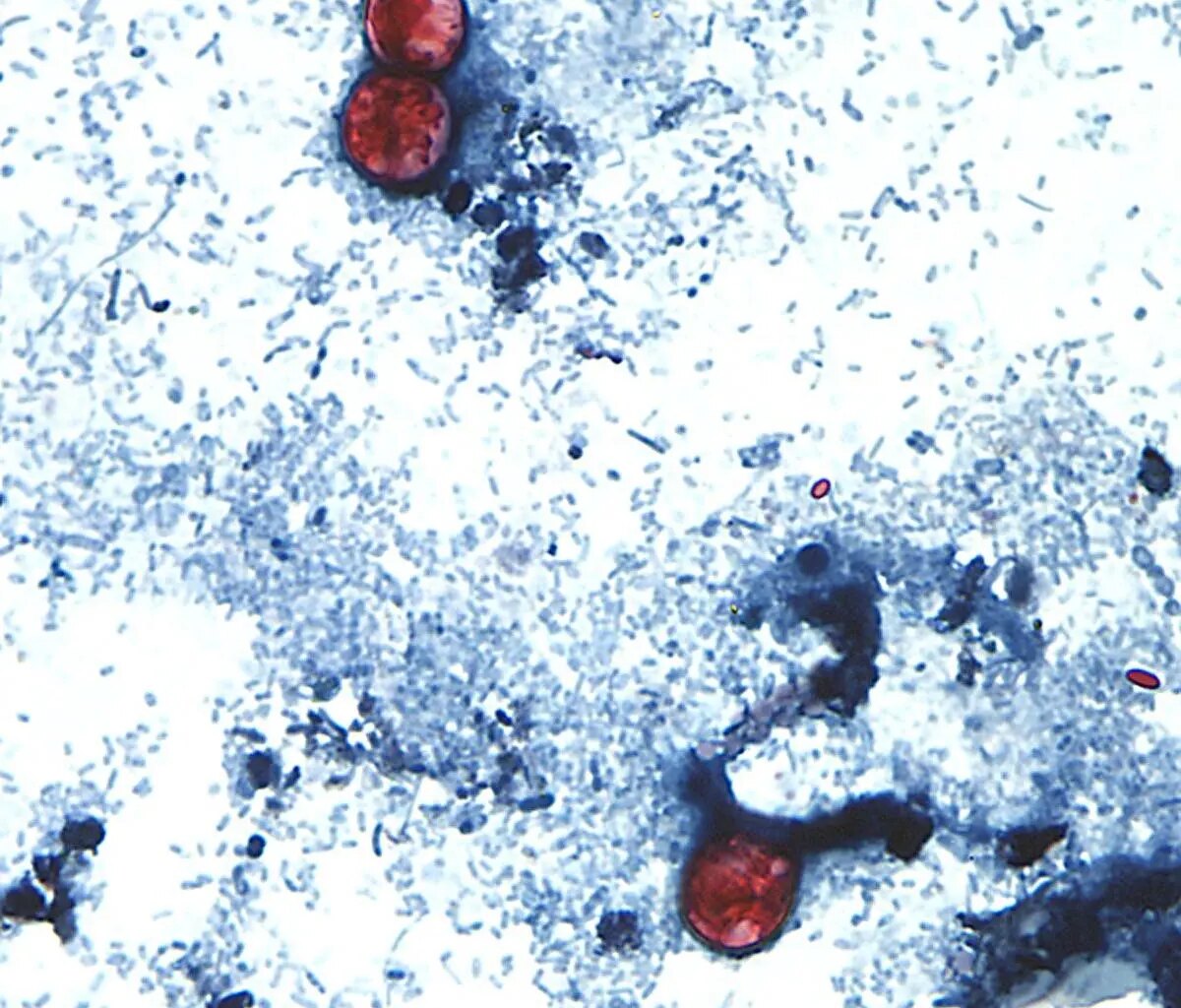
Though cases of the diarrhea-causing parasite Cyclospora continues to rise across the U.S., there is only one possible case in the Lehigh Valley.
Major outbreaks caused by the protozoan parasite Cyclospora cayetanensis are occurring in 41 states, including Pennsylvania, New York, New Jersey, Michigan and Ohio.
At least 48 cases have been found in Pennsylvania, with the majority confirmed so far in Allegheny County. Only one unconfirmed case has been found so far in the Lehigh Valley, in Northampton County.
Dr. Jeffrey Jahre, chief emeritus of infectious disease for St. Luke’s University Health Network, said the health network has been paying close attention to this parasite since the beginning of the outbreaks and continues to do so.
“We’re facing at this point one of the largest modern food-borne epidemics. We’re not talking about a few hundred cases,” Jahre said.
The only food-borne epidemic that outpaces the Cyclospora outbreak of 2026 is the salmonella outbreak of 1985, where nearly 200,000 people were infected after drinking contaminated milk from a single dairy plant.
“If you had to go back before that, you’re now talking about typhoid epidemics more than 100 years ago,” Jahre said.
Cyclospora is transmitted through contact with infected fecal matter or infected water. It is most common in tropical areas of the world, but the U.S. frequently experiences cases due to the importation of certain fresh produce. It is not believed that the parasite can be transmitted from person to person.
The greatest risk posed by a Cyclospora infection is dehydration as a result of diarrhea, which can be fatal if not managed. But the lethality of the illness is not what has public health experts concerned as much as how much more severe this outbreak is than anything involving the parasite before in the U.S.
Dr. Tibisay Villobos, chief of the pediatrics section of infectious disease at Jefferson Health, parent of Lehigh Valley Health Network, said salmonella, campylobacter and shigella, which they treat more frequently, tend to result in more serious infections.
Cyclosporiasis, the condition caused by the parasites in the Cyclospora genus, is not viral but it has similarities to some other diseases, such as norovirus, also known as the stomach bug or stomach flu. Cyclosporiasis symptoms include loss of appetite, bloating, burping, farting, fatigue, low-grade fever, stomach cramps, nausea and vomiting. The biggest thing that differentiates it from many similar illnesses is highly explosive diarrhea, but that is not always present. Jahre said for this reason, and its similarity in presentation to norovirus, he recommends everyone who is experiencing persistent diarrhea see their doctor and get tested.
Getting tested will help public health officials better track the spread of the parasite and provide access to effective treatments. Though the condition can get better on its own, it’s not always advisable, as bouts of diarrhea can persist for weeks or months if left untreated. And as with most illnesses, it is more likely to be worse in the very old, the very young and people with other health conditions. Fortunately, hospitalization is rarely necessary. Jahre describes it as an outpatient illness that is treated with antibiotics, though this isn’t always necessary.
Villobos said to protect against the parasite, people should make sure the produce they buy is properly cleaned. This starts with washing your hands thoroughly with soap and water before and after handling produce, and using a vegetable brush or soft cloth. With lettuce, removing the first two to three layers is advised. There is also research that vinegar and vinaigrettes can help neutralize the parasite, though this is not a surefire approach, Jahre said. The only foolproof way of eliminating the parasite from food is to thoroughly cook it.
Some cases have been linked to shredded lettuce sold by Taylor Farms de Mexico, a major agricultural company that sells its produce to many fast food chains as well as retailers such as Walmart. On July 17, Taylor Farms issued a recall of all of its iceberg lettuce sourced from central Mexico.
However, Jahre said there is evidence that some cases are not tied to the Taylor Farms iceberg lettuce and there may be another strain out there.
Jahre added that the CDC is behind on tracking the outbreak.
According to the Centers for Disease Control and Prevention, there are 11,500 confirmed and suspected cases. However, the number of confirmed and suspected cases reported by the state health departments for Michigan and Ohio alone exceeds the CDC’s total for the entire country. Based on numbers reported by the departments of health for the 12 states with the highest number of Cyclospora cases, there are more than 15,000 confirmed or suspected cases in the U.S.
“There seems to be a lag in what the CDC is doing in comparison to some of the state health departments who have really taken a major initiative,” Jahre said.
Jahre added he has no agenda against U.S. Health Secretary Robert Kennedy Jr. but some staffing cuts Kennedy made, including to Food and Drug Administration liaisons to the Secretariat of Agriculture and Rural Development, are hampering efforts to track and trace the source of the outbreaks.
“When you see the information that’s coming out of Mexico, they’re denying that the source is from their country,” Jahre said. “There’s again a lack of consistency in the messaging. And we don’t have people on the ground working directly with their agricultural department so that we can get to the root of this and where everybody benefits, so that there isn’t a lot of false scares and things along that line.”