
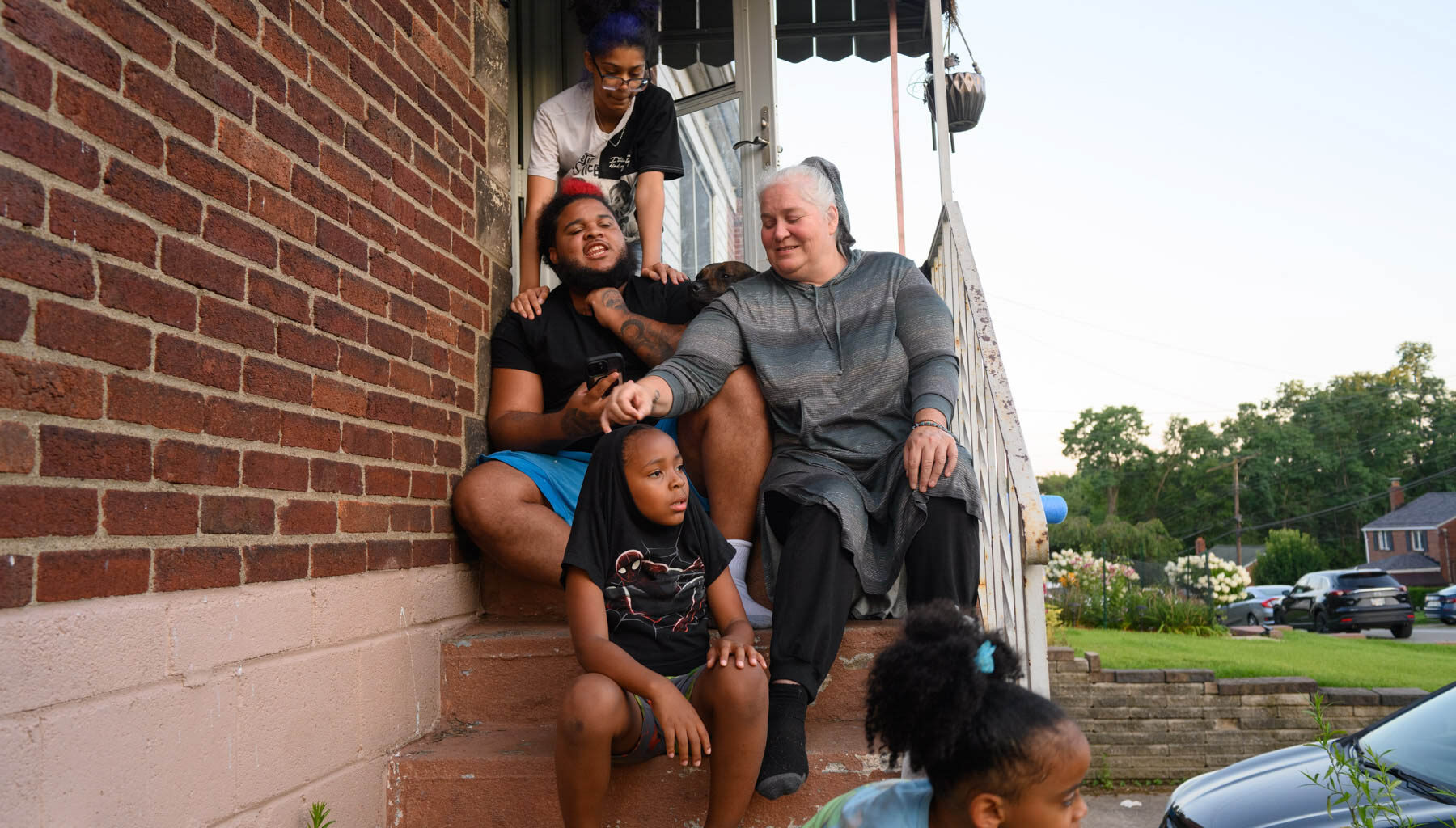
“They’re the reason I get up. They’re the reason why I push through everything that I push through. They are my inner strength, my outer strength”, says Jean Givner, 54, a mother and grandmother, who is the oldest of three generations of the Givner family living under the same roof in Wilkins Township.
Jean is the matriarch of the home and works two full-time jobs, as a certified nursing assistant and a direct support professional, to afford the rising cost of living for her family. She bought her house during the COVID pandemic, when housing costs weren’t as high as they are now.
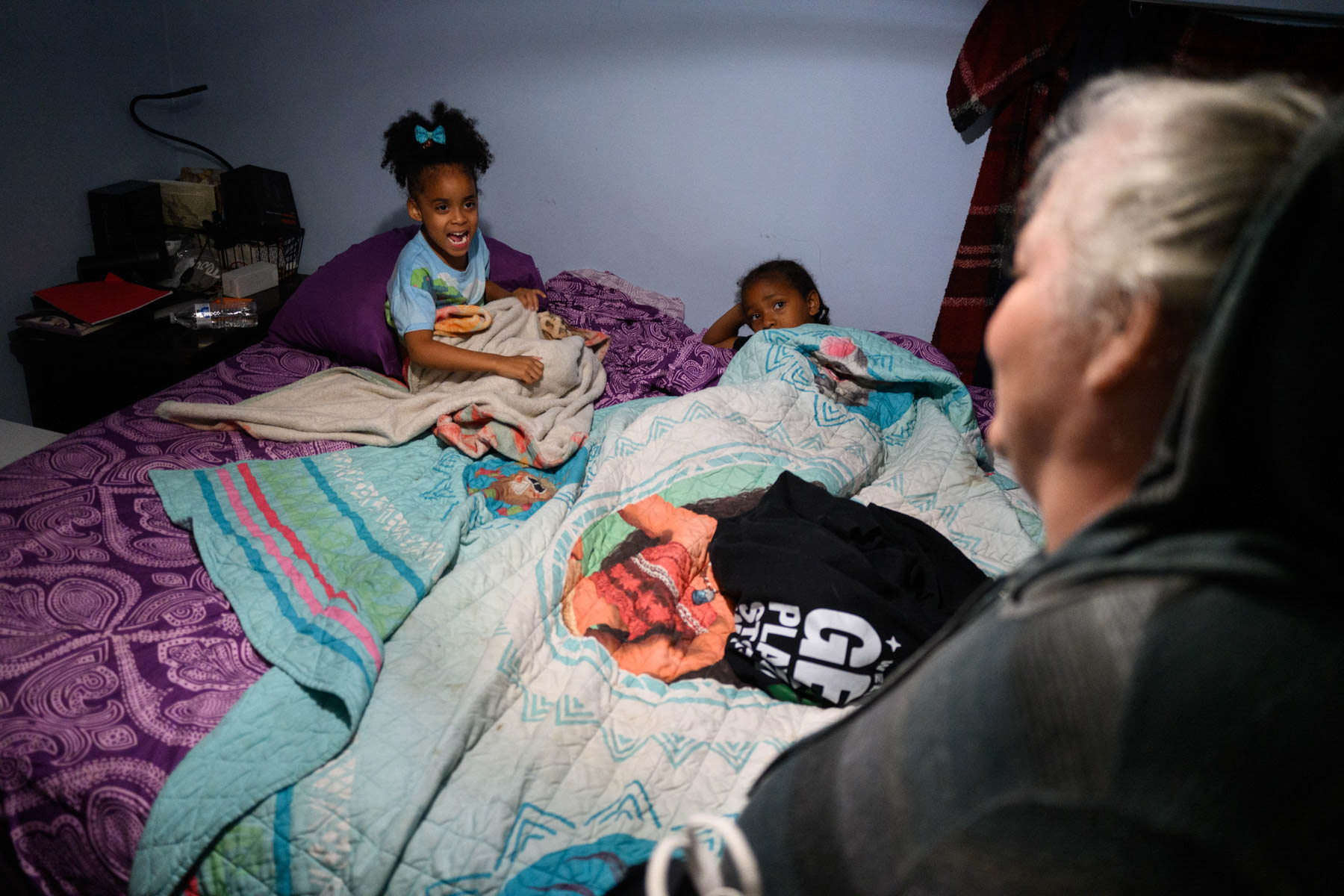 Jean tucks Harmony and Asher into bed before she gets ready for an overnight shift on July 23. (Photo by Claira Tokarz/Pittsburgh’s Public Source)
When inflation began to rise, her daughter Layla, 30, Layla’s fiancé, 36, and Layla’s daughter, 11, moved in with Jean.
“The point of us all being together and working together is to be able to lighten the load, but it seems like every time we think we’re going to catch a breathing room, you know, we get hit with, oh well, inflation’s going to happen more, and you know, then we’re getting hit with these higher utility bills, which is ridiculous,” Jean said.
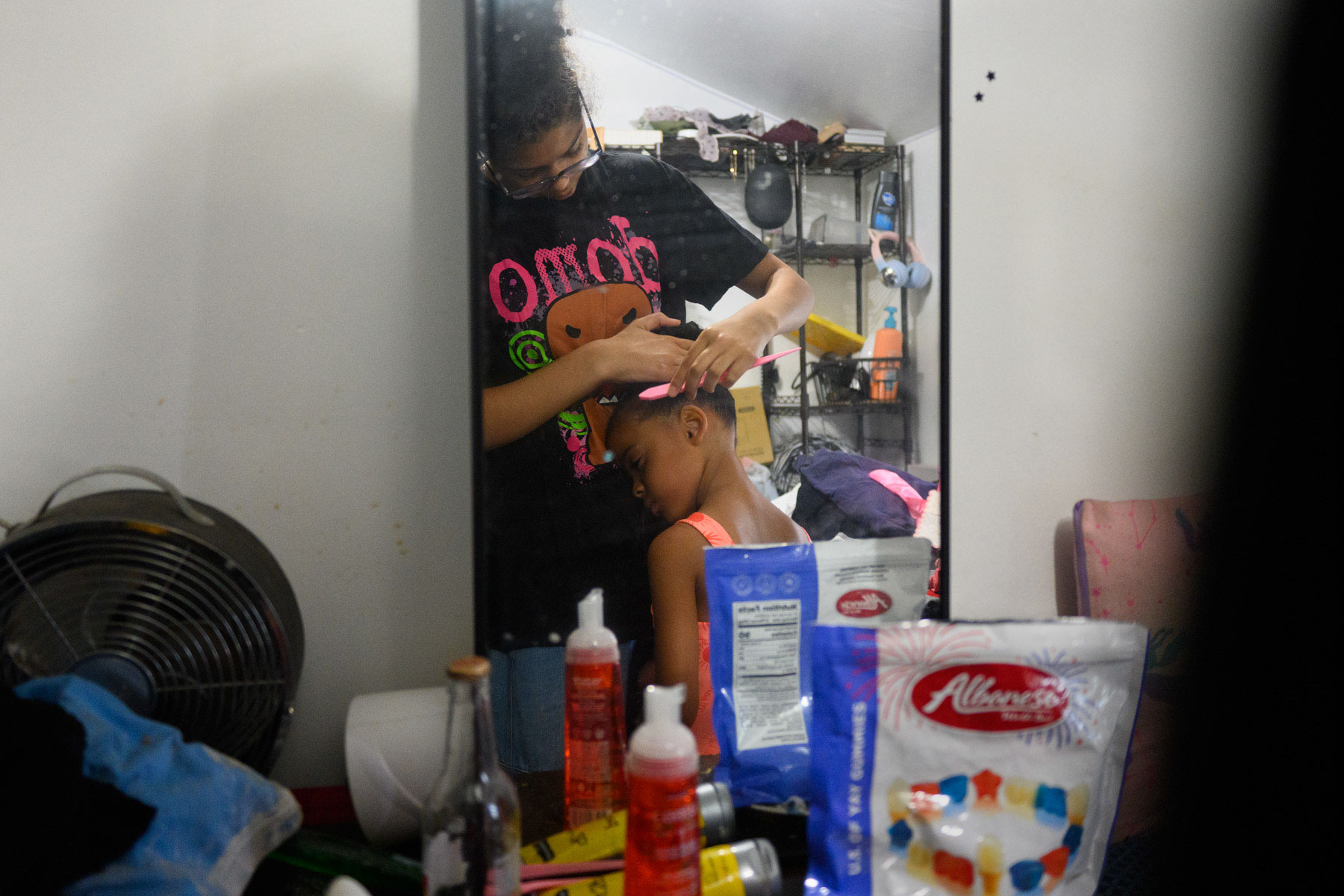 Anajha, the oldest grandkid, does her sister’s hair on July 8. (Photo by Claira Tokarz/Pittsburgh’s Public Source)
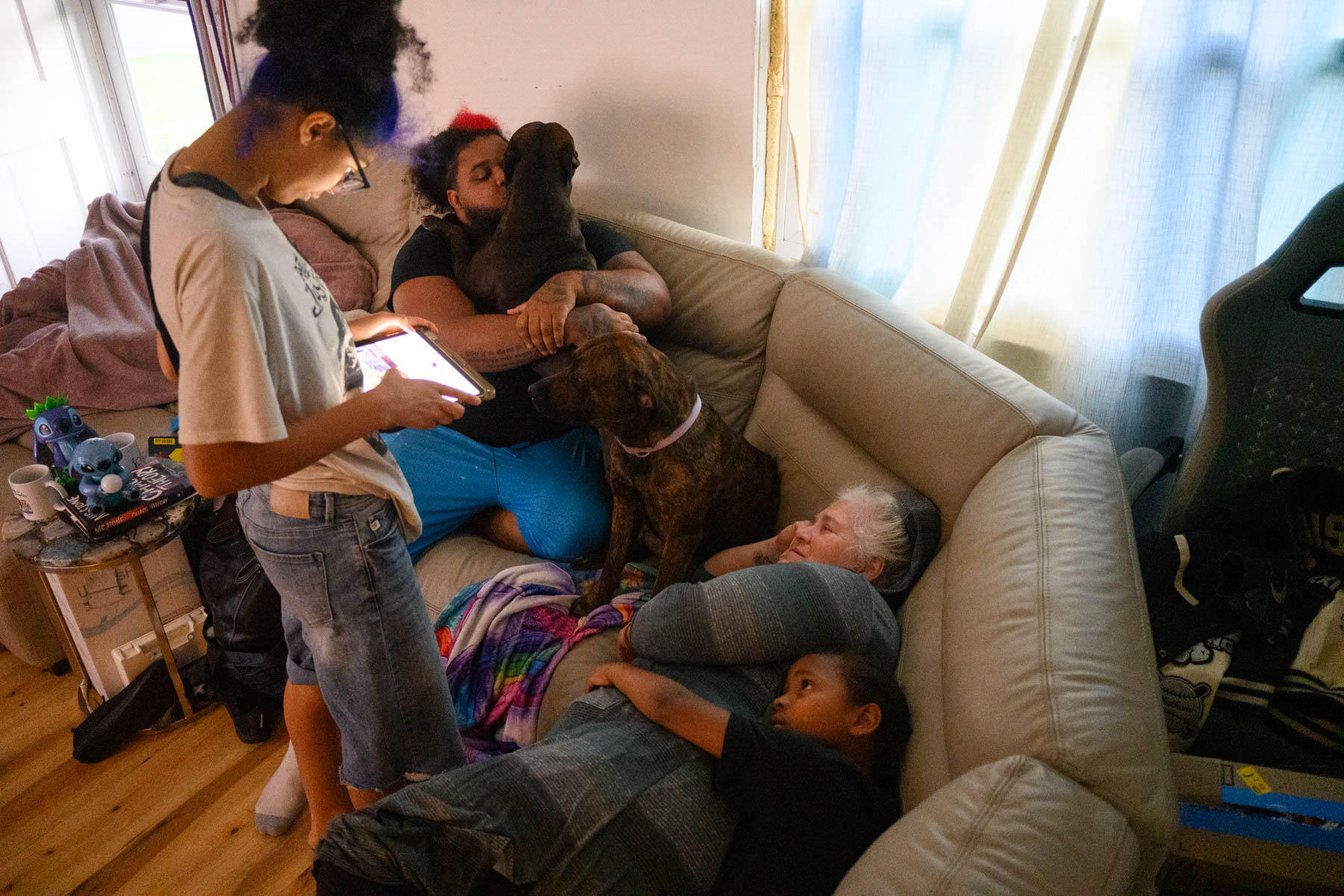
Now two of Jean’s adult children live in the home with her, along with five of her grandchildren, ages 5 to 15. With nine people and three dogs under one roof, Jean said she works a second full-time job to afford groceries, which usually cost the family around $450 a week.
Jean did the math for a month, and figured out that she works an average of 14 hours a day and sleeps five, leaving her with around 5 for everything else.
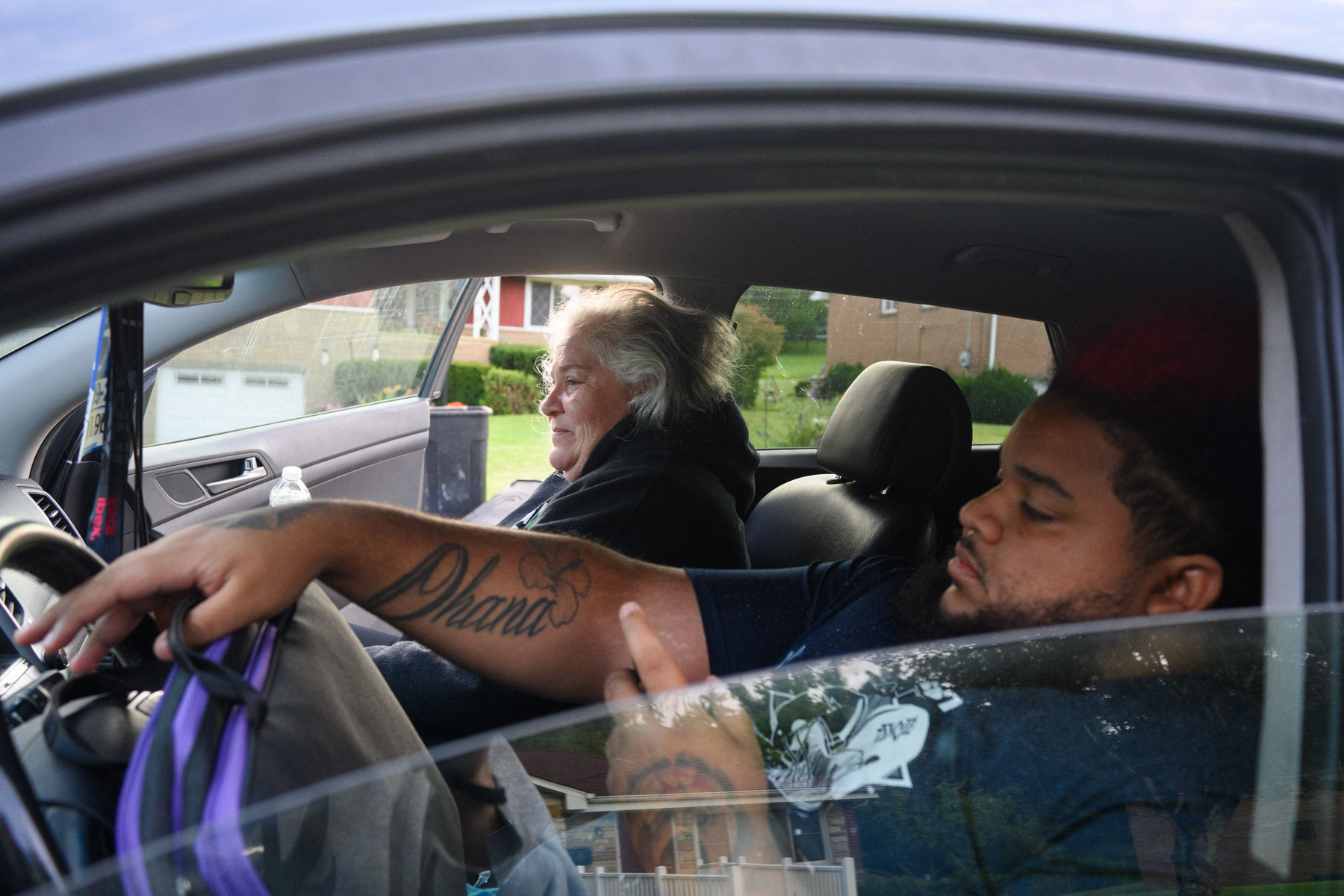 Se’von picks up his mother, Jean, on July 24, as he does every Friday from her overnight in Monroeville. Then he takes her to her second shift, which lasts 16 hours. Jean works around 24-hour days on Thursday evenings to Friday nights. (Photo by Claira Tokarz/Pittsburgh’s Public Source)
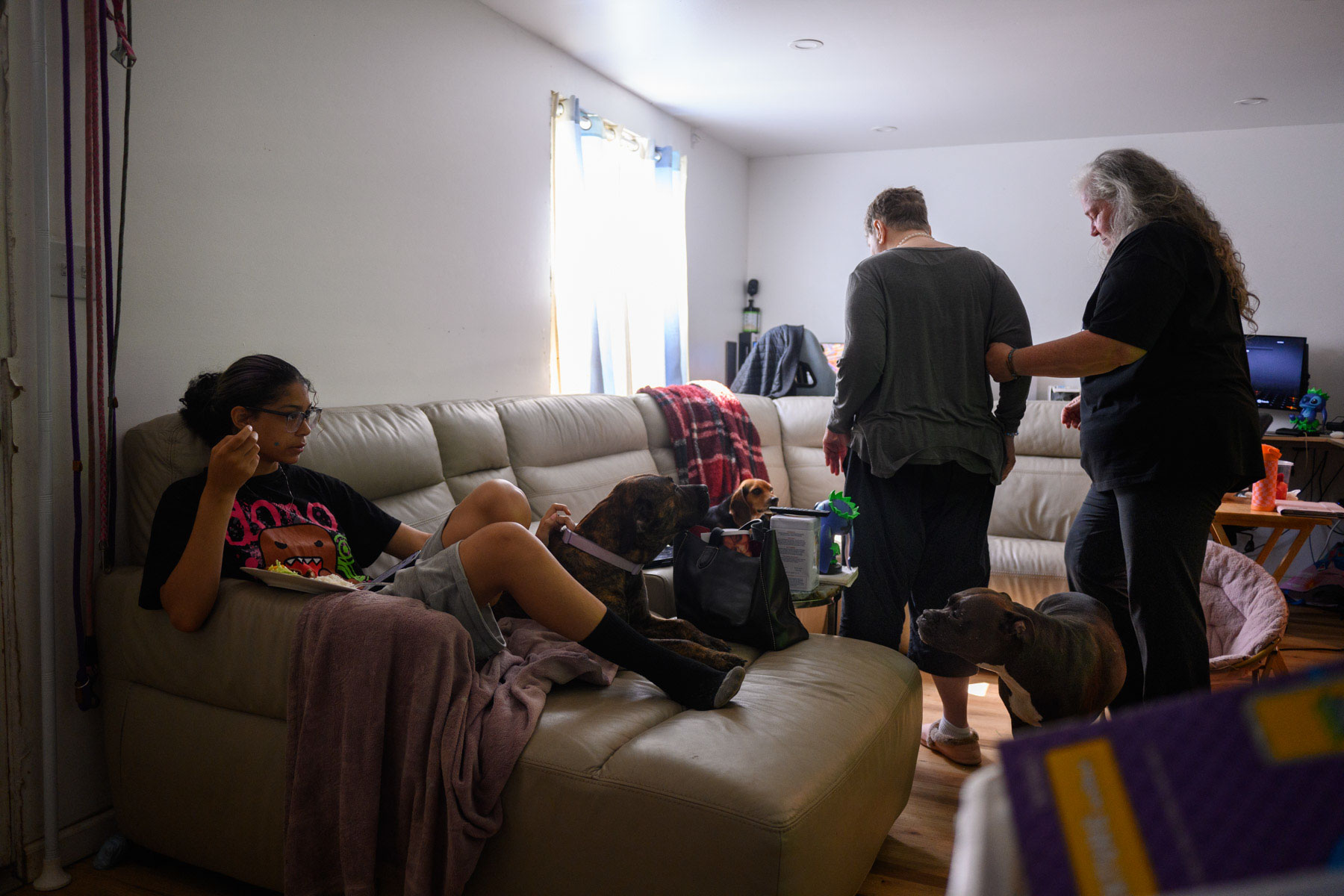 Jean walks one of her caregiving clients to the couch after a meal at Jean’s home on July 9. (Photo by Claira Tokarz/Pittsburgh’s Public Source)
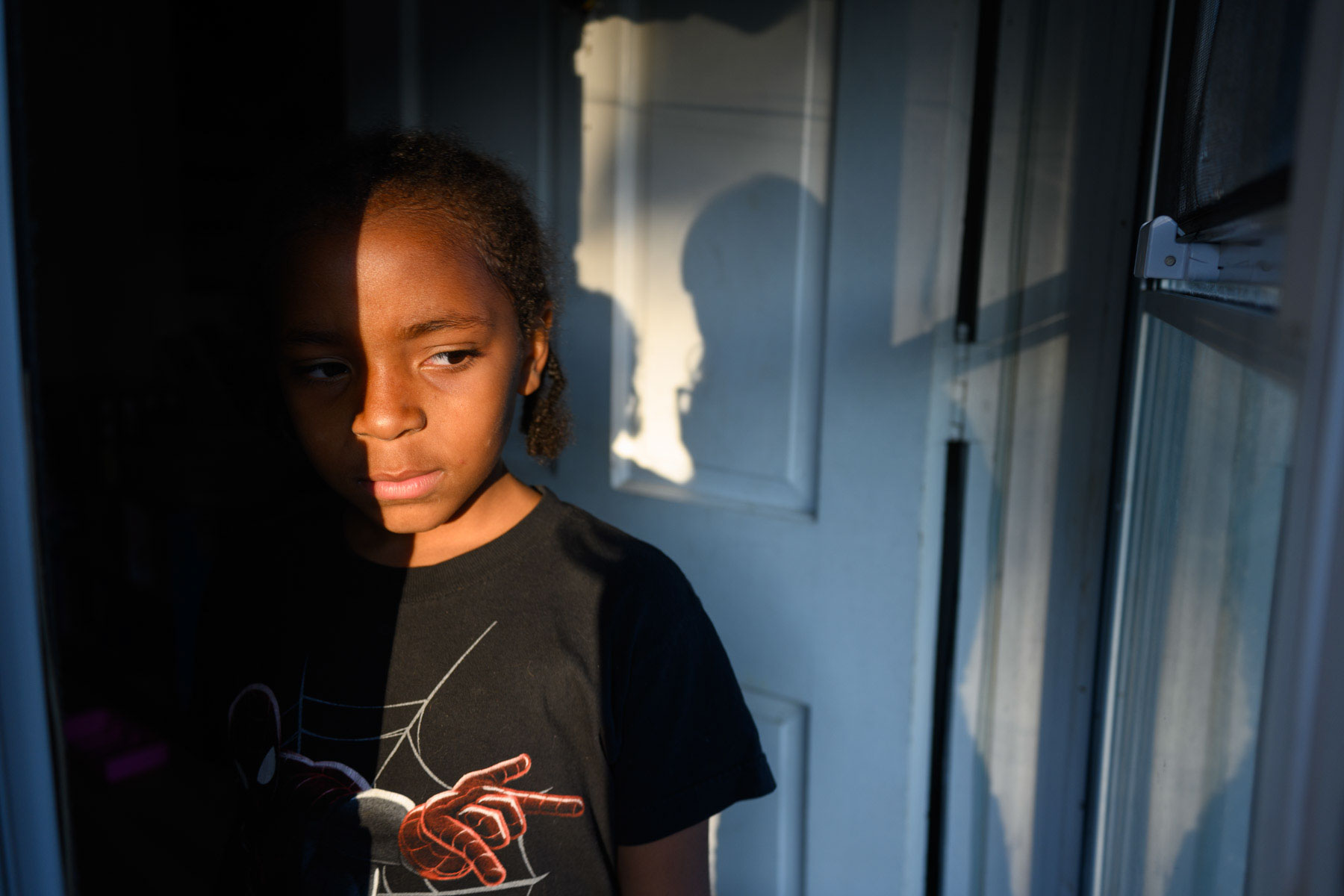 Asher stands in the doorway of his home on July 23. (Photo by Claira Tokarz/Pittsburgh’s Public Source)
“It can get a little hectic with my three siblings, but we make it work and try to do our best.”
Anajha, the oldest grandchild.
In the United States, around one-third of adults under 35 are living with their parents, which is higher than it has ever been.
While people used to buy homes in their late 20s, now the median age for first-time homebuying is 38. Inflation has pushed rents higher while income has not kept up. As a result, the purchase of multigenerational homes hit an all-time high, rising nationally from 11% in 2021 to 17% in 2024.
While the trend is driven by cost, living multigenerationally can also strengthen community and fight the isolation and loneliness people often experience as they age. “A multi-generational family offers natural social interaction and community, and it also expands the older adults’ network,” said Pamela Toto, director of the University of Pittsburgh’s Healthy Home Laboratory, which promotes aging in place.
Toto said one downside is that some things that are put in place for one generation may negatively impact another generation in the home. “If we’re putting modifications into someone’s home that meets the needs for an older adult, it might actually hinder the needs for a younger person.”
For instance, an Amazon Alexa can be a really beneficial tool for older people, but if it is programmed to turn off the lights in the home at a certain time, that might hinder a younger night owl, Toto noted.
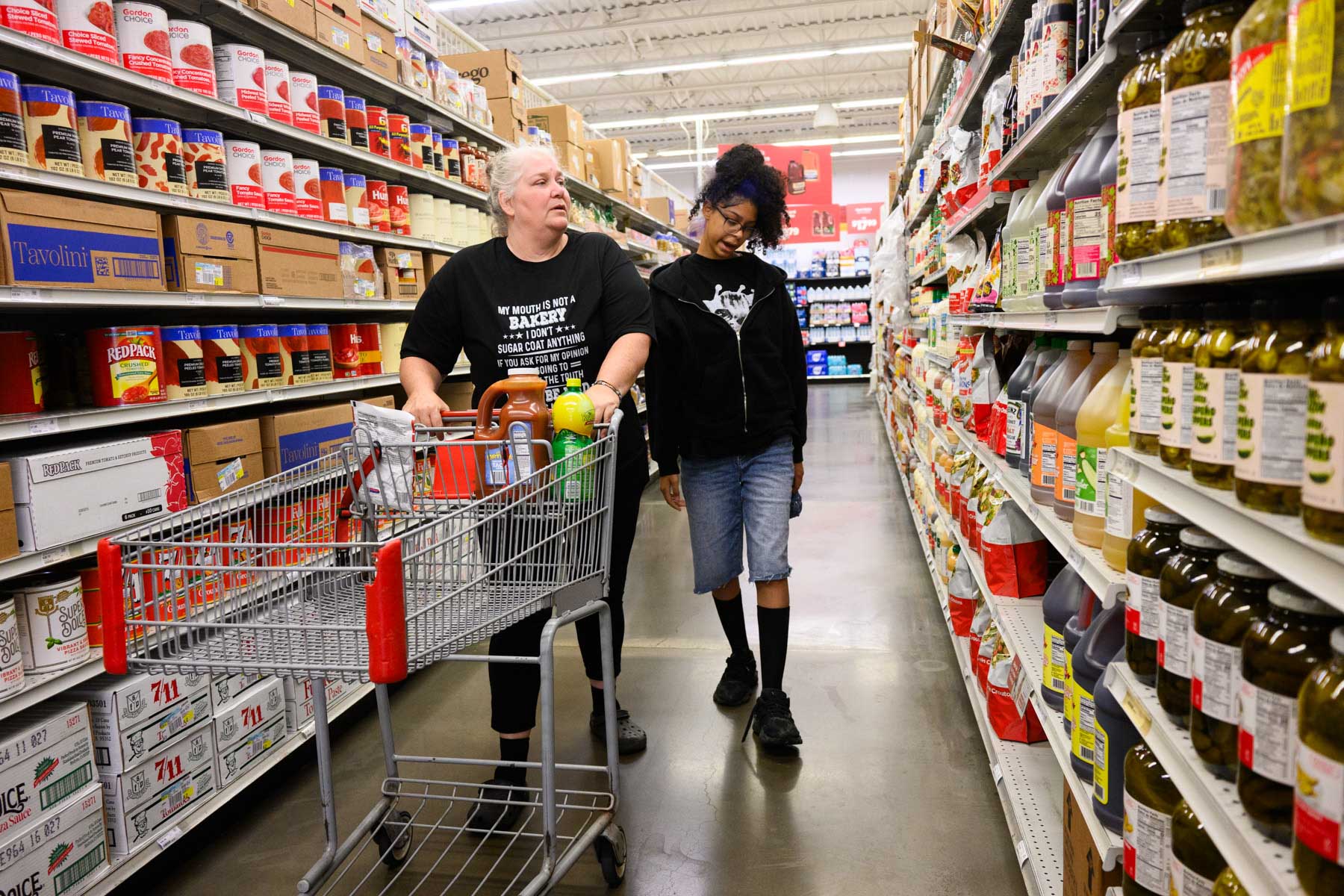 Jean and her oldest grandchild, Anajha, grocery shop in Monroeville on July 20. Jean does her best to find items in bulk or on sale to try and lighten the cost of food, one of the family’s largest expenses. (Photo by Claira Tokarz/Pittsburgh’s Public Source)
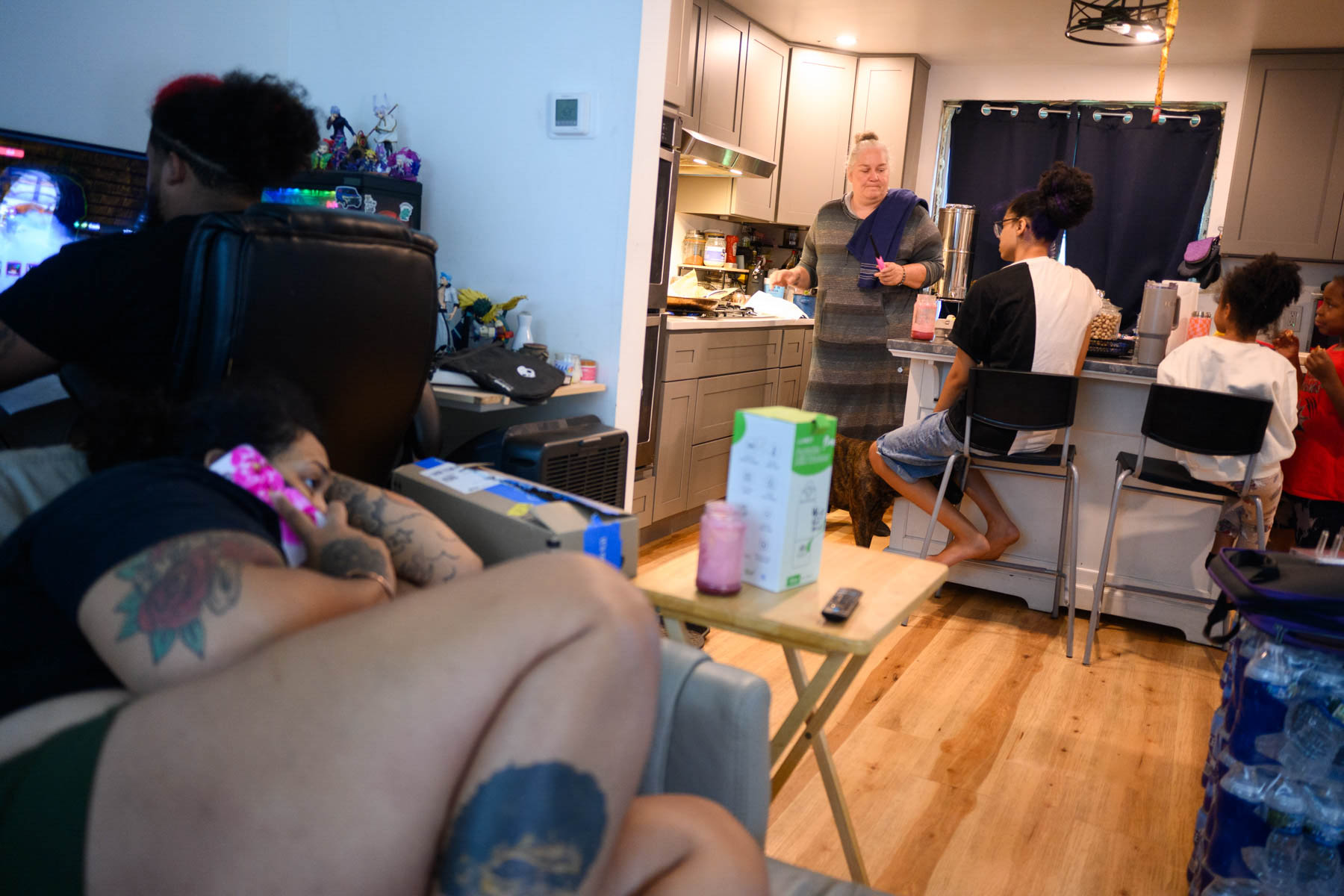 From left, Layla Renner, Se’von, Jean, Anajha, Harmony and Asher hang out while Jean makes everyone breakfast on July 23. Layla is not feeling the best about bringing another kid into the home, due to the limited space. (Photo by Claira Tokarz/Pittsburgh’s Public Source)
Jean’s only daughter, Layla, lives in the basement of the home with her fiancé and daughter. They have their own kitchen and bathroom, but the bathroom is currently broken. Leila is pregnant, and soon there will be another grandchild in the home.
“The struggle is not really having enough room for everyone.”
jean Givner
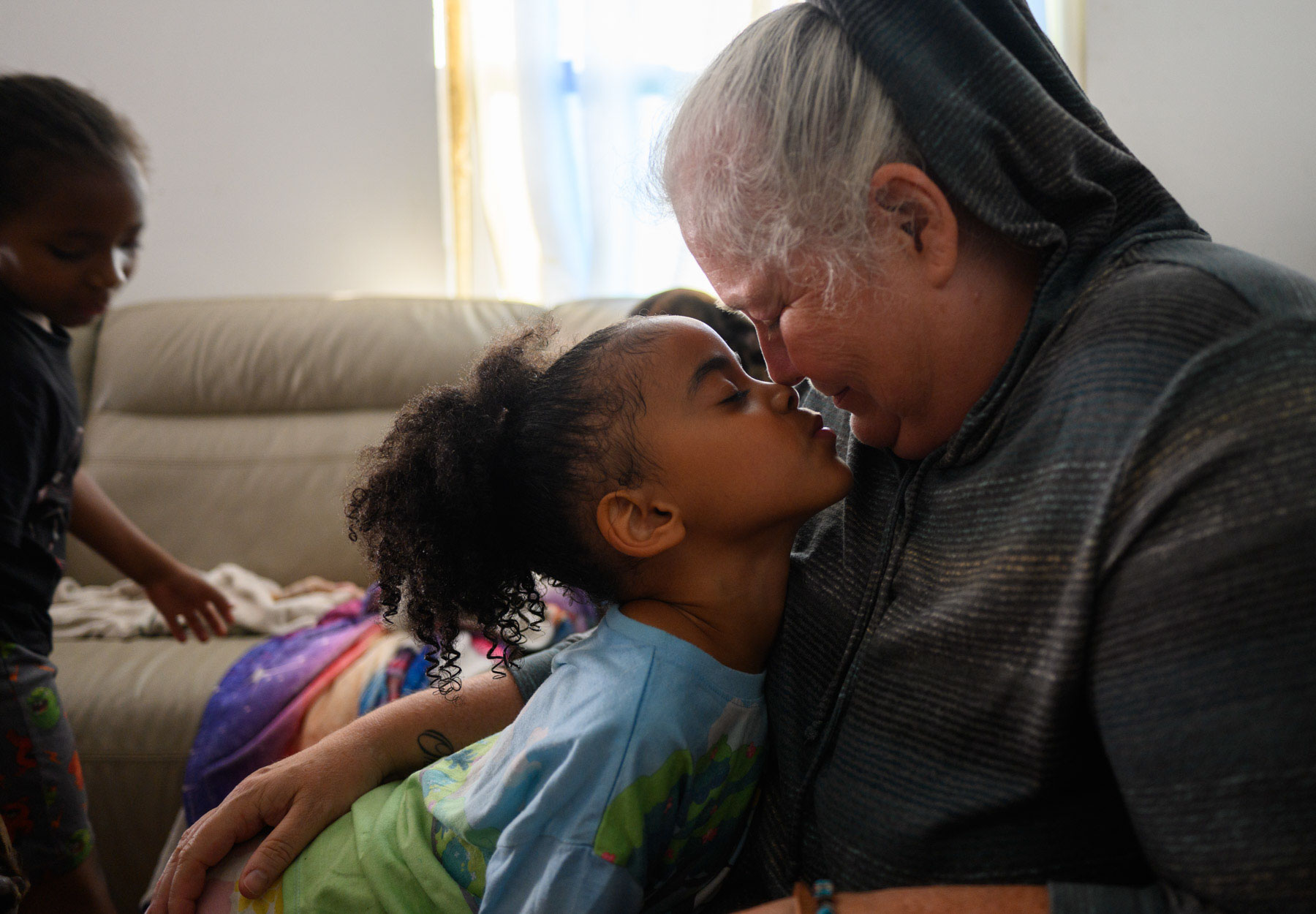 Harmony and Jean in their home on July 23. (Photo by Claira Tokarz/Pittsburgh’s Public Source)
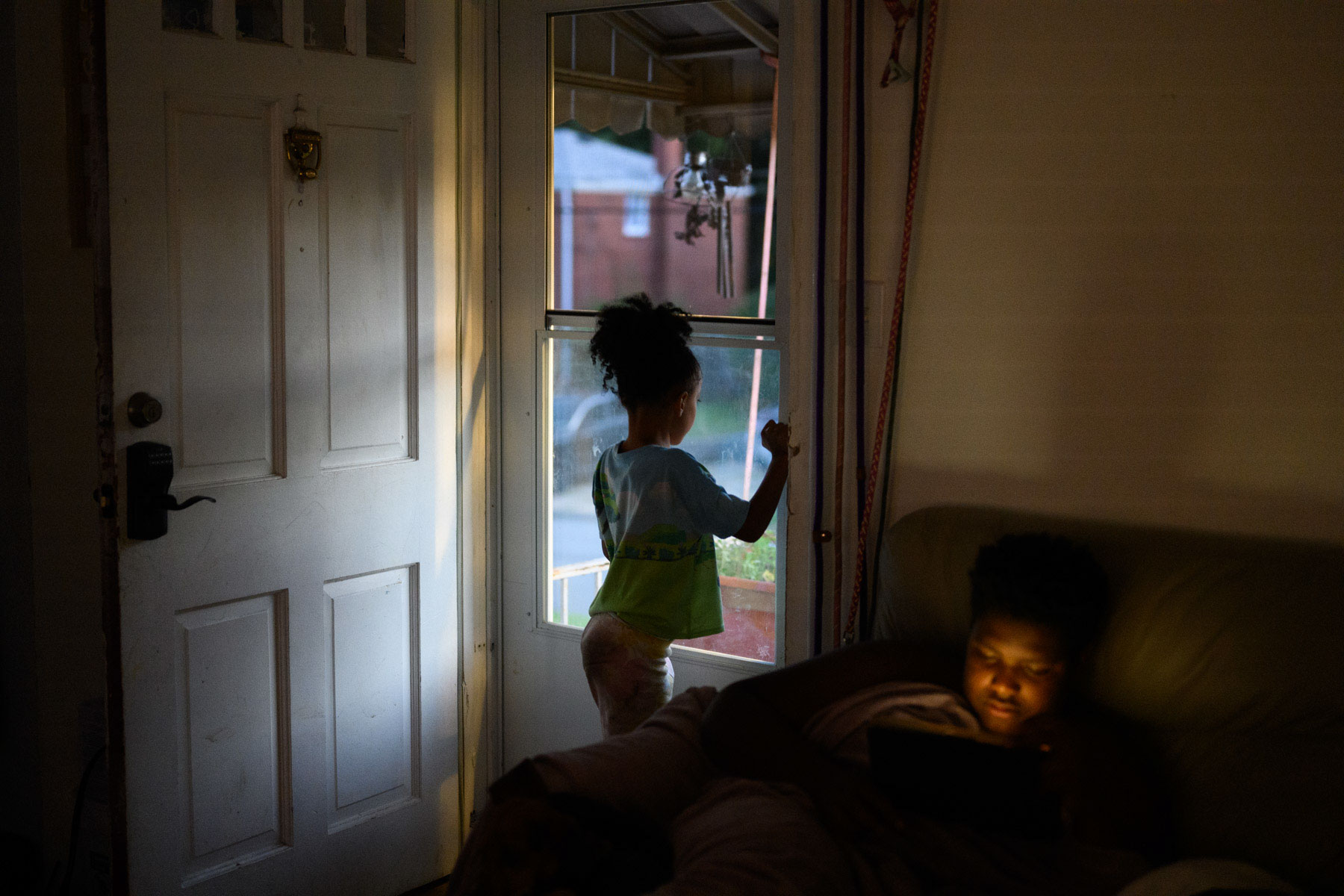 Harmony and Kenneth hang out after a long day in their home on July 23. (Photo by Claira Tokarz/Pittsburgh’s Public Source)
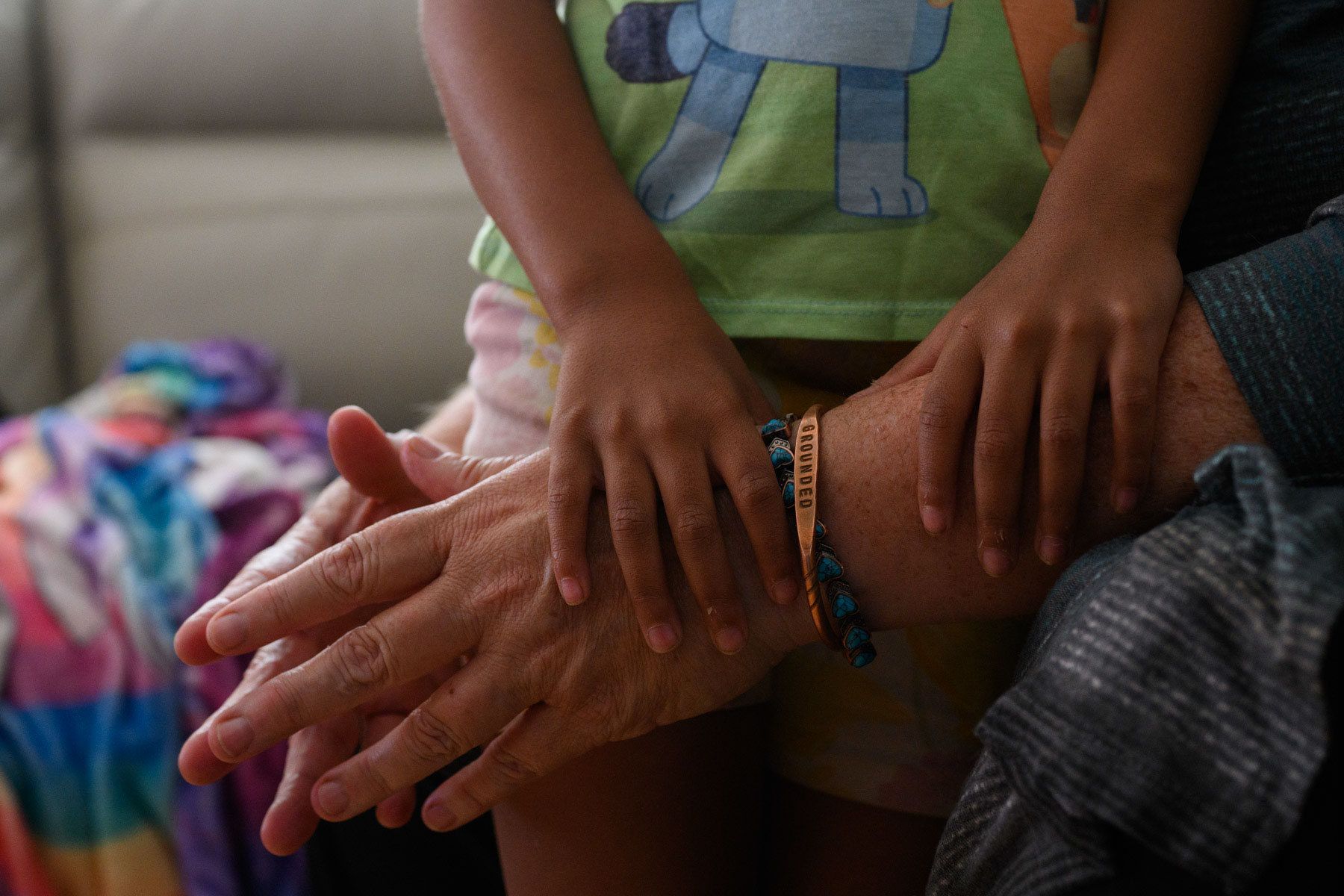 Harmony holds onto her grandmother Jean in their home on July 23. (Photo by Claira Tokarz/Pittsburgh’s Public Source)
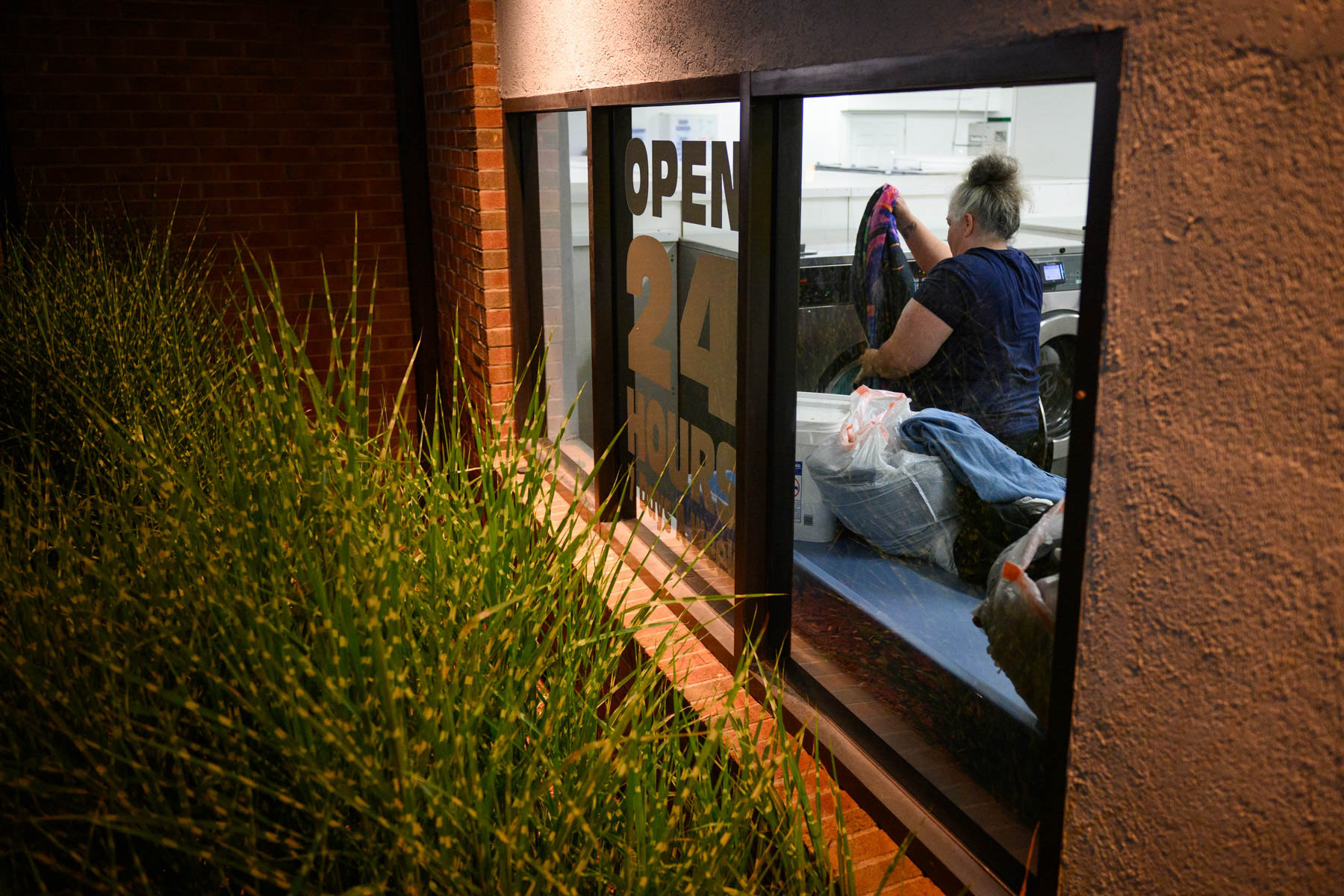 Jean does laundry at a laundromat in Monroeville in the early hours of Saturday, July 25. Jean had just finished up a twenty-four-hour shift working both of her full-time jobs and did not get home until around 3:30 a.m. “I don’t think I ever had a me time? I don’t even know what that would look like, and I don’t, I don’t know if I would be able to handle it,” said Jean. (Photo by Claira Tokarz/Pittsburgh’s Public Source)
 The family settles down for the night after hanging out outside on July 23. “They’re the greatest gift that I have and that I’ve been given,” said Jean. (Photo by Claira Tokarz/Pittsburgh’s Public Source)
Jean shares her bedroom with the two youngest grandchildren a lot of the time, which she says she doesn’t mind.
 In a family tree drawn by Anajha, the family is connected by the word Ohana, which means family in Hawaiian. Jean and Se’von both have it tattooed, and Anajha plans to get the tattoo when she turns 18. Two of Jean’s children who do not live in the home also plan to get the family tattoo soon.
“You gotta learn to love them, you gotta learn to cooperate with one of eachother and just help out honestly, even if it’s something small, it’s still help, helping never bothered me,” said Anajha
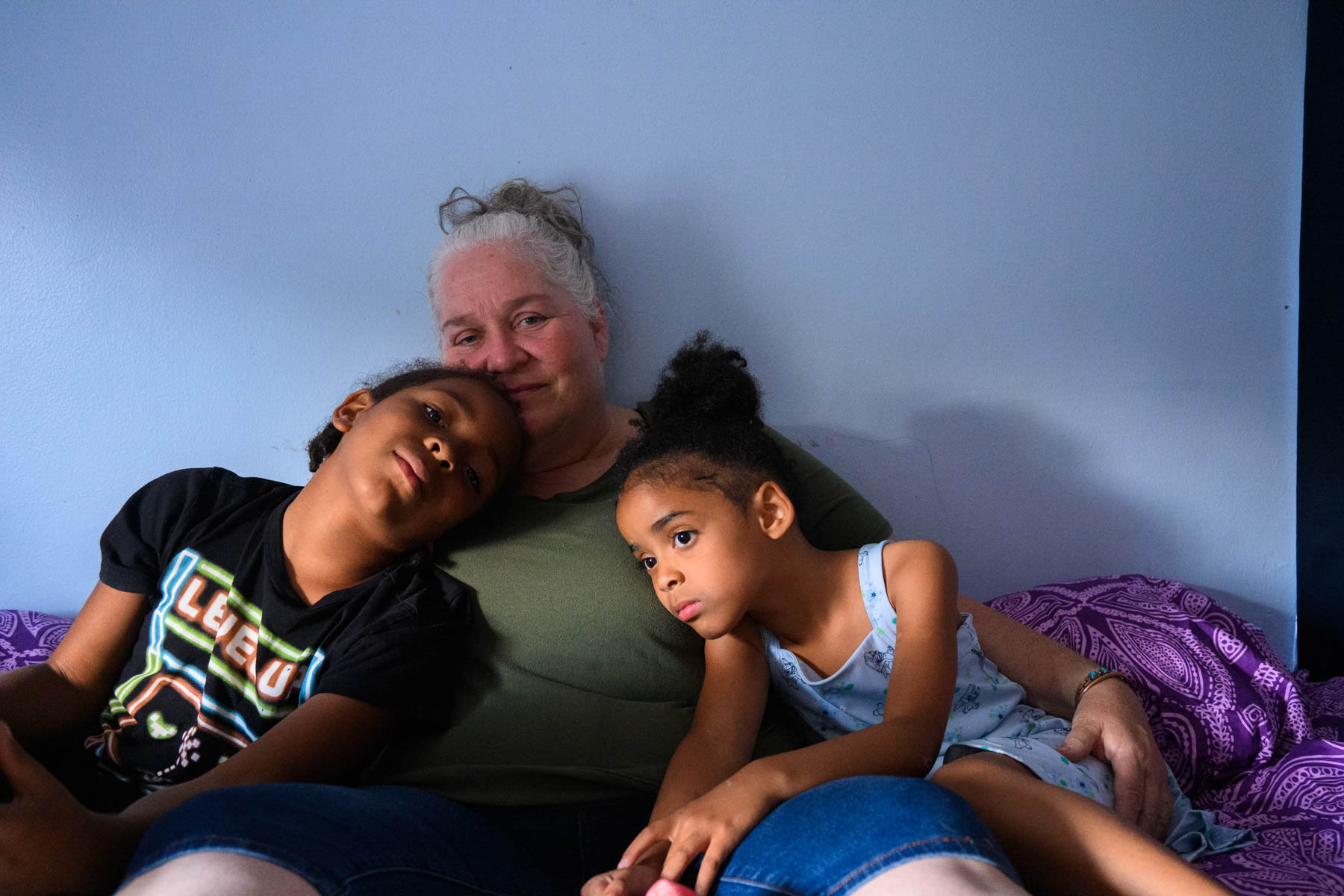 Asher, Jean and Harmony pose for a portrait in Jean’s bedroom on July 12. They have been living with Jean for 3 years. Jean said one of the biggest struggles living multigenerationally is not having enough room for everyone. (Photo by Claira Tokarz/Pittsburgh’s Public Source)
Claira Tokarz is a photojournalism intern at Pittsburgh’s Public Source. She can be reached at claira@publicsource.org.
This <a target=”_blank” href=”https://www.publicsource.org/multigenerational-living-helps-make-ends-meet/”>article</a> first appeared on <a target=”_blank” href=”https://www.publicsource.org”>Pittsburgh’s Public Source</a> and is republished here under a <a target=”_blank” href=”https://creativecommons.org/licenses/by-nd/4.0/”>Creative Commons Attribution-NoDerivatives 4.0 International License</a>.<img src=”https://i0.wp.com/www.publicsource.org/wp-content/uploads/2025/07/cropped-ps_circle_favicon_blue.png?resize=150%2C150&ssl=1″ style=”width:1em;height:1em;margin-left:10px;”>
<img id=”republication-tracker-tool-source” src=”https://www.publicsource.org/?republication-pixel=true&post=1335250&ga4=G-CCLXQK5C14″ style=”width:1px;height:1px;”><script> PARSELY = { autotrack: false, onload: function() { PARSELY.beacon.trackPageView({ url: “https://www.publicsource.org/multigenerational-living-helps-make-ends-meet/”, urlref: window.location.href }); } } </script> <script id=”parsely-cfg” src=”//cdn.parsely.com/keys/publicsource.org/p.js”></script>