
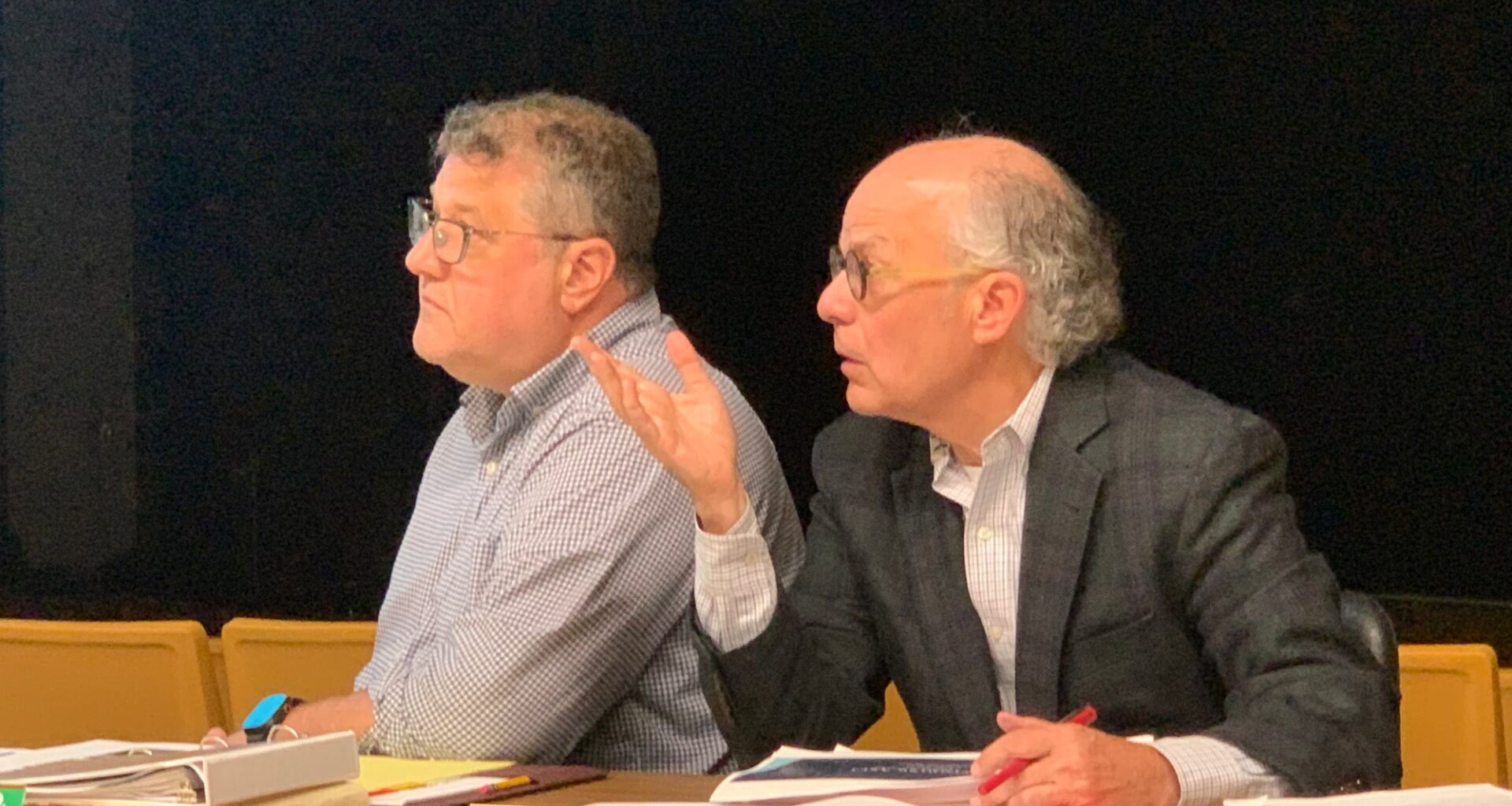
EXETER — The results of the audit of the 2024-25 school year was presented to the Wyoming Area Board of Education on Tuesday. Prepared by the firm CliftonLarsonAllen, LLP, the audit found no unusual transactions, no uncorrected misstatements, and no “other difficulties” with the district’s accounting practices. It also determined that Wyoming Area’s actual expenditures and revenues resulted in much less of a fund balance drain than the school board had anticipated in its budget.
“We have an unmodified opinion on your financial statements, we have an unmodified opinion on compliance,” Carl Hogan, a principal for CLA in King of Prussia, who delivered a presentation on the Wyoming Area audit Tuesday. “Basically meaning, this is a clean audit report.”
The audit found Wyoming Area collected $48.59 million in revenue during the 2024-25 school year, amounting to $2.05 million, or 4.41%, more than budgeted revenue. Differences between the budgeted and actual revenue can be attributed to the district collecting $860,180 in additional local revenue, which includes revenue from property taxes and other taxes and fees the school board imposes, over what had been budgeted; $1.58 million in additional state revenue; and $391,280 less in federal revenue.
The seven-figure gap between budgeted and actual state revenue is the result of impunctuality of the state budgeting process. The General Assembly has habitually passes the state budget, which determines school districts’ state funding, after the school boards are required to adopt their budgets under state law.
State funding for Wyoming Area is set to come in over budget again this year. Tom Melone, whose firm performs business-management services for Wyoming Area, said Tuesday that the state budget the General Assembly adopted earlier this month includes around $490,000 in additional funding for Wyoming Area than the school board had included in its budget. Gov. Josh Shapiro had proposed sending Wyoming Area a similar sum of additional funding in the proposed budget he introduced over the winter, but Wyoming Area excluded the funding to stay conservative in its revenue estimates.
“A lot of the line items, such as taxes and investment earnings came in better than anticipated, but keep that budget practice of being conservative,” Hogan said during his audit presentation. “It’s better to be a little bit over than a little bit under in this line item.”
Expenses, however, were found to be similarly underestimated. Wyoming Area’s actual expenditures for the 2024-25 school year were $48.57 million, a sum that is $897,191, or 1.88%, greater than budgeted expenditures. Hogan attributed these excess expenses to the tuition Wyoming Area needed to pay charter schools and the growing cost of special education – two cost pressures school districts across the Wyoming Valley and throughout the commonwealth have bemoaned as being increasingly unmanageable.
“A lot of that has to do with those costs and the unpredictability of those costs,” Hogan said.
The audit also reviewed the Wyoming Area food-service budget, finding it collected $14,091 in operating revenue and earnings on investment. The vast majority of food-service funding at Wyoming Area came from federal food-service funding, totaling $918,804; and state food-service funding, totaling $163,900. (Wyoming Area qualifies under the Community Eligibility Provision under the National School Lunch program, with the provision allowing every Wyoming Area student to qualify for a free lunch. Pennsylvania currently has universal free school breakfast.) The state and federal funding was nevertheless short of the district’s food-service losses, requiring $102,088 transfer from the general fund.
All these expense and revenue figures meant Wyoming Area finished the 2024-25 school year with revenues $17,562 in excess over expenses, giving them an operating surplus rather than a $1.14 million deficit. Because of other outbound transfers, namely the $102,088 transfer to subsidize food service, the Wyoming Area fund balance still finished the year depleted $84,526 — still marking an improvement over the $1.25 million depletion that had been budgeted. With the actual change being less than $85,000, the Wyoming Area fund balance finished the 2024-25 school year around $4.2 million, close to where the district’s fund-balance level has been since the 2022-23 school year.
Wyoming Area also drew on net $641,584 from its capital fund, ending the 2024-25 school year with $681,107 for future capital projects. Between capital and operational categories, the district’s total fund balance is $4.92 million, including $3.11 million in unassigned funds.
“Typically, what we’re seeing here is that as the fund balance goes up, you’re using that fund balance as needed without it putting it too low,” Hogan said.
Melone said the district received the results of the audit in June and it has already been placed on file with the relevant state authorities.
“The audit came back stating all of our procedures are in compliance,” Wyoming Area Superintendent Jon Pollard said after the school board meeting Tuesday. “It came back clean….”