
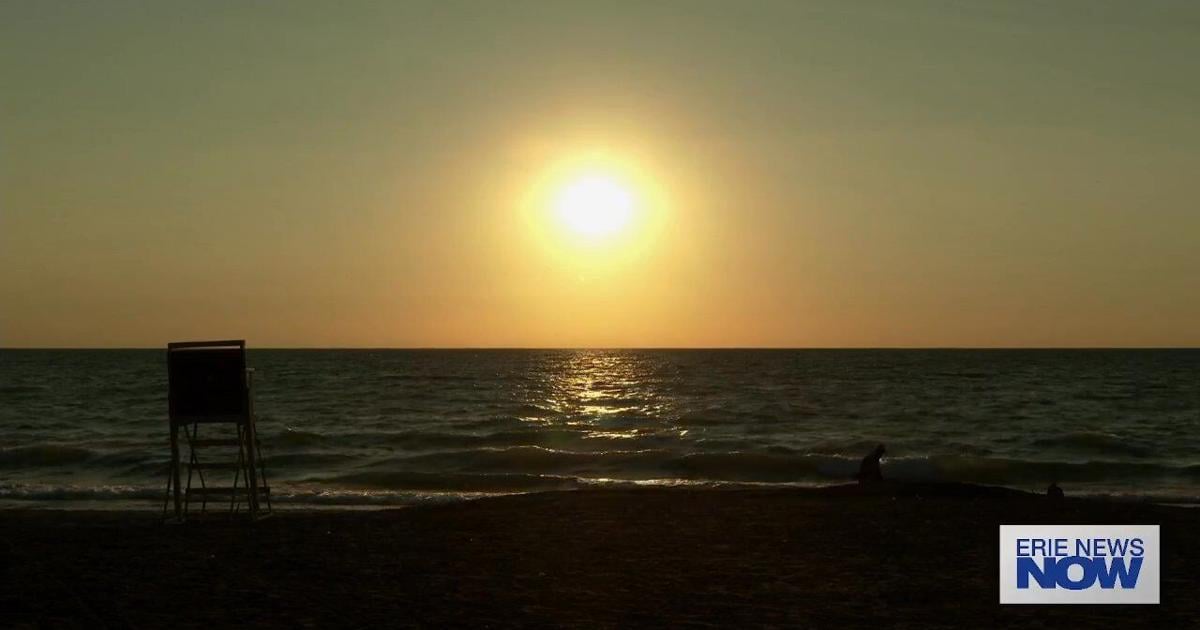
As state and local leaders continue pushing for funding to replenish sand at Presque Isle State Park, visitors from across the country say the peninsula is more than just a local attraction—it’s a destination worth protecting.
Among them are California residents Jane Usatin and Steve Morris, who traveled thousands of miles to visit Presque Isle as part of a historic motorcycle journey.
“I came from the San Diego area. My buddy came from the LA area, and we are thousands of miles from home,” Usatin said.
Presque Isle State Park is one of 12 checkpoints along the historic motorcycle trail the pair is traveling.
“And this is actually the last one of twelve checkpoints that we have to be at from Nova Scotia to here,” Morris said. “This is an important place in American history. The sacrifices that these people made, literally putting their lives on the line. We need to honor them and remember them.”
The California riders aren’t the only visitors making the trip to Erie.
Ohio resident Lynne Laughner said she drove five hours to spend a month exploring everything Presque Isle has to offer.
“We just drove five hours straight to get here,” Laughner said. “We’ll be here for a month, and I’m going to take advantage of everything I can do.”
Environmental officials warn that without continued sand replenishment, the park’s beaches will gradually erode. They say severe storms could eventually breach the narrowest section of the peninsula, separating it from the mainland and effectively turning Presque Isle into an island.
Laughner said preserving the park should be a priority regardless of politics.
“You’ve got to hold onto this,” she said. “This isn’t a Democrat or Republican issue, this is saving our beautiful Presque Isle.”
Joe Pfadt, chairman of the Presque Isle Advisory Committee, said addressing the issue begins with educating the public about the urgency of the situation and working together to identify long-term solutions.
“One is to convey how serious the issue really is and how serious it’s become over time,” Pfadt said. “And two, to begin that process of saying, ‘Okay, here’s the issue. Here’s the problem. What are our ways forward?’ If we can figure out that process locally on our way forward, I think that would be a really, really good first step.”
While the state has committed the anticipated $1.5 million for sand replenishment, officials say federal funding remains uncertain.