
Steel City Underground presents post-game takeaways in our Steelers Offseason Recall series, revisiting key moments from the 2025 season and how they shaped the year that followed.
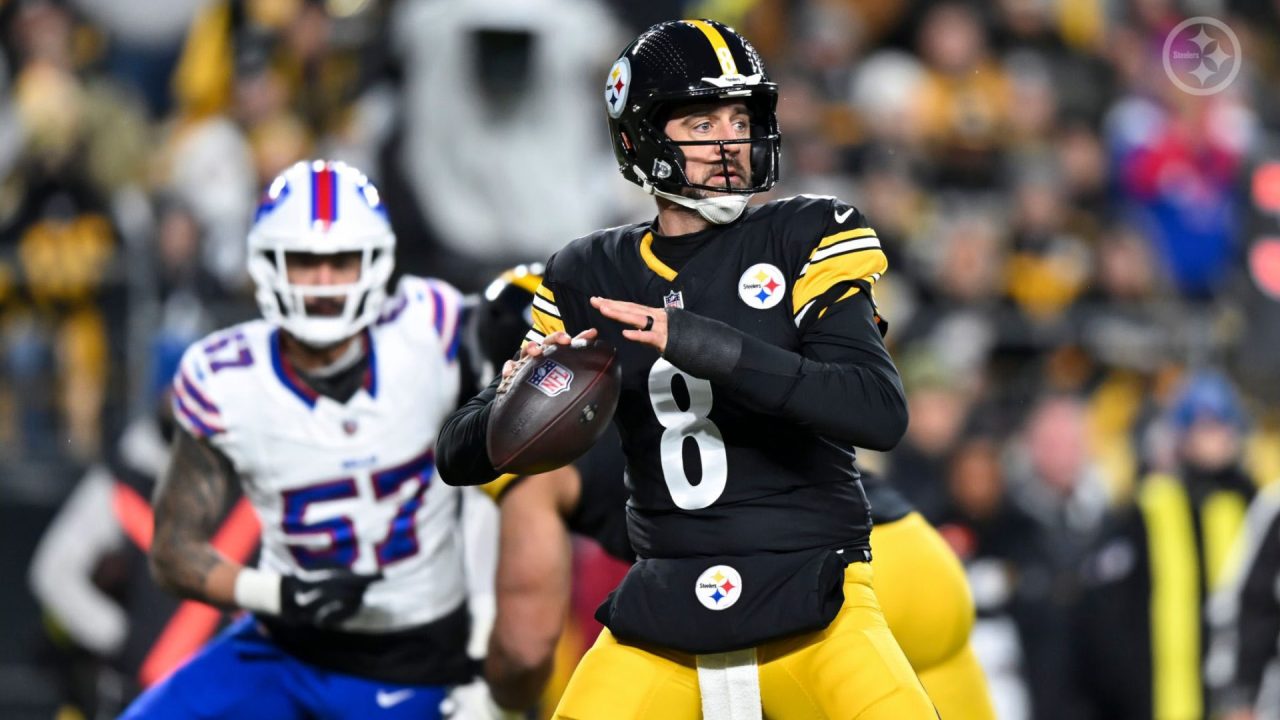
The Pittsburgh Steelers entered Week 13 knowing every game mattered in a crowded AFC North race. Instead of building momentum, they delivered one of their most disappointing performances of the season, falling 26-7 to the Buffalo Bills at Acrisure Stadium.
What began as a defensive battle quickly turned into a lesson in domination. Buffalo controlled the line of scrimmage, dictated the tempo, and exposed weaknesses on both sides of the ball as Pittsburgh slipped back to 6-6. Looking back, this game marked a turning point where many of the Steelers’ lingering issues came together in one afternoon.
Buffalo owned the trenches
The Steelers knew exactly what Buffalo wanted to do offensively. Throughout the week, the focus centered on forcing Josh Allen to beat them through the air by containing the running game. Instead, the Bills did exactly the opposite.
Buffalo rushed for 249 yards, the most ever allowed by a Steelers defense at Acrisure Stadium and the franchise’s worst rushing performance surrendered in decades.
James Cook carried the offense with 144 yards on 32 attempts, while Ray Davis added another 62 yards. Allen chipped in 38 rushing yards of his own, including the 76th rushing touchdown of his career to set a new NFL record for quarterbacks.
The problems weren’t difficult to identify. Pittsburgh rarely lined up in its traditional 3-4 front, struggled to set the edge, and repeatedly allowed the Bills to run nearly identical concepts with little resistance. Whether Cook attacked inside or bounced outside, the Steelers failed to adjust as Buffalo consistently moved the chains.
The frustration wasn’t simply about the numbers. It was the complete lack of answers. Mike Tomlin had challenged his defense to do “historic things” entering the season.
Unfortunately, history was made for all the wrong reasons.
A promising start disappeared after halftime
Despite Buffalo’s dominance on the ground, the Steelers actually entered halftime leading 7-3.
Brandin Echols intercepted Allen in the first quarter, while Nick Herbig forced a second-quarter fumble that briefly swung momentum toward Pittsburgh. Yet the offense failed to capitalize, turning two takeaways into just seven points.
Receiving the opening kickoff of the second half appeared to give the Steelers an opportunity to seize control. Instead, everything unraveled almost immediately.
On the first offensive snap of the third quarter, Joey Bosa beat the protection and strip-sacked Aaron Rodgers. Christian Benford scooped up the loose ball and returned it for a touchdown, instantly flipping the scoreboard and the momentum.
The play also injured Rodgers, forcing Mason Rudolph into action.
Rudolph lasted one series before throwing an interception into triple coverage, giving Buffalo another short field. The Bills quickly turned that mistake into more points, extending the lead to 16-7 before eventually pulling away.
From that moment on, Pittsburgh never seriously threatened again.
Rodgers played through pain, but the offense never found rhythm
Rodgers’ appearance was somewhat surprising after missing the previous week’s game against Chicago. It was later revealed he was attempting to play through three fractures in his left hand, significantly limiting what offensive coordinator Arthur Smith could call.
The Steelers leaned heavily on shotgun formations, avoiding under-center snaps that required Rodgers to securely handle the football with his injured hand. Tosses and pitches replaced traditional handoffs, making an already predictable offense even easier to defend.
Rodgers completed just 10 of 21 passes for 117 yards before briefly leaving with the injury. Although he returned after having his nose taped following the strip sack, the offense never recovered.
The running game offered little support. Jaylen Warren and Kenneth Gainwell combined for only 58 rushing yards as a team, while Warren’s one-yard touchdown represented Pittsburgh’s lone trip to the end zone.
Only three receptions went to wide receivers, all by D.K. Metcalf. Tight end Darnell Washington actually led the team with 45 receiving yards on two catches, while Pat Freiermuth was largely taken out of the game plan and Jonnu Smith‘s miscommunication on a route erased what could have been Pittsburgh’s best scoring opportunity.
By game’s end, the Steelers had managed only 166 total yards on 43 offensive plays.
Buffalo controlled every aspect of the game
The rushing dominance had another consequence: Buffalo completely dictated possession.
The Bills ran 74 offensive plays compared to Pittsburgh’s 43 and controlled the football for an astonishing 41:59. Their second-half drives lasted 8, 15, and 14 plays, consuming more than 21 combined minutes of game clock.
Allen didn’t need to carry the offense through the air, either. The reigning MVP attempted only 23 passes, completing 15 for 123 yards with one touchdown and one interception. Buffalo simply never needed him to throw often because the ground game continually put the offense in manageable situations.
For the Steelers defense, it was an exhausting afternoon spent chasing an offense that never lost control.
A wake-up call before the stretch run
At 6-6, the Steelers remained tied atop the AFC North with Baltimore entering a crucial divisional matchup the following week.
The standings suggested everything was still within reach. The performance suggested something very different.
This wasn’t simply a loss to a quality opponent. It was a complete breakdown in execution, coaching adjustments, offensive efficiency, and defensive discipline. Pittsburgh’s inability to stop the run, sustain drives, or capitalize on takeaways raised legitimate questions about whether the team could contend down the stretch.
Looking back now, Week 13 stands as one of the defining low points of the 2025 season. Buffalo exposed nearly every weakness Pittsburgh had spent months trying to overcome, and the Steelers left Acrisure Stadium searching for answers at the worst possible time.