
A New York City developer distanced itself from its Russian origins as it seeks to build two data centers in Archbald and tries to make inroads in the wary community.
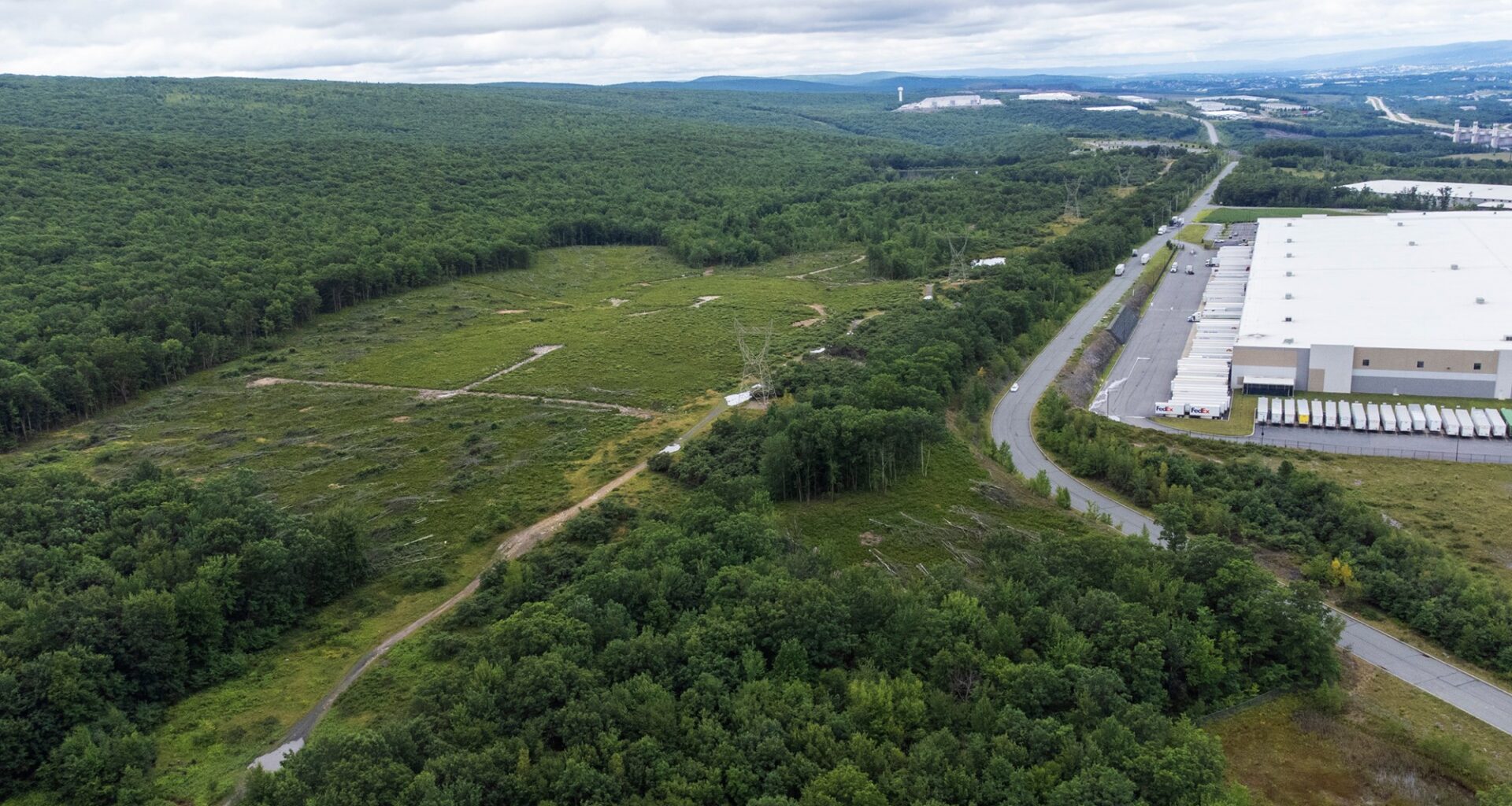
PNK Group is the latest developer to consider Archbald for data centers. It launched a mailer and internet advertising campaign in mid-July to collect residents’ opinions on data centers to be built on industrial land in the Valley View Business Park. The survey highlights the site’s distance of at least a mile from the nearest residential areas.
“First we listen, and then we design,” said PNK Group Chief Development Officer Anton Voronkin.
PNK Group began operations in Russia around 2003, according to archives of a former PNK Group website that used a Russian domain. The company has operated in the United States market since 2017, according to its current website, which touts more than 20 years of experience with international clients across Central and Eastern Europe, as well as Central Asia.
The brand withdrew from Russia in 2024, Voronkin said.
“You can’t really do business in (the) United States if there are any ties with Russia, so that’s why we decided to — the company decided to just withdraw the brand and start developing the business in (the) United States,” he said. “And we’re doing it quite successfully.”
In an interview Monday, Voronkin repeatedly disputed any existing ties between PNK Group and Russia.
“It is very simple — no ties to Russia. That’s it,” Voronkin said. “We wouldn’t be able to do business in (the) United States with any ties with Russia.”
Voronkin said Pennsylvania is PNK’s home base, housing one of its two manufacturing facilities. With plants in Bethel and Georgia, PNK manufactures components of its developments, such as columns, panels and roof structures, he said.
“We basically manufacture the entire building system,” he said.
Locally, PNK Group has so far constructed two warehouses in the Jessup portion of the Valley View Business Park: a 255,776-square-foot building on Valley View Drive, and a 162,907-square-foot facility on Alberigi Drive. PNK also purchased land in Moosic in July for a 460,000-square-foot warehouse on Davis Street.
PNK P1 LLC acquired a 44.5-acre Archbald property nearly 2½ years ago from SLIBCO, the Greater Scranton Chamber of Commerce’s industrial development arm, for just over $3.3 million.
Less than a week later, PNK P1 purchased the land for its Jessup warehouses from SLIBCO for $3.95 million.
The acquisitions were part of PNK buying and developing land on the East Coast, Voronkin said. They built the Jessup warehouses on speculation, he said, meaning they did not have tenants in mind.
PNK bought its Archbald land for industrial use and later realized it would be a suitable site for data centers, Voronkin said.
Archbald conditionally allows data centers in the Valley View Business Park after four former council members voted in November to adopt a zoning ordinance regulating the industry. The legislation, which a group of residents is currently challenging in court, created four data center overlays throughout the town, including one encompassing the business park.
Residents opposed the legislation and urged the town to apply additional restrictions. Opponents pressed the town to limit data centers to industrial land across the Casey Highway from the borough and opposite from the community, the site of PNK’s proposed data centers.
PNK Group wants to understand the concerns of the community, Voronkin said.
“We don’t want to create any negative impact,” he said. “That’s our priority.”
As PNK prepares to work with a town leery of data center development, Voronkin said they plan to talk to stakeholders and learn who they need to communicate with. He pointed to another proposed data center development by PNK Group in Allenwood in Central Pennsylvania.
Voronkin emphasized the importance of committing to their plans in writing, like committing to a closed-loop cooling system.
“I know that there are a lot of promises, right, and statements, so I think what is really important is after you listen to the community, there must be some kind of a process with the local authorities to actually put all that in writing,” he said. “That’s really important. This is how we build trust.”
Although their plans are in the early stages, Voronkin anticipates two data centers with a combined capacity of 300 megawatts, plus a substation. Developments can cost $10 million to $15 million per megawatt, he said.
“In terms of the cost estimate, that’s very early to say, but that’s hundreds of millions and potentially billions,” he said.
The data centers would use a closed-loop cooling system and comply with Archbald’s noise ordinance, he said. Chillers would use magnetic bearings to avoid mechanical friction, he said.
“That basically almost eliminates any vibration that you may have,” he said. “And obviously, there will be noise mitigation measures such as the acoustic enclosures and the noise suppression barriers, just to be compliant with the ordinance.”
PNK Group would build the data centers as “turnkey infrastructure,” essentially constructing everything but the actual computer equipment, Voronkin said.
“You create the entire infrastructure, and then your tenant brings in the racks with the chips and plugs them in,” he said.
Managing the property from start to finish puts more responsibility on the developer because they stay with the community for longer, Voronkin said.
“There’s also a pragmatic reason to that,” he said. “We have to be a much better partner to the community than someone who just develops the land and then sells it.”
Voronkin anticipates formally applying with Archbald within the next two months.
When PNK Group files its conditional use application and initiates the public hearing process, Archbald resident Tamara Misewicz-Healey expects to obtain party status, allowing her to cross-examine its witnesses. A co-founder of the Stop Archbald Data Centers movement, Misewicz-Healey has requested and received legal standing in every data center and power plant-related hearing in Archbald this year.
As an industrial hygienist and mother of three young children, she often focuses on how projects affect public health and safety, the risks of a development and the controls developers consider to minimize those risks.
PNK’s approach to the community is respectful, though its survey, which initially misidentified the borough and county, was “not a great first impression,” Misewicz-Healey said. Those details were soon corrected.
She hopes the developer is sincere.
“If it is genuine, I do appreciate it, and I hope we would continue to see it,” Misewicz-Healey said. “But words are words, and actions are actions.”