
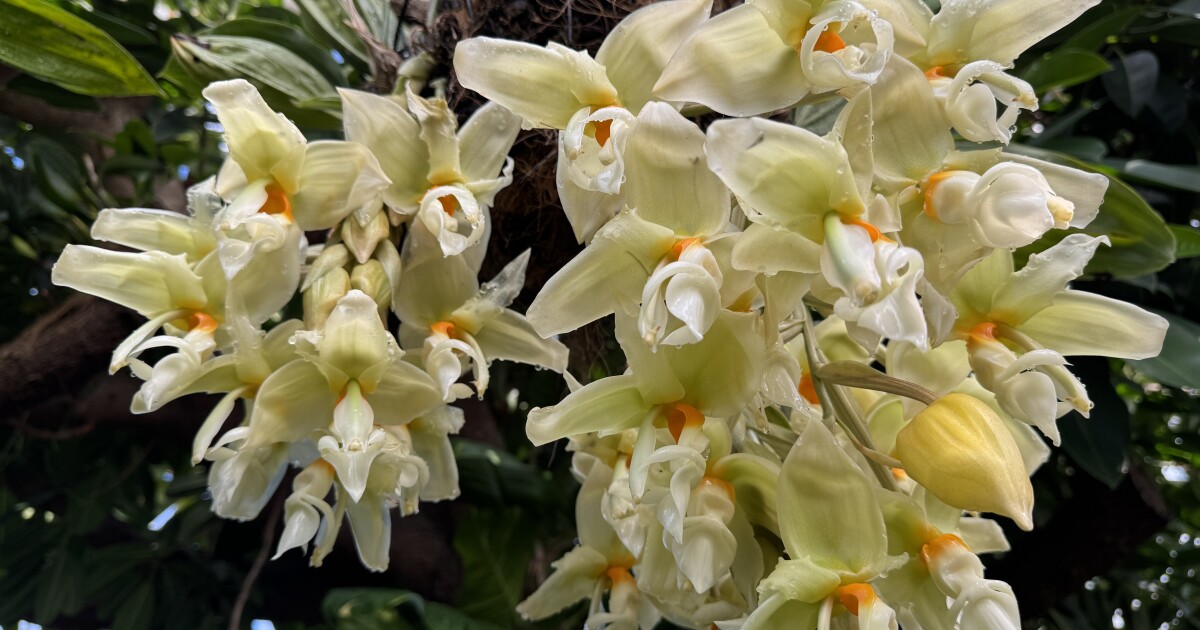
Something sweet is blooming for a short time over at Phipps. Two orchid species are in bloom with what is described by horticulturists as dramatic flowers, intense fragrance and unusual blooms.
The orchids are hanging in the Orchid Room at Phipps Conservatory, where they grow in their distinct downward pattern and fill the room with an alluring fragrance that greets you from the moment you step in.
“For me, it’s like vanilla, fruity, but a little bit like very expensive perfume,” said Thathmini Kularatna, the orchid horticulturist at Phipps Conservatory. “Some people definitely think it’s like vanilla and maple syrup.”
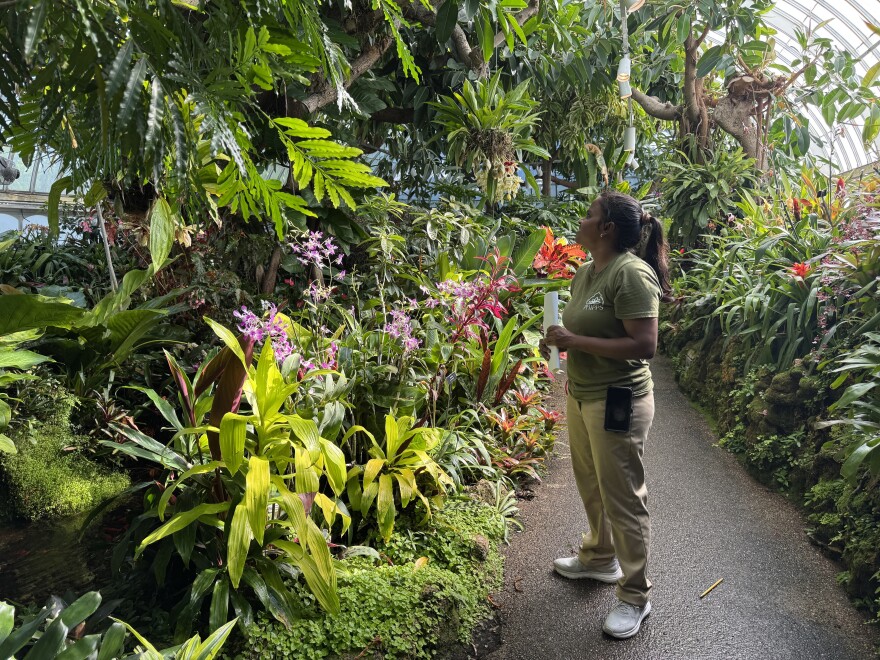
Orchid horticulturist Thathmini Kularatna checks in each morning with the orchids.
The first of the orchids is Stanhopea tigrina, native to Mexico and the other is Stanhopea wardii, native to Central and northern South America. Both blooms are rare because the flowers emerge only for a short period — and never more than a few days.
The Stanhopea tigirina blooms into a massive, yellow flower with deep maroon stains and spots, sometimes called the tiger orchid. Its powerful fragrance attracts more than just flower lovers, it also attracts euglossine, or orchid bees, who collect the fragrance to attract a mate.
The bees slip on the bloom’s waxy surface and are guided along a route that places pollen on their bodies, which will inadvertently lead to pollination once they escape with the fragrance and pollen in tow.
The Stanhopea wardii are smaller and resemble a duck beak, white with an orange petal. Their fragrance can perfume an entire greenhouse, and growers often notice the scent before they see the blooms, according to the conservatory.
But while their fragrance is their shining quality, Kularatna said their odd shapes are sometimes described as looking like predators and aliens. She said guests mistook their appearance as a new addition for the Alice in Wonderland exhibit that is going on concurrently in other parts of the garden.
“I’m like, I never thought about it! But it just aligned with the timeline,” she said. “These flowers do not look like a typical orchid flower at all.”
In nature, both Stanhopeas grow as epiphytes (a plant that grows on another plant and derives moisture and nutrients from air, rain, water or from debris around it) on trees and therefore depend on an intact forest. So if they are seen in the wild, it’s usually a good sign that the forest has a healthy ecosystem. Kularatna says due to habitat loss, they are endangered in the wild, and it’s a challenge even to get them blooming in Phipps’ controlled conditions.
Kularatna got her start as an orchid specialist in Hawaii, but she said right here is the place to be for orchids.
“I love Pittsburgh. I like the green. I like the tiny mountains. And also I like the fact we have nearly 57 native orchids in Pennsylvania. Hawaii only has two native orchids.”
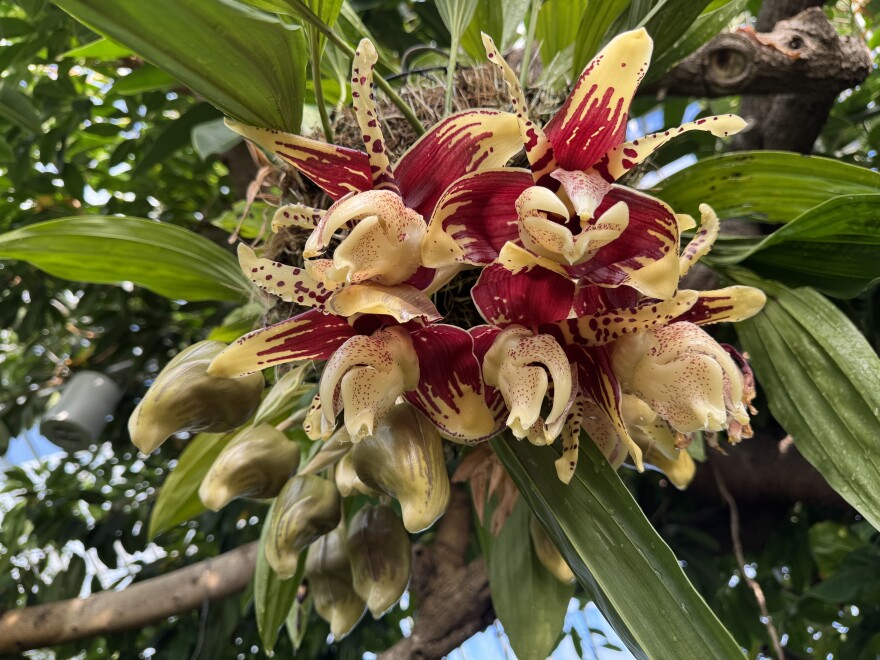
Stanhopea tigrina with a handful of bloomed flowers. The rest will bloom within the week.
You can find these rare Stanhopeas, the only ones on display in Western Pa., for just a week more at Phipps Conservatory. Phipps is located in Schenley Park and is listed on the National Register of Historic Places for its unique Victorian greenhouse architecture.
Orchids, too, have their place in Victorian history, for what was called “orchideliruim” or orchid fever, when there was a rush for collecting and discovering orchids by the wealthy in London. Orchid-hunters were hired to travel to tropical places to bring them back for the collector, sometimes resulting in danger for the hunter, the environment and even the species themselves.
And while these latest blooms at Phipps might not cause a delirium, their rarity and fragrance should at least promise a pleasant visit for parkgoers.

The duo of rarely bloomed orchids fill the room with sweet fragrance.