
Keeping a legacy alive
While King was assassinated 58 years ago, West Philly community members remain dedicated to preserving his legacy. A state historical marker commemorating the 1965 Freedom Now address sits at the closest intersection, erected in 2010 by the Pennsylvania Historical & Museum Commission. In 2025, the block was named the “Rev. Dr. Martin Luther King Jr. Triangle.”
Local businesses also pay homage to King. Plant and People, a plant shop and cafe located where King gave his Freedom Now speech, features framed photos of King around the shop. Inside, Makeba Rainey, a Philadelphia-based artist, hosted an interactive pin-making workshop. At her station, festival participants could customize Black history-themed pins, featuring portraits of King and messages about liberation.
“I’m mostly a digital collage artist, and I’m here because Martin Luther King is one of my favorite people to make portraits of,” Rainey said. “I try to make a portrait of him every year, and I think this is a great event and opportunity to just recognize that we are in the same spot that he was in years ago.”
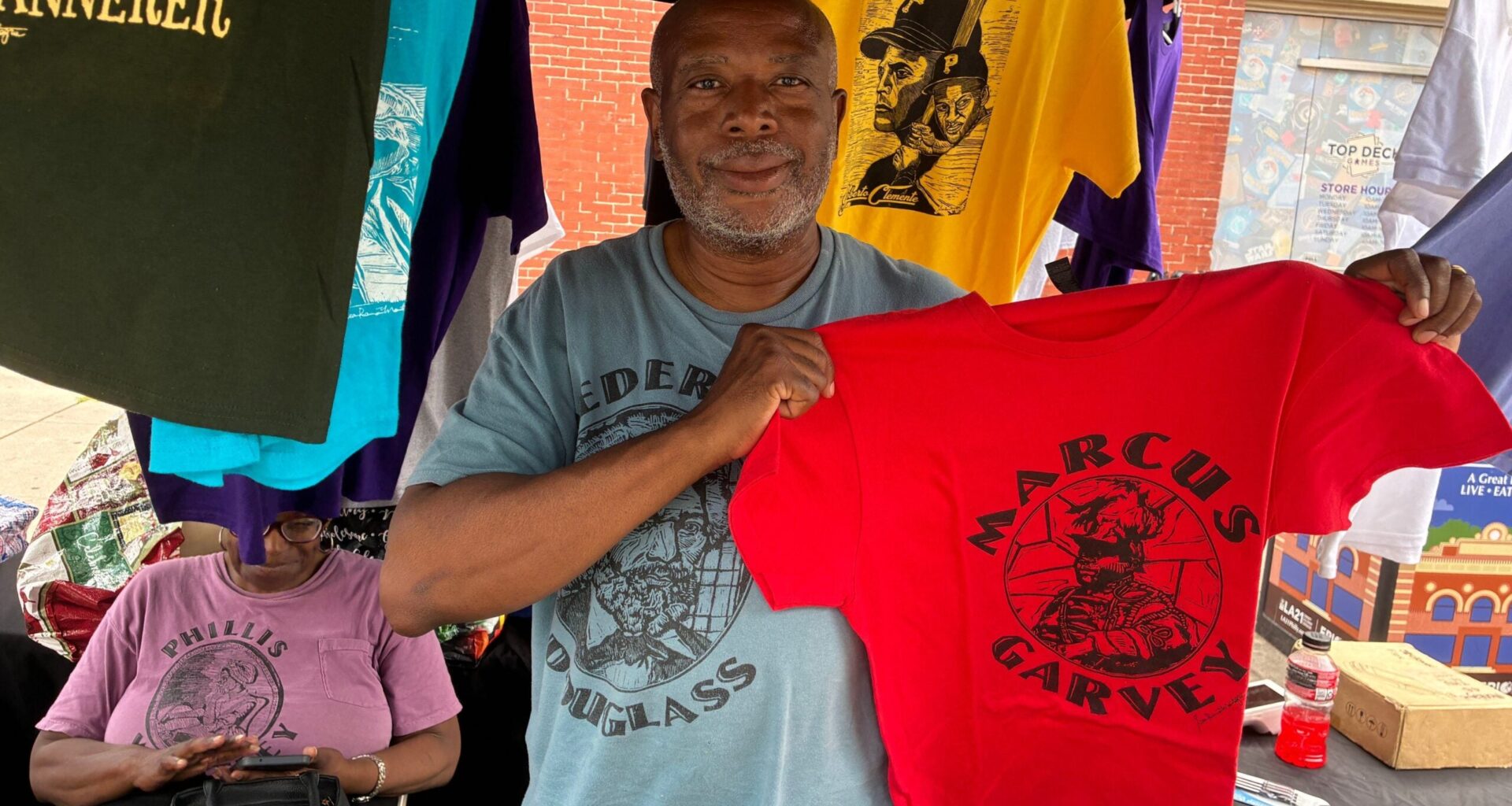
Other artists, like Sean Ramon Montague, founder and owner of Ethnicitees LLC, traveled from out of town to honor King at the festival. Montague, who is from Baltimore, designs educational T-shirts featuring Black historical figures, preserving their stories through wearable art.
“I was a teacher in Baltimore City Public Schools. I was tired of schools not teaching African American heritage to our kids … so we’re here today and spreading the legacy and continuing the legacy of Dr. Martin Luther King,” Montague said.
Joe Becton, a historian of Philadelphia Black history, said the city has a long and rich legacy of activism that expands beyond King. Reflecting on the meaning of freedom, Becton told the crowd to remember the perseverance of the Black community.
“Right now, it’s a backlash, and we’re getting kicked. But we’ve been kicked before, and when it’s all over, we are going to be the ones who define and identify what freedom is for Philadelphia, for the United States, and for the entire world,” Becton said.
Preserving the legacy of King, Gauthier said, includes applying his message of liberation to modern struggles. Gauthier said these struggles include attacks on immigrant communities and community programs and the censorship of Black history.
“Dr. King came to West Philly because he knew that this community had a long tradition of organizing for justice, and more than 60 years later, it’s our responsibility to carry that tradition forward,” Gauthier said. “Now more than ever, we have to speak truth to power, to roll up our sleeves and fight for a city in a country where everyone can thrive.”