
![Pennsylvania woman's papers serve as doorway to Holocaust understanding [opinion]](https://www.newsbeep.com/us-pa/wp-content/uploads/2026/08/REG-L-WWIIWeekend673-1920x1024.jpg)
By Cindy Silverman Chronister
Inside the shadow box I carried to World War II Weekend are my grandparents’ passports, each stamped with a large red “J.” Beside them sits my grandfather’s reissued birth certificate, altered by the Nazi government, and an envelope marked geöffnet, “opened.” Nazi authorities had read that letter before my grandparents did.
Years ago, my mother handed me a box filled with family letters and documents. At the time, I thought I had inherited a collection of papers.
Instead, I inherited the story of my grandparents Karl and Mathilde Reiser, Austrian Jews who escaped Vienna in 1939, and of the parents, siblings, and relatives they left behind, most of whom would be deported and murdered.
In June I brought some of those documents to the Mid-Atlantic Air Museum’s annual World War II living history event at Reading Regional Airport, where visitors experience military encampments, aircraft, vehicles, reenactments and personal stories from the war.
Representing 3G Philly, an organization of grandchildren of Holocaust survivors, I invited visitors to explore my grandparents’ story through the documents they carried as they fled Nazi Vienna, answering questions and giving presentations throughout the weekend.
The Nazis intended these documents to isolate and mark Jews. The large red “J” on my grandparents’ passports was designed to separate them from the society around them, to identify them as different, and to restrict where they could belong.
Eighty years later, those same documents do something the Nazis never intended.
They invite people closer.
Throughout the weekend, visitors stopped at our exhibit where my grandparents’ passports, letters, photographs, and other documents were displayed. The large red “J” stamped across the passports was difficult to ignore. So were the Nazi seals covering the documents. People leaned in, trying to make sense of what they were seeing.
These were not reproductions or museum artifacts. They were the documents my family carried as antisemitic laws narrowed where Jews could live, work, travel, and belong.
The documents stopped people.
The questions that followed kept them there.
One man studying the passports remarked that it was fortunate my grandparents had them, since they were able to leave.
I explained that the passports were not symbols of freedom. The red “J,” the forced names imposed on Jewish men and women and countless other regulations were all part of a system of exclusion. These documents were evidence of rights being stripped away long before deportation and murder.
He had never considered that the passport itself was part of the persecution.
What struck me was how often that happened throughout the weekend.
People lingered over maps and photographs. They wanted to understand how a Jewish community of nearly 200,000 people in Vienna in 1938 could be reduced to only a few hundred visible Jews by 1942 through emigration, deportation and murder.
Again and again, I found myself explaining that the Holocaust did not begin with gas chambers. It began years earlier with words, laws, paperwork, restrictions and the gradual exclusion of Jews from public life. Many visitors understood the Holocaust through its ending. I wanted them to see it as a process.
Yet the questions people asked were rarely only about history.
One of the most meaningful conversations came after a 40-minute presentation about my family’s story. A man approached me afterward. He had listened as I spoke about Karl and Mathilde and the family members whose letters survived even when they did not.
For several minutes, he asked questions about my family, the Holocaust, and the rise in antisemitism today. Eventually, he became emotional.
“I don’t understand hatred like this,” he said.
Then he asked, “What can I do?”
I told him that when a non-Jewish person speaks out against antisemitism, it carries a different weight than when a Jewish person does. That education matters. That speaking up matters. That refusing indifference matters.He listened carefully before looking at me and saying, “You can count on me.”
His words reminded me of another visitor I had met the year before, someone who left our conversation asking the same question.
What can I do?
Unlike most visitors, he did not let the question end there.
Within days of World War II Weekend, I stood before a room of retired businessmen. The gentleman introducing me had first stopped at our exhibit the year before.
He smiled, looked around the room, and said, “Last year, after meeting Cindy and hearing her family’s story, I left asking myself, ‘What can I do to help?’”
Then he gestured toward the audience.
“I have Cindy here today. This is my answer.”
That sentence has stayed with me.
Neither man could change what had happened to my family. Neither could undo the history that brought them to my table. But both chose something that was still available to them. One chose to speak. The other chose to act.
History had become responsibility.
Years ago, when my mother handed me the box of letters and documents, I never imagined it would lead to moments like these.
What I inherited was more than a family archive.
The objects in the shadow box are evidence of lives that existed before the machinery of persecution tried to erase them. Yet they do their most important work when they spark a question, challenge an assumption, or invite someone to see the past differently.
Once, those documents were used to separate people.
Now they bring people together.
Again and again, people step through that opening. They arrive asking about documents and leave thinking about people.
Years ago, I thought I had inherited a box of papers.
What I actually inherited was a doorway.
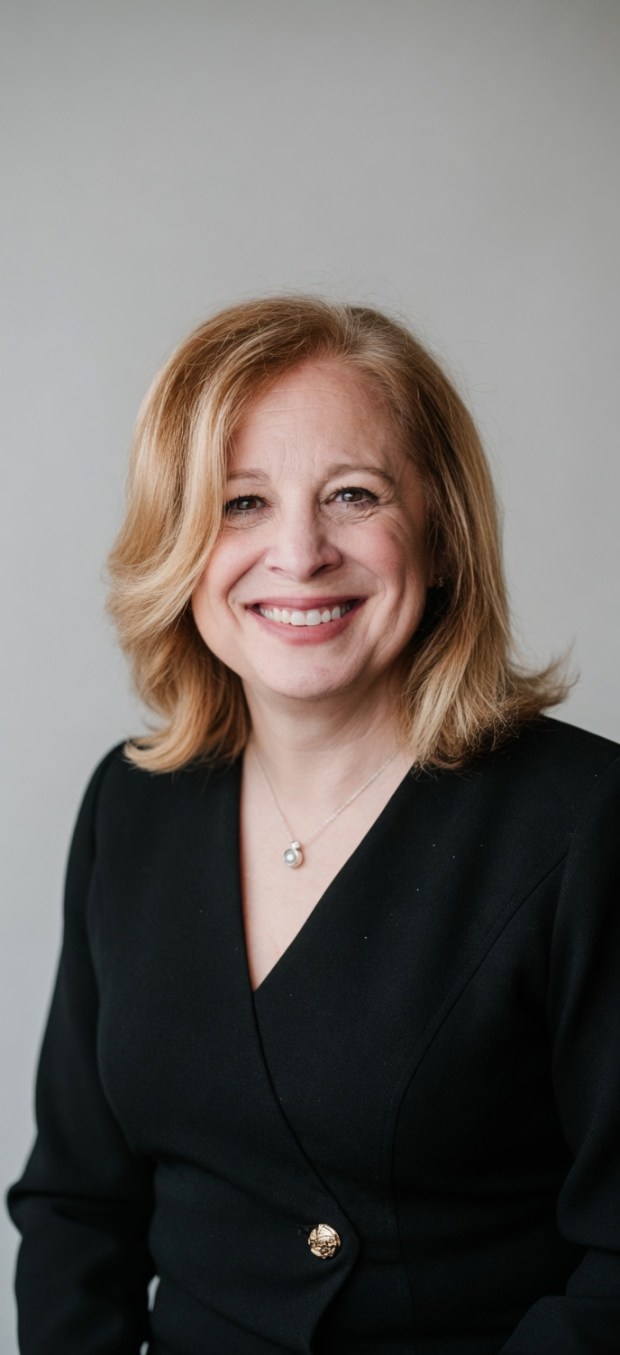 Cindy Chronister
Cindy Silverman Chronister is part of 3G Philly, a group of grandchildren of Holocaust survivors who work to preserve and share their stories.