
PENNSYLVANIA (WJAC) — A product sold legally in smoke shops and convenience stores across Pennsylvania is drawing renewed scrutiny as federal officials move to crack down on high-potency kratom-derived products and state leaders weigh whether broader regulation is needed.
The Cambria County coroner has investigated six deaths since 2019 in which kratom was detected in the person’s system. The Pennsylvania Department of Health also reported 38 deaths in 2024 in which kratom was identified as being a factor.
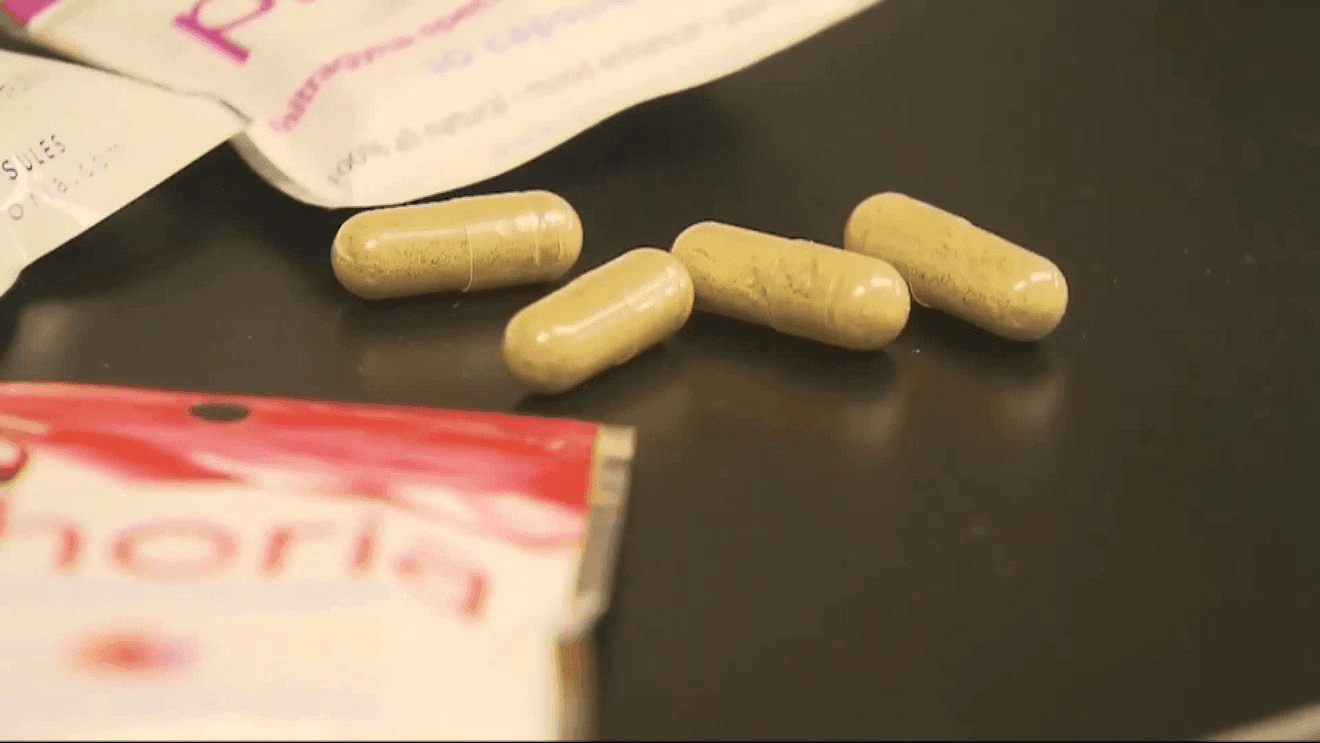
Kratom is a tropical plant native to Southeast Asia. Historically, its leaves have been chewed to help relieve minor pain and fatigue. Officials at Conemaugh Memorial Medical Center say interest in kratom has grown significantly as it has become more widely available.
“It’s actually estimated that overall one to three million people use it annually in the U.S., with lifetime use estimated between 10 and 13 million,” said Dr. Aditya Lal Vallath, a resident physician in emergency medicine at Conemaugh Memorial Medical Center.
Vallath said highly concentrated kratom-derived products have entered the market and can be much more potent than natural kratom, but he said natural kratom can also carry risks.
“But that being said, any medication—or really any substance—that affects those receptors has the potential for dependence,” Vallath said. “Some studies show it’s not as addictive as opioids. Other studies suggest it can still be addictive.”
The higher-potency products are typically marketed as 7-OH. The DEA has temporarily placed high-potency 7-hydroxymitragynine, known as 7-OH, into Schedule 1 of the Controlled Substances Act, while natural kratom remains unscheduled. As of Aug. 5, those high-potency products can no longer be sold.
Pennsylvania Attorney General Dave Sunday said his office is prepared to enforce the change.
“They should make sure they take the time to figure out if what they’re selling is lawful or not,” Sunday said. “My hope is that people selling illegal products remove them from their shelves—or someone else may remove them for them.”
Visits to several vape shops across the region found kratom products remain popular. One employee, who asked not to be identified, said kratom products are extremely popular and claimed to have seen customers who appeared dependent on both natural kratom and high-potency 7-OH products. The employee said some customers refer to the products as “gas station heroin.”
The American Kratom Association says many people use natural kratom to help manage pain or while trying to stop using opioids. The association argues natural kratom leaf products create a dependence more comparable to caffeine than to opioids.
“Natural kratom leaf products create a dependency, and obviously that should be managed by the consumer, but it is similar to a caffeine dependency and you can self-wean off of it in the natural kratom leaf products. That’s a critical distinction from these chemically manipulated 7-OH products,” said Mac Haddow, senior fellow on public policy for the American Kratom Association.
The association also supports regulating kratom products.
“So we think vape shops, convenience stores—it doesn’t matter where you buy this product—should only sell safely formulated, properly labeled products and enforce age restrictions. That’s the way to protect consumers,” Haddow said.
Cambria County District Attorney Jessica Aurandt said existing laws can apply to driving under the influence of kratom, but she believes additional regulation could help.
“We in the justice system view that as a drug. So if you are using or ingesting kratom in any way and driving, that can result in a DUI charge that we are able to prosecute,” Aurandt said. “My hope is that there can be some sort of regulation before we begin seeing more serious consequences.”
In Harrisburg, state Rep. Scott Conklin said a constituent who lost a loved one after using kratom first brought the issue to his attention years ago, and he said the topic has repeatedly surfaced in the Legislature.
“There’s actually two bills in the legislature and every year for probably the last decade there have been bills to either look at Kraytum make sure it’s it’s appropriate for the public and it’s it’s something that is very very popular,” Conklin said.
State Rep. Mike Armanini said he has also heard from families impacted by kratom and believes stronger regulation should be considered.
“We should be doing everything we possibly do lesson the addicting drugs that are available over the counter not available to protect as many Pennsylvanians as we can if we truly want to help the welfare of individuals and to keep them away from other drugs that are easily accessible we need to make stronger laws,” Armanini said.
While natural kratom leaf products remain unscheduled under federal law, high-potency 7-OH products subject to the new federal action are no longer permitted to be sold. Prosecutors say they expect retailers to remove those products from their shelves as lawmakers continue debating whether Pennsylvania should adopt broader regulations for kratom.