
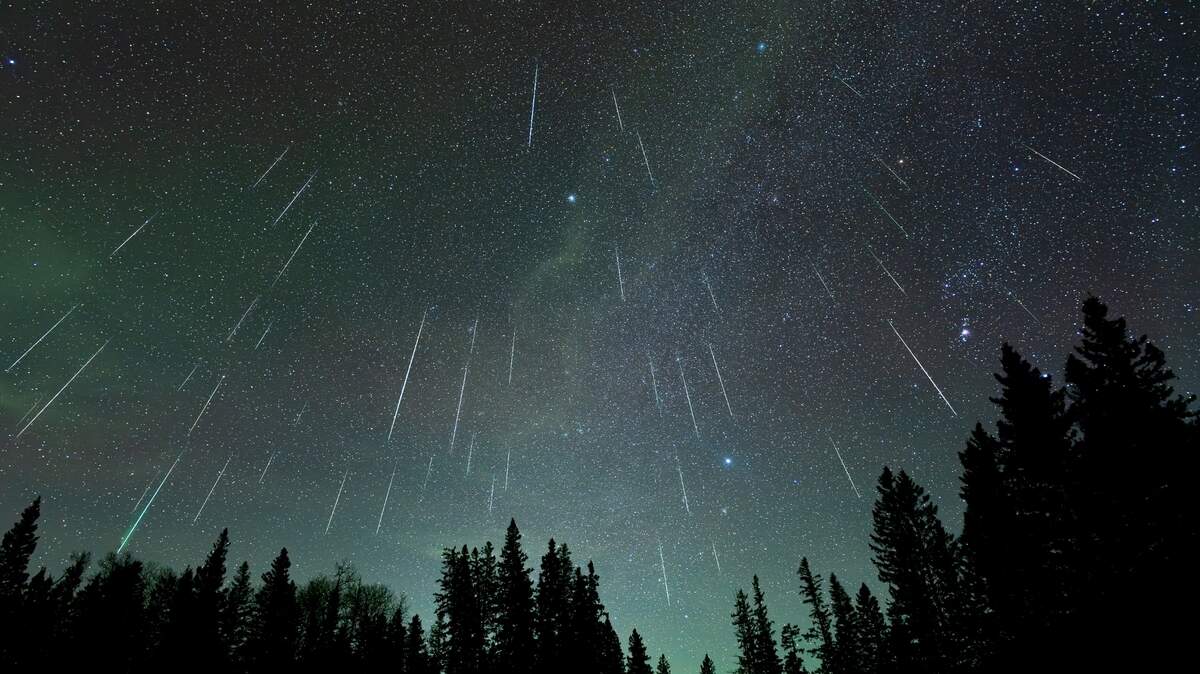
Here’s when to see the Perseid meteor shower peak over Pennsylvania this month.
Shutterstock
Pennsylvania stargazers will soon get a chance to see the fan-favorite Perseid meteors peak, and viewing conditions are expected to be optimal.
The American Meteor Society describes the Perseids as the “most popular” meteor shower of the year, as they peak on warm August nights in the Northern Hemisphere.
The Perseids became active July 17 and run through Aug. 24, and the shower’s peak is expected to be Wednesday, Aug. 12 to Thursday, Aug. 13. The exact maximum timing can vary based on the year.
“The Perseids happen every year when Earth passes through a debris stream left behind by Comet Swift-Tuttle,” NASA reports. “As those tiny bits of comet dust hit our atmosphere at high speed, they burn up as bright streaks of light.”
Spotting a meteor doesn’t require special equipment, according to NASA. The agency reports for the best view of the meteor shower, you should look to the northeast after dark and watch for the constellation Perseus, as that’s where the Perseid meteors originate. NASA astronomers recommend finding a dark, open space and giving your eyes 30 minutes to adjust.
Conditions should be optimal for viewing the Perseids this year, the American Meteor Society reports, as the moon will be new Aug. 12.
AccuWeather forecasts the night of Aug. 12 will have a low temperature around 62 degrees Fahrenheit in State College, with “rather cloudy” skies. The night of Aug. 13 may provide better viewing conditions, with a low temperature forecast around 60 degrees and partly cloudy skies expected.
The sun will set over State College at 8:13 p.m. Aug. 12, and 8:12 p.m. Aug. 13, according to online clock Time and Date.
More stargazing events to see from Pennsylvania
There will be five more full moons to catch a glimpse of in 2026, including two “supermoons.” Here’s when to see them, from Astronomy.com:
Friday, Aug. 28: Sturgeon moon and partial lunar eclipseSaturday, Sept. 26: Corn moonMonday, Oct. 26: Hunter’s moonTuesday, Nov. 24: Beaver moon (supermoon)Wednesday, Dec. 23: Cold moon (supermoon)
Pennsylvania stargazers can also enjoy viewing several more meteor showers this year. In addition to the popular Perseids in August, check out the Orionids in October, the Leonids in November and more.
If you’d like to get together with others who enjoy astronomy, the Central Pennsylvania Observers will host a free, public stargazing event 8 to 10 p.m. Saturday, Oct. 3, weather-permitting.
Related Stories from Centre Daily Times

Belleville News-Democrat
Meredith Howard is a service journalist with the Belleville News-Democrat. She is a Baylor University graduate and has previously freelanced with the Illinois Times and the Pulitzer Center on Crisis Reporting.
Support my work with a digital subscription