
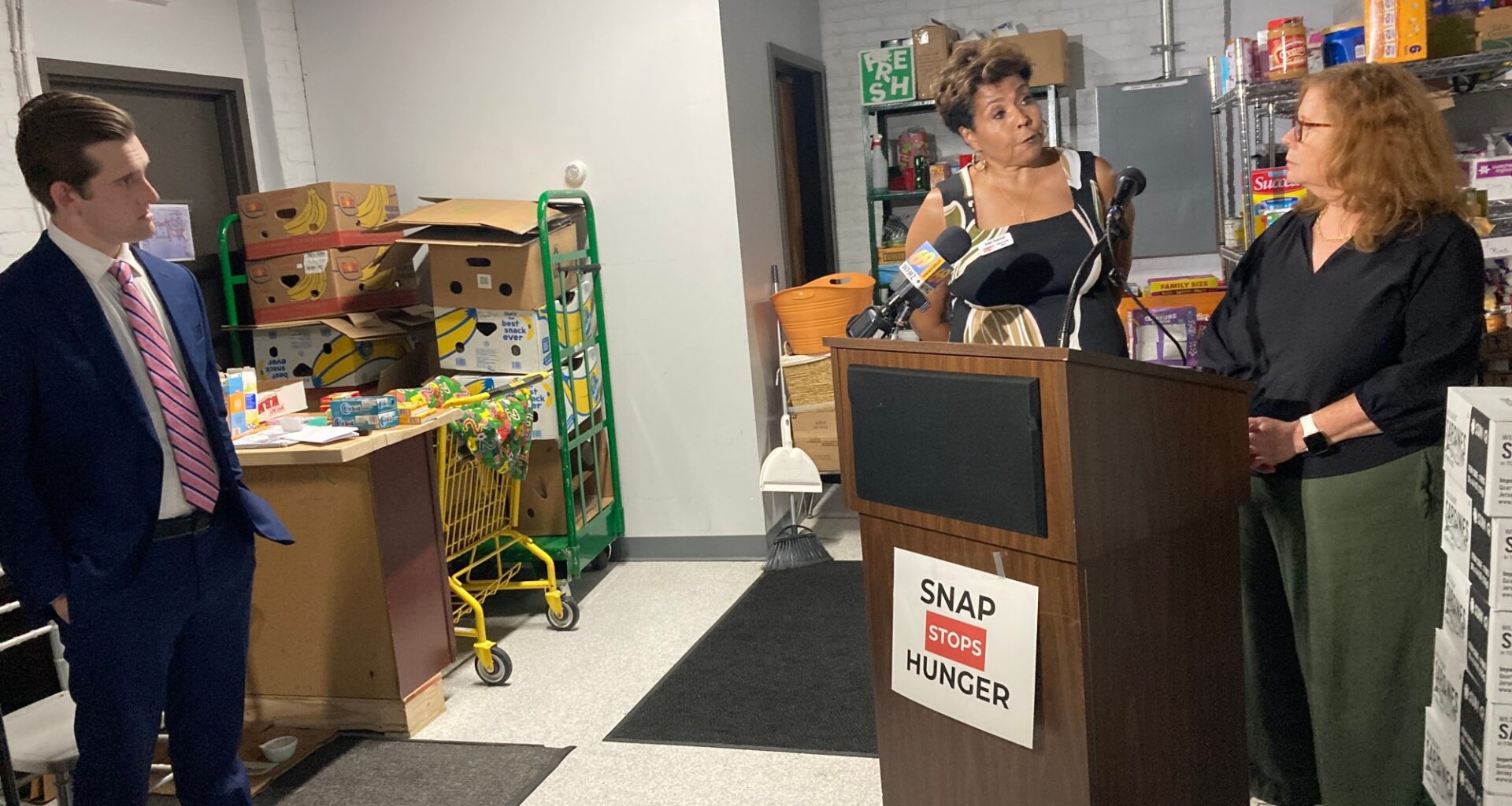
Advocates gathered in Allentown Monday morning to warn of an “emerging crisis” in hunger, as restrictions to SNAP food benefits have led to hundreds of thousands of people losing access to that program.
Lehigh County Executive Josh Siegel, speaking at a news conference at the Allentown Area Ecumenical Food Bank, one of the largest such organizations in Pennsylvania, blasted the cuts as “legalized theft” of benefits to Americans who he said are entitled to them.
“We are here today, in part, to call attention to an emerging crisis, a crisis of cruelty and hunger, and, frankly, manmade famine,” Siegel said.
Changes to the program, which took effect late last year under the Republican-backed “Big Beautiful Bill,” require people ages 18-64 who receive benefits to prove to the government that they work, volunteer, job search or participate in training programs for at least 20 hours a week (with some exceptions) in order to receive SNAP benefits.
Refugees, people seeking asylum and foreign-born people escaping domestic violence also lost access under the new restrictions.
Food bank leaders said that despite the bill’s purported intent to ensure the benefits are reserved for working people, many of their clients are, in fact, employed. They have lost their benefits because of confusion surrounding the additional paperwork requirements needed to prove their employment to the government, they said.
Anne Egan, executive director of the Allentown Area Ecumenical Food Bank, said the organization has seen a 55% increase in new clients over the past two months.
“The majority of them that we have spoken to and asked the questions are people who have had their SNAP either cut, or taken away, and most of them are working, and they just can’t make ends meet between their income and then the price of gas and all of that,” Egan said. “It’s just so challenging.”
Nationally, over 4 million people have lost access to SNAP due to the new restrictions, including around 400,000 in Pennsylvania, according to a study by the left-leaning think tank Center on Budget and Policy Priorities.
In Lehigh County, participation in SNAP has declined by 10% since the increased restrictions took effect, including a 9% drop in participation from children enrolled in the program, according to Siegel.
At the same time, federal funding to food bank distributors like Second Harvest Food Bank, which supports over 200 pantries in the Lehigh Valley, also has decreased under the Trump administration, further straining resources.
“We saw the impact when benefits were reduced before,” said Dawn Godshall, executive director of Community Action Lehigh Valley, which oversees Second Harvest. “Families were hurt, food banks were stretched. Our community stepped up, but charitable food assistance can never replace the strength and stability that SNAP provides. The question before us is simple. How many children and families must grow hungry before we decide that enough is enough?”
Food banks in the Lehigh Valley need additional donations and funding to keep up with what they expect to be a sustained increase in demand, as millions of people are expected to permanently lose SNAP access nationally. According to the Congressional Budget Office, funding for SNAP is expected to decrease by around $138 billion by 2034 due to the new restrictions.
Around 58,000 people in Lehigh County are considered “food insecure,” according to Godshall, meaning they do not have reliable access to enough affordable and nutritious food.
Siegel, who is expected to present a county budget proposal by the end of the month, said that while negotiations are still being finalized, he intends to allocate at least some fund toward food access efforts.
Outside of new government revenue streams, food bank administrators and leaders are asking the community to step up — volunteer, hold food drives or donate money directly to a food bank or pantry organization.
“Were seeing both an increase in clients and a decrease in products,” Egan said. “So this time of year what we really are looking for, right now, is any support we can get from this community, because it is the community who has come together to support us.”
For more information, go to Allentownfoodbank.org or SecondharvestLV.org.
Reporter Lindsay Weber can be reached at Liweber@mcall.com.