
Two newly funded projects in Allentown are testing how to expand affordable housing, one by building new homes, the other by reimagining existing spaces.
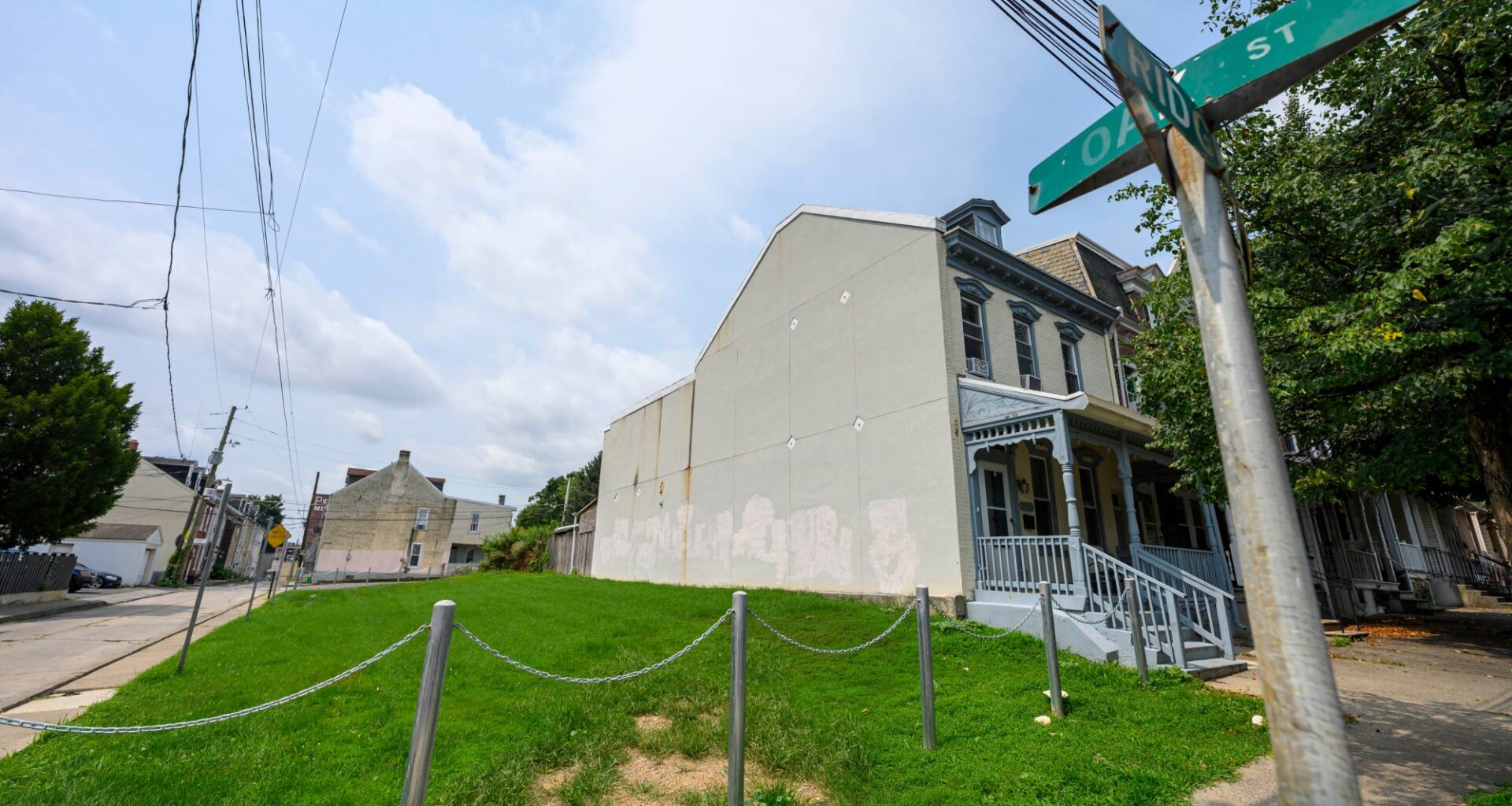
The Allentown Housing Authority plans to build affordable housing on a vacant city-owned lot off Ridge Avenue that could become a template for affordable homeownership across the city.
Meanwhile, across town, a coalition of churches is asking another important question: Can underused sanctuaries, classrooms and church property become the next generation of affordable housing?
Though they’re taking adifferent pproaches, the two projects share the same goal of expanding affordable housing in a city where rising home prices, limited inventory and growing demand have made stable housing increasingly difficult for working-class people to attain.
Each recently received $100,000 through the Pennsylvania Housing Affordability and Rehabilitation Enhancement program, part of a $1.45 million package announced in June to support housing initiatives throughout the Lehigh Valley.
Together, the projects reflect two ways local organizations are trying to expand affordable housing: building homes on vacant land and reusing existing buildings.
Building a model on Ridge Avenue
The Allentown Housing Authority plans to use its PHARE funding to begin developing a financially accessible, single-family home at 228 Ridge Ave., a vacant parcel the authority has owned for some time.
For families priced out of today’s housing market, the goal is simple: Prove an affordable home can still be built on a small city lot. The project is intended to serve households earning up to 80% of the area’s median income while creating a prototype that could eventually be replicated on vacant lots throughout Allentown.
Rather than simply filling an empty parcel, housing authority Executive Director Julio Guridy said the goal is to demonstrate that modest, affordable homes can still be built in neighborhoods where homeownership has increasingly slipped out of reach.
“The average house in the Lehigh Valley is selling for three, four or even $500,000,” Guridy said. “It’s very difficult for low-income or middle-income individuals to buy a house.”
The authority hasn’t finalized construction plans or total project costs. Guridy said officials are working with an architect who previously developed similar homes in Easton and are still determining how much additional funding will be needed beyond the PHARE grant.
Because the project remains in the planning stages, no construction timeline has been established.
Still, Guridy believes the home could become more than a single affordable unit.
“We’re trying to build or sell properties so families that can’t afford to buy a house can build equity,” he said. “Eventually they own that home, and that creates stability for generations.”
The authority has also rehabilitated older homes for income-qualified first-time buyers, an effort Guridy said includes forgivable deferred assistance for qualifying purchasers.
The Ridge Avenue project, however, marks the authority’s first effort to build a prototype designed specifically for replication. It also fits within broader neighborhood revitalization efforts.
Guridy said the property sits among Allentown’s oldest and most diverse neighborhoods, where the authority has been working with Blueprint Communities, an initiative to rehabilitate housing and strengthen community investment.
“We want to beautify that area as much as we can,” Guridy said. “It’s one of the poorest areas in the region, but it’s also one of the most diverse.”
Turning churches into housing partners
While the housing authority is starting from the ground up, another group is looking upward at excess church properties.
Faith & Home, a partnership between the Lehigh Conference of Churches and Lehigh University’s Small Cities Lab, aims to convert portions of underutilized church properties into affordable housing.
The concept grew out of conversations that Lehigh Conference of Churches Executive Director Abigail Goldfarb began having after the COVID-19 pandemic, when congregations increasingly questioned how to use large buildings that no longer matched their shrinking memberships.
Church leaders, she said, repeatedly called her asking variations of the same question.
” ‘We don’t need this huge parking lot. We don’t need a sanctuary that seats 2,000,’ ” Goldfarb recalled them saying. ” ‘How can we use these assets to help our community?’ “
Rather than selling those properties outright, organizers began exploring whether they could be adapted into housing while allowing congregations to continue worshipping in the same buildings.
The initiative now includes several churches within Allentown Collaborative Ministries.
Small Cities Lab has spent the last several years studying faith-based housing models across Pennsylvania while helping participating congregations evaluate whether their properties are suitable for redevelopment.
Wes Hiatt, co-director of Small Cities Lab, said the project is about more than architecture. Mainline Protestant congregations own valuable land and buildings but face declining attendance and increasing maintenance costs. At the same time, communities continue to struggle with an acute shortage of affordable housing.
The challenge, he said, is finding ways to address both realities simultaneously.
“How can we work with what we already have?” Hiatt said. “Many faith-based organizations want to invest in their communities while also sustaining their own existence. That’s really the opportunity here.”
Unlike the Ridge Avenue project, Faith & Home will focus primarily on adaptive reuse, converting space rather than constructing buildings.
Designs haven’t yet been finalized because organizers are still determining which participating site will move forward first.
Current plans envision anywhere from three to 12 affordable units depending on funding and site conditions.
Once a location is selected, organizers expect to begin engineering, design work and community engagement before seeking local approvals.
“We’re trying to understand what that change means not just for the congregation, but for the neighborhood,” Hiatt said. “We want this to be additive and constructive to the community.”
Goldfarb said the project also reflects a broader shift taking place among many mainline Protestant churches.
“Mainline churches are changing,” she said. “This is a completely new way of looking at sacred space and a new way of doing missions.”
She described affordable housing as an extension of ministries many congregations already provide through food assistance, homelessness prevention and refugee support.
“For churches who own so much underutilized space and also have a heart for their community,” she said, “this is a unique opportunity to make a lasting impact.”
A growing housing challenge
The two projects arrive as affordable housing continues to dominate conversations among local governments and nonprofit organizations throughout the Lehigh Valley.
PHARE funding, administered by the Pennsylvania Housing Finance Agency, supports housing preservation, development and stability programs statewide. This year’s awards included 10 projects across Lehigh and Northampton counties ranging from homelessness prevention to senior housing repairs, eviction assistance and home repair programs.
In announcing the funding, state Sen. Nick Millerm, D-Lehigh, said expanding access to affordable housing requires preserving homes while creating opportunities for ownership and rental housing.
“Access to safe, affordable housing is the foundation of strong communities,” Miller said in a statement. “Strategic investments like these help ensure residents have stable places to call home while preserving and improving the housing stock our neighborhoods already rely on.”
Neither of Allentown’s $100,000 projects will solve the region’s housing shortage on its own, and their organizers acknowledge both remain in early planning stages and will require additional funding before construction begins.
But their significance may lie less in the number of units they immediately produce than in whether they create models that can be repeated elsewhere.
“Everyone benefits from this,” said Hiatt. “That’s how we’re going to solve the housing crisis in general. It’s finding as many win-wins as we can.”