
Pittsburgh woman says advanced mammogram technology detected cancer missed by routine screening
 PITTSBURGH —
A Pittsburgh woman credits contrast-enhanced mammography for detecting her breast cancer early after her routine mammogram failed to identify it due to dense breast tissue.
Deirdre Smith, a Squirrel Hill resident and college professor, said her journey began in December when she discovered a lump on her breast during a self-examination.
“Emotionally, it’s definitely been a journey from feeling shock, sad, angry,” Smith said.
In December, Smith scheduled her first mammogram, but the initial screening did not reveal any signs of concern.
“I was 37 at the time, so it was my first mammogram. That first routine mammogram didn’t show anything of concern,” Smith said.
However, an ultrasound performed the same day revealed two growths where Smith had felt the lump.
“But I had an ultrasound the same day that showed two growths where I felt the lump because there were two, I was told I would come back for a biopsy even though they looked benign,” Smith said.
“Deirdre’s case is a perfect example of how contrast-enhanced mammography is so useful and helpful,” said Dr. Amy Kelly, a radiologist at UPMC Magee Women’s Hospital.
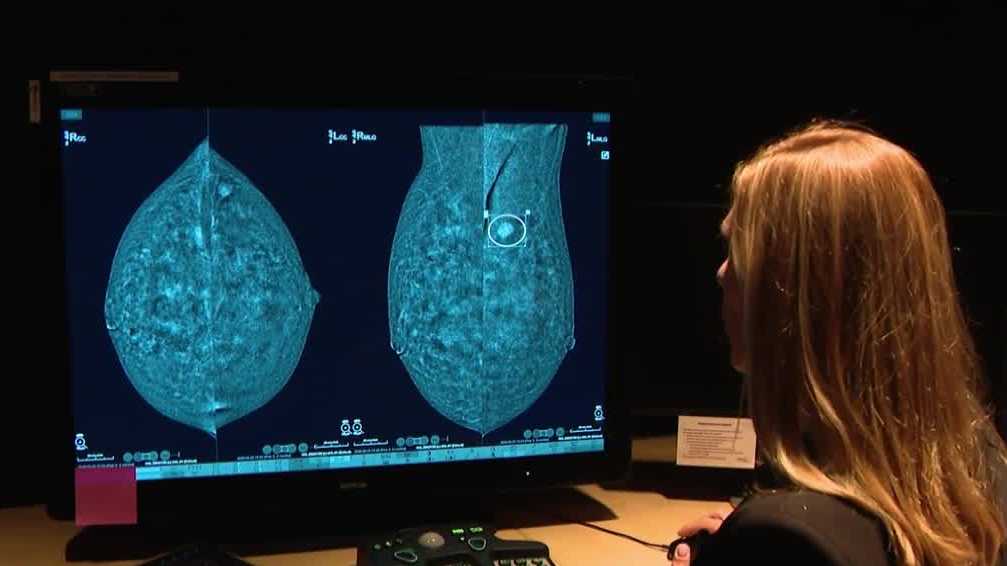
Contrast-enhanced mammography involves an IV injection of an iodine-based dye before the screening, which helps radiologists identify areas of abnormal blood vessels where cancers may be present.
“Cancers or other abnormalities light up like a bright white lightbulb,” Kelly said.
Smith’s contrast-enhanced mammogram revealed a small breast cancer that had been obscured by dense breast tissue during her routine mammogram.
“This is a cancer that would have otherwise been missed on her regular mammogram,” Kelly said. “We were able to set her up for a biopsy right then and there and detect a small breast cancer at the earliest stage, and it really would have otherwise been missed on her routine mammogram because it was masked or obscured by dense breast tissue.”
Smith said the diagnosis came as a shock.
“I was shocked more than anything else. I wasn’t expecting to hear that news…based on my age…based on how things have looked previously,” Smith said.
Doctors say contrast-enhanced mammograms can detect two to three times more breast cancers than mammography alone, leading to earlier detection and better outcomes.
“So with that, we’re able to find breast cancers earlier, and they have better prognoses, better outcomes, and we’re reducing the need for more aggressive surgeries and treatments because we’re finding breast cancers earlier,” Kelly said.
“Ultimately, I’m just grateful it was caught as early as it was,” Smith said.
Smith will undergo 20 radiation sessions and five years of hormone therapy as part of her treatment plan.
Diagnostic mammograms using contrast-enhanced imaging are available at six UPMC Magee centers across the Pittsburgh area: Oakland, Monroeville, Cranberry Township, Shadyside, West Mifflin, and Bethel Park.
You can find out more by heading to the UPMC website by clicking here.