
Mayors are holding out hope that a bill before the Senate Agriculture Committee could reverse some of the recent changes to the Supplemental Nutrition Assistance Program.
At minimum, they want more time to prepare for new cost-sharing requirements.
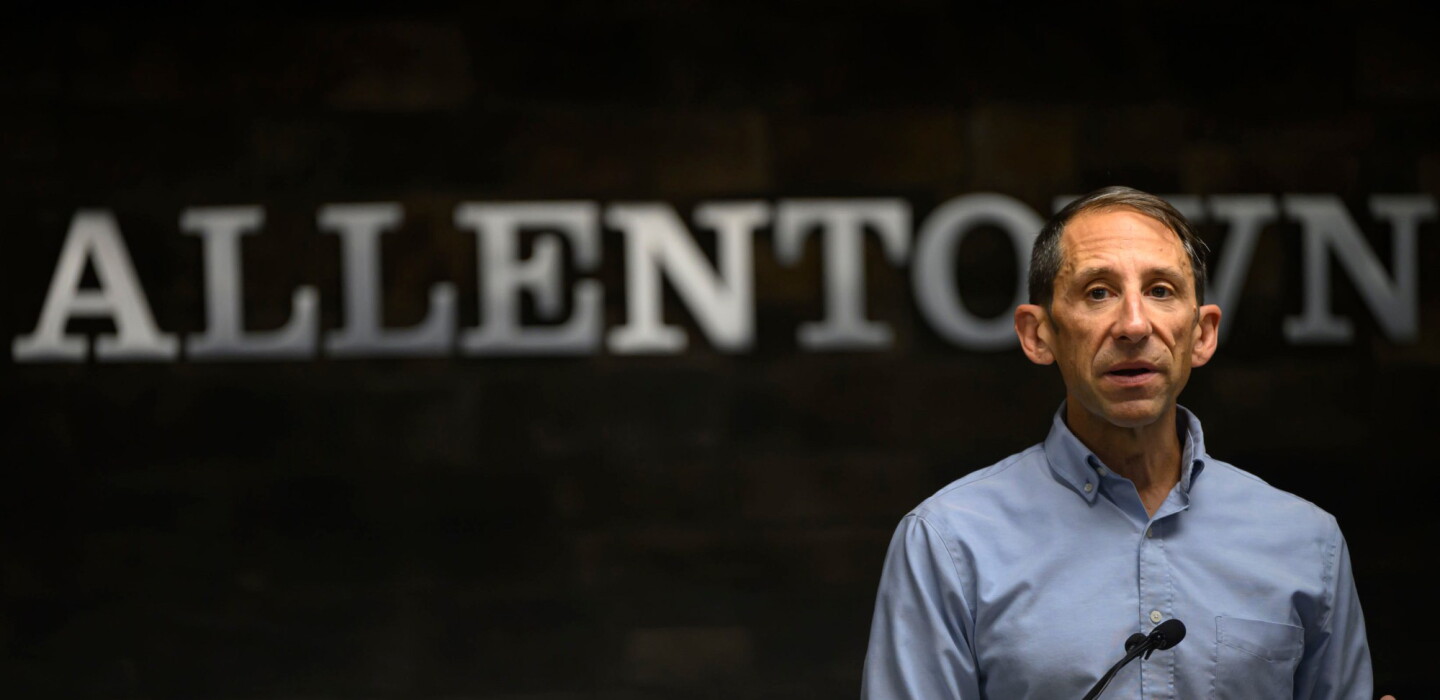
Matt Tuerk, the mayor of Allentown, Penn., spoke with Governing about what’s at stake.
Federal food assistance isn’t an abstraction to Allentown, Penn. Mayor Matt Tuerk. As a child, the tattered orange card he carried to school meant he could eat lunch.
“That’s how I grew up,” he says. “I didn’t view it as an entitlement; I viewed it as a piece of getting by as a kid.” His parents bought groceries with food stamps. This support helped them rise above the conditions that created a need for it, he says.
Now, he and hundreds of other mayors across the country are asking Congress to reverse or delay federal food assistance cuts. Last year, Republicans reduced funding for the Supplemental Nutrition Assistance Program via the One Big Beautiful Bill Act, arguing that the federal government needed to reign in erroneous payments and increase state accountability for SNAP spending. Under the OBBBA, states will have to assume increased costs for the program and implement more stringent work requirements.
Tuerk, a Democrat, is chair of the children, health and human services committee at the United States Conference of Mayors. He’s one of more than 200 mayors who have signed onto a letter to the Senate Agriculture Committee, requesting that Congress reverse or delay SNAP cuts. The bipartisan group of mayors wants the committee to insert SNAP funding and other changes to the Farm Bill currently under consideration.
In their letter, the mayors asked the committee to delay administrative and program cost shifts until FY 2030.
Disagreements about SNAP kept the bill from making it out of committee before the August recess. When the Senators meet again in September, proximity to the midterm elections is expected to add to negotiating tensions.
In a conversation with Governing, Mayor Tuerk discusses the unique perspective mayors have on the impact of cuts. The interview has been edited for length and clarity.
What’s behind this bipartisan agreement about preserving SNAP?
Mayors are laser focused on affordability in our cities. We’re watching as residents struggle with rising food costs. They’re dealing with wildly fluctuating prices at the pumps and continuing to be challenged by unaffordable housing.
We’ve been grateful to have partnership from both houses of Congress in delivering the 21st Century ROAD to Housing Act. [Bipartisan legislation enacted in July to strengthen federal programs to increase housing supply.] Nutrition is something that mayors just don’t have an easy fix for; there’s not a lever that we can pull and make it easier for our residents to have access to healthy and nutritious meals.
More and more mayors are adding their voices to the message to Agriculture Committee Chair John Boozman, Ranking Member Amy Klobuchar — and to Secretary of Agriculture Brooke Rollins as well: you guys have to sort this out because our residents are going to pay the price.
Do you have a feel for the level of support for the SNAP changes you and your colleagues asked for in your letter?
I don’t know, when it comes to the Senate committee. The big fight is around error rates at the state level and around funding the percentage of SNAP payments that the states would make. That’s a battle between the federal government and state governments.
While they hash it out, we deal with the consequences. That’s usually what happens with us as mayors. We’re fighting to try to figure something out so that our residents don’t struggle. We were grateful to President Joe Biden that American Rescue Plan Act funding [the federal post-pandemic recovery program] went direct to cities. Mayors are close to the problems that we face, and we usually have the best tools to resolve them.
I think there are folks on our side, so to speak, in the Senate and in the House. In this particular fight, everybody should be on the side of making sure that residents, particularly children and vulnerable people, have access to healthy, nutritious meals.
(Governing. Graphic elements other than text creating with AI assistance.)
How many people in your community have lost benefits?
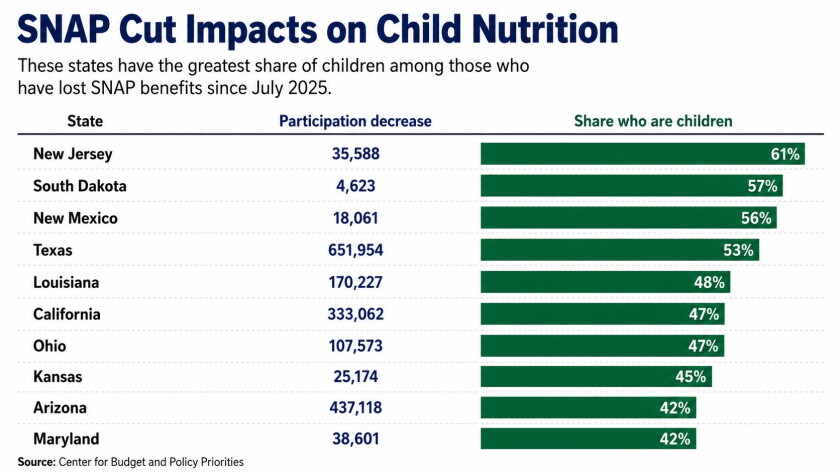
We know that 4 million people nationwide have lost benefits, about a million children among them. In the Commonwealth of Pennsylvania, around 89,000 people have lost benefits since the One Big Beautiful Bill Act was implemented. [The Pennsylvania Office of Rural Health counts about 200,000.]
In the congressional district that we’re part of, around 6,000 people have lost access to a nutritious meal. I would guess that the majority of those 6,000 people are here in the city of Allentown.
More will lose access to these benefits because the federal government is trying to save money on SNAP through eligibility checks.
I talked to a woman outside a bodega last week who was on a two-mile walk back from the county assistance office. She had just filed her SNAP benefits renewal paperwork. She’s going to have to keep doing that, and at some point she’s not going to fill out the right form, or something’s not going to happen the right way. She’ll lose her benefits.
Losing SNAP benefits will cut her ability to do what normal people do: buy food and make food.
What do mayors bring to debates about SNAP funding?
I don’t know how many of our 535 congressional representatives grew up like I grew up. I had my orange free lunch card that got me a meal at school. When I was with my parents shopping in the supermarket, we paid for our groceries with the food stamp program at the time.
Some elected officials think about hunger and food insecurity as something that only affects the homeless folks they serve in a soup kitchen on Thanksgiving. SNAP benefits put food on tables for normal American families that are just trying to do a bit a little bit better for themselves and for their kids. SNAP dollars are spent in local stores. They help keep urban economies going.
People in Washington, away from the districts they serve, might not get to see what life is like for people on the edge of losing their benefits or standing in line at a food pantry. Mayors do. We see the people who are really struggling.
What kinds of things do you see?
When people are facing food insecurity, it changes everything. If they were counting on SNAP benefits to offset the cost of food, and now they can’t count on that, it exacerbates rent challenges and can contribute to homelessness. People who are food insecure face health challenges that show up for our emergency responders.
When our chief of police looks at an environment in which people don’t have ready access to food stamps, his concern is that there’ll be greater instances of retail theft as people do what they have to do to put food on the table.
About a year ago when there was a government shutdown, people were not getting their EBT cards recharged. They had to try to plan for an uncertain future. It adds to the stress of daily life if people don’t have confidence that there’s support for them, that there’s a way out for them. That’s doing damage to the psyche and to the bodies of people in cities across America.
They [Congress] have to figure this out. I know that they’re on recess now, but while they’re out campaigning, people are worrying about their futures. Those same people who are worrying about their future are going to be casting votes in November.
It’s one thing to show up at the soup kitchen for a photo opportunity. It’s another to spend time out at the supermarket and get to know the people who need this [food assistance] to be able to get ahead.
Don’t show up for the photo op if you’re not going to put your money where your mouth is.