
It is easy for Sony and Marvel Studios to tell you how “Spider-Man: Brand New Day” has broken box office records.
The tickets tell the story of $700 million domestically and $1.1 billion worldwide. One ticket to get one person into the theater, multiplied by eager Tom Holland fans, is pretty simple math.
Shouldn’t that work for everything? Disney can tell you how many people visit Magic Kingdom daily (about 48,000 on average). The Steelers know how many people buy tickets for home games (more than 66,000 per event).
But numbers for some events apparently are harder to pin down.
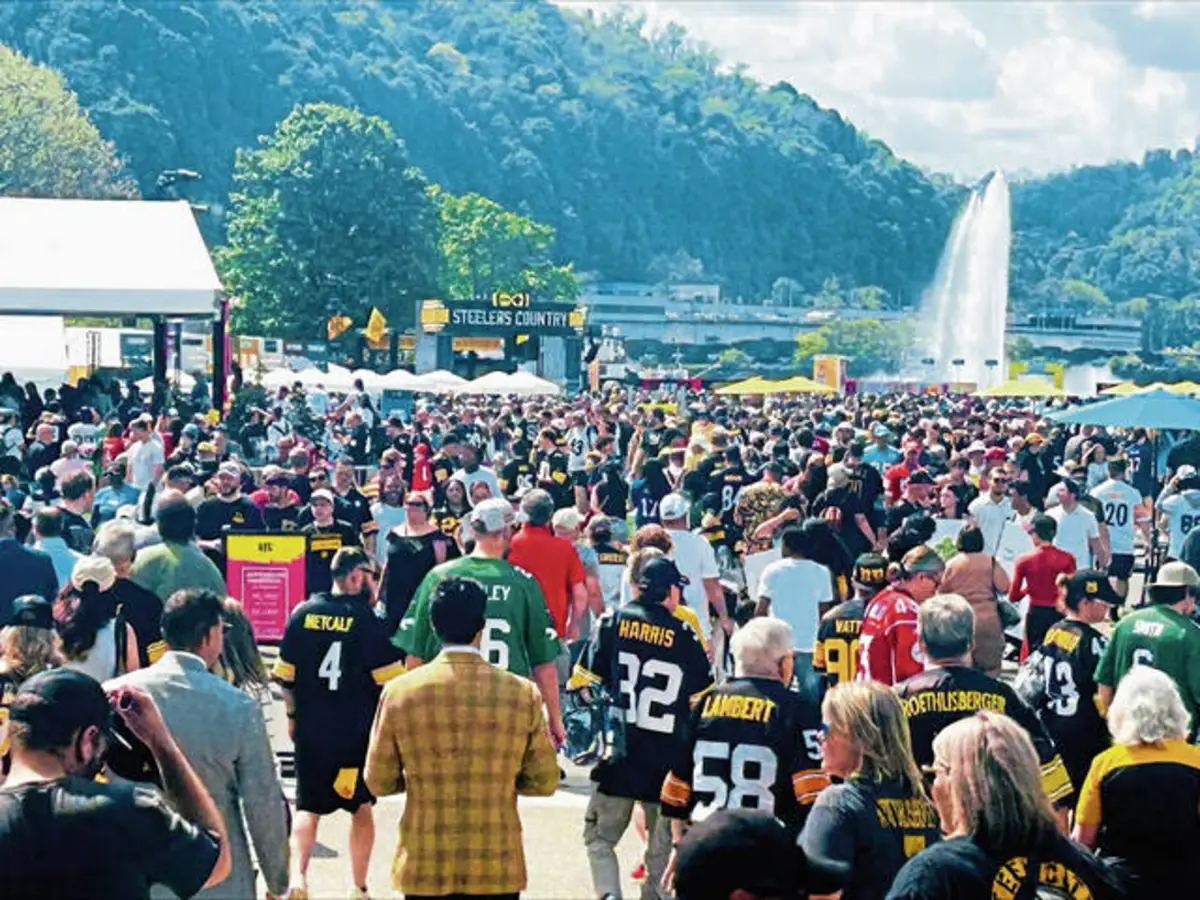
In Pittsburgh, there are questions about the impact of the NFL Draft. Football’s second-biggest party, eclipsed only by the Super Bowl, was hosted this year in the Steel City in April. The event was, by most accounts, an unparalleled success.
According to the NFL, attendance was off the charts at 805,000 people. But these aren’t “Spider-Man” numbers. They are more of a Venn diagram with three interlocking circles representing the three days of the draft.
The total number is not “who was here at some point over this period.” It’s more “how many people walked through the gates.” The issue? It doesn’t consider how many people came in and out each day — or how many did so Thursday, Friday and Saturday. Total turns of the turnstile and total people are not necessarily the same number.
Officials have acknowledged that attending multiple days could mean being counted multiple times.
On Monday, tourism agency Visit Pittsburgh released its report on the economic impact of the event. It claimed a $177 million impact on the local economy.
That sounds amazing. The question is whether it can be verified.
Visit Pittsburgh declined to release the two studies that were the basis of the number.
This doesn’t mean there’s anything wrong with the math. There were a lot of people in town. They spent money to sleep and eat and travel. There was absolutely an impact.
But the Visit Pittsburgh determination appears to be grounded in “trust us” instead of “see for yourself.”
The math on another number also would be helpful. Visit Pittsburgh claims the draft was worth $1.41 billion in “PR publicity value” as 55 million households tuned in.
If you watched the draft and saw the stunning stadium and river views as cameras panned over the landscape, you could see it as a three-day commercial for the city, occasionally studded with endorsements from regional heavy-hitters such as Michael Keaton.
Imagine one company paying for all the commercial time in a Super Bowl that ran for 12 hours a day every day for most of a week. At an average cost of $16 million a minute, the benefits generated by the draft seem like a generous gift. So how was the final figure determined?
As noted right after the event, the draft’s impact can’t be calculated to the penny. While the two days of the Taylor Swift Eras Tour in 2023 did show about $46 million pouring into the region, that was better evidenced in local business returns.
Is this to say the Visit Pittsburgh numbers aren’t believable? Not necessarily.
But when we’re talking about public money being used to promote and prepare for a major spotlight event, it’s important to have good, understandable information about impact. Why? Because, while the draft may not return, other opportunities will come.
The instinct is to want the studies for transparency’s sake — and that’s a good enough reason.
But the better reason is to replicate the success of a blockbuster moment.
Featured Local Businesses