
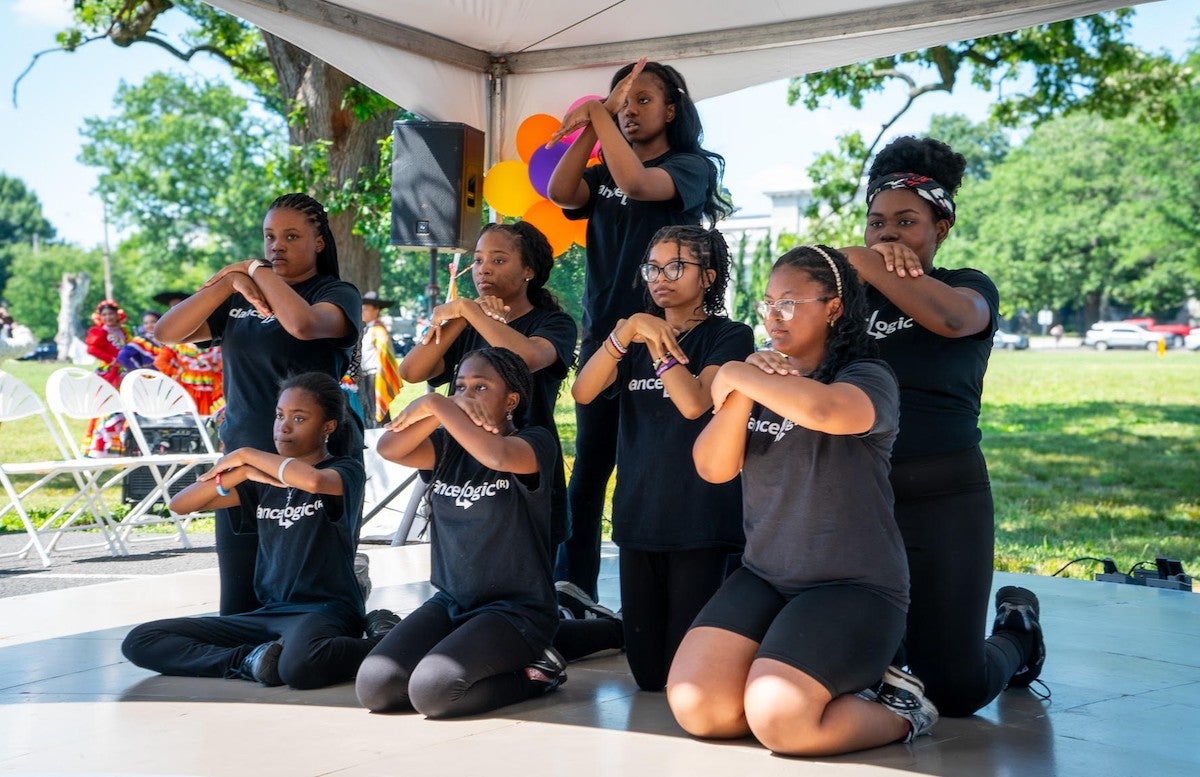
What happens when children dance
A 2024 review of 187 studies published in the European Journal of Public Health found that dance is a safe and effective form of physical activity for children and adolescents. After reviewing 17 high-quality studies that met inclusion criteria, researchers concluded that dance provides physical and well-being benefits comparable to those of traditional physical education classes, with no negative effects when programs are of sufficient duration.
At danceLogic, the connection is more practical than clinical.
A dancer learns a sequence, performs it, sees what went wrong and repeats it in order to correct it. A programmer writes a command, tests it, finds an error and revises it.
“It’s always repetition,” Athias said. “It’s the same as homework. At some point, it becomes innate, and you know it. But it’s tough until the light bulb goes off and they say, ‘Ah, this is what they’re talking about.’”
Research suggests dance does much more than get children moving. A 2022 review assessed 20 years of research and found that dance provides physiological and psychological benefits for children and adolescents. Researchers found evidence that dance can support executive function, including working memory, inhibitory control and cognitive flexibility, while also promoting physical activity and mental wellbeing. The authors concluded that “dance is a feasible alternative to traditional physical activity” and provides “physiological and psychological benefits” for children and adolescents.
Creating, not just following
Students in danceLogic do not spend the year only following an instructor’s choreography. They help develop their own routines.
As they do develop those routines, instructors pay attention to more than if students can master the steps. They watch for growth in balance and coordination, whether or not students become more comfortable moving through increasingly complex choreography, how well they retain what they’ve learned from week to week, and if they’re beginning to collaborate more confidently with one another.
The goal isn’t simply to dance. It’s to build the same habits of practice, creativity and persistence students will use later when solving problems through code.
That creative control is an important part of the program, Kennedy said. Students have to make choices, communicate their ideas and work with others to turn separate movements into a complete performance.
As students gain experience, they may also take on leadership roles by teaching steps or helping newer participants.
Athias said the program began placing greater emphasis on group collaboration after instructors saw experienced students step forward.
“It brings out some of the leadership stuff that they probably didn’t think they had,” he said. “They can stand up and teach and help the other young ladies coming in.”
That confidence can appear in small moments, including a student demonstrating a movement or explaining an idea to the group. Shabazz said she saw those same collaborative skills carry in the coding classroom.
“Coding has a learning curve, and it’s usually easier to get through the challenges when you’re communicating,” she said. “It helps with teamwork because you’re asking questions, helping each other and solving problems together.”
She said dance worked much the same way. Students helped each other learn choreography, practiced difficult movements together and built confidence as a group.
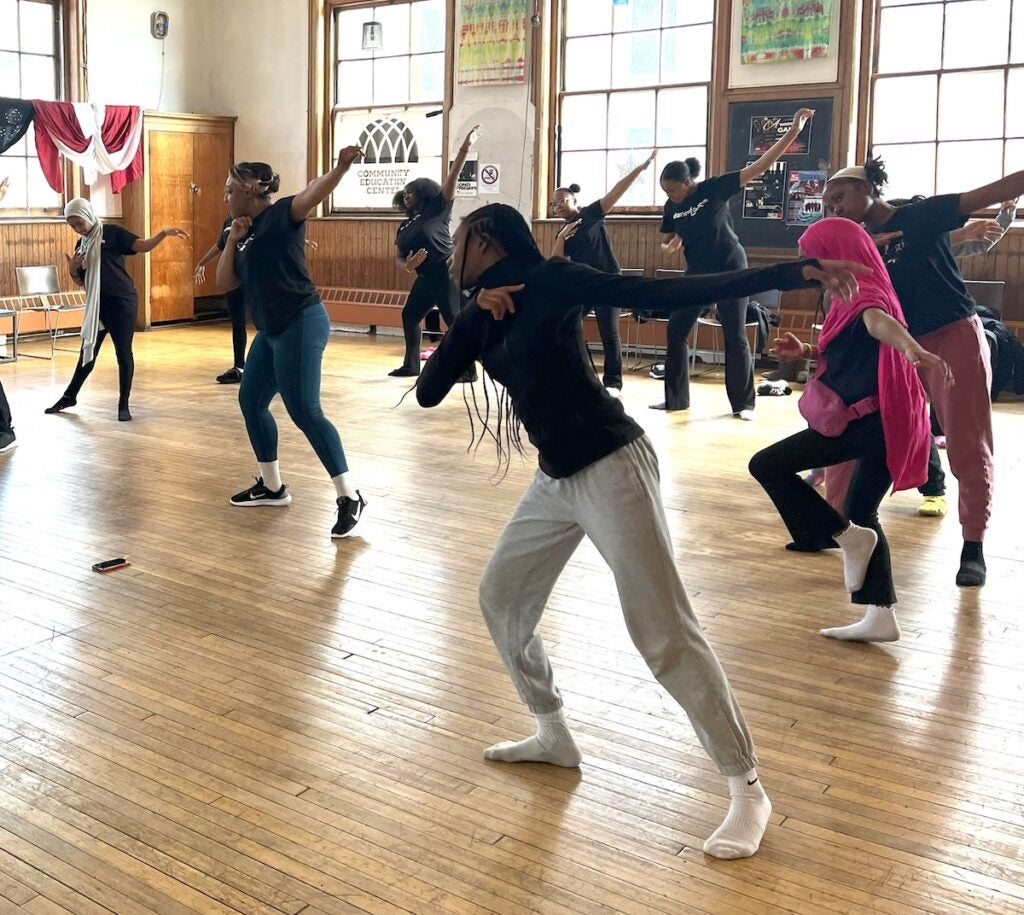 Girls learn steps and moves every Saturday, which helps to develop confidence, teamwork, and leadership. (Courtesy of West Park Cultural Center)
Research suggests dance does boost confidence; a review found that dance interventions helped children and adolescents improve “self-trust, self-esteem, self-expression and perception of dance abilities.” The authors concluded that “dance may be a valuable approach to strengthen aspects of the self,” suggesting that structured dance programs can help young people build confidence alongside physical and cognitive skills.
Student Jennah Wims, 11, agrees. She shared in a student video that she used to be shy about dancing in public.
“When I made my own dances and showed up, I was more confident,” Wims said.
Jamie Dixon’s daughter, Juhlia, recently completed a semester at danceLogic. She said her daughter learned how to build and perform routines while developing teamwork, confidence and discipline. She said the program teaches dancers to be aware of their surroundings, give one another space during performances and understand how each person’s movements contribute to the group skills she saw on display during the end-of-year performance.
“Introducing kids to different types of art is really important at WestPark; it gives children a chance to showcase their talents, not just to parents and their friends, but to the community,” Dixon said.
In the coding portion of class, beginners learn foundational concepts and languages. Students who progress beyond the introductory material may begin creating websites and using their skills for practical projects.
Those lessons stayed with Shabazz. Now a junior studying computer science at the University of Delaware, she said many of the concepts introduced through danceLogic became familiar again during her first year of college.
“A lot of the fundamentals I learned [in college] weren’t new to me,” she said. “It was more of a refresher, rather than something that was completely new.”
Student Taylor Buck, 13, said that coding has helped her with school and critical thinking.
“It helps you think better,” Buck said in her post-class review.
The program’s curriculum has changed over time as technology has evolved. Athias said West Park is exploring how to introduce students to artificial intelligence tools while continuing to teach them how technology works and how to use it responsibly.
Technology may change, but he said the larger lesson remains the same.
“This gives them the ability to say, ‘I’m not afraid of this technology,’” Athias said.