
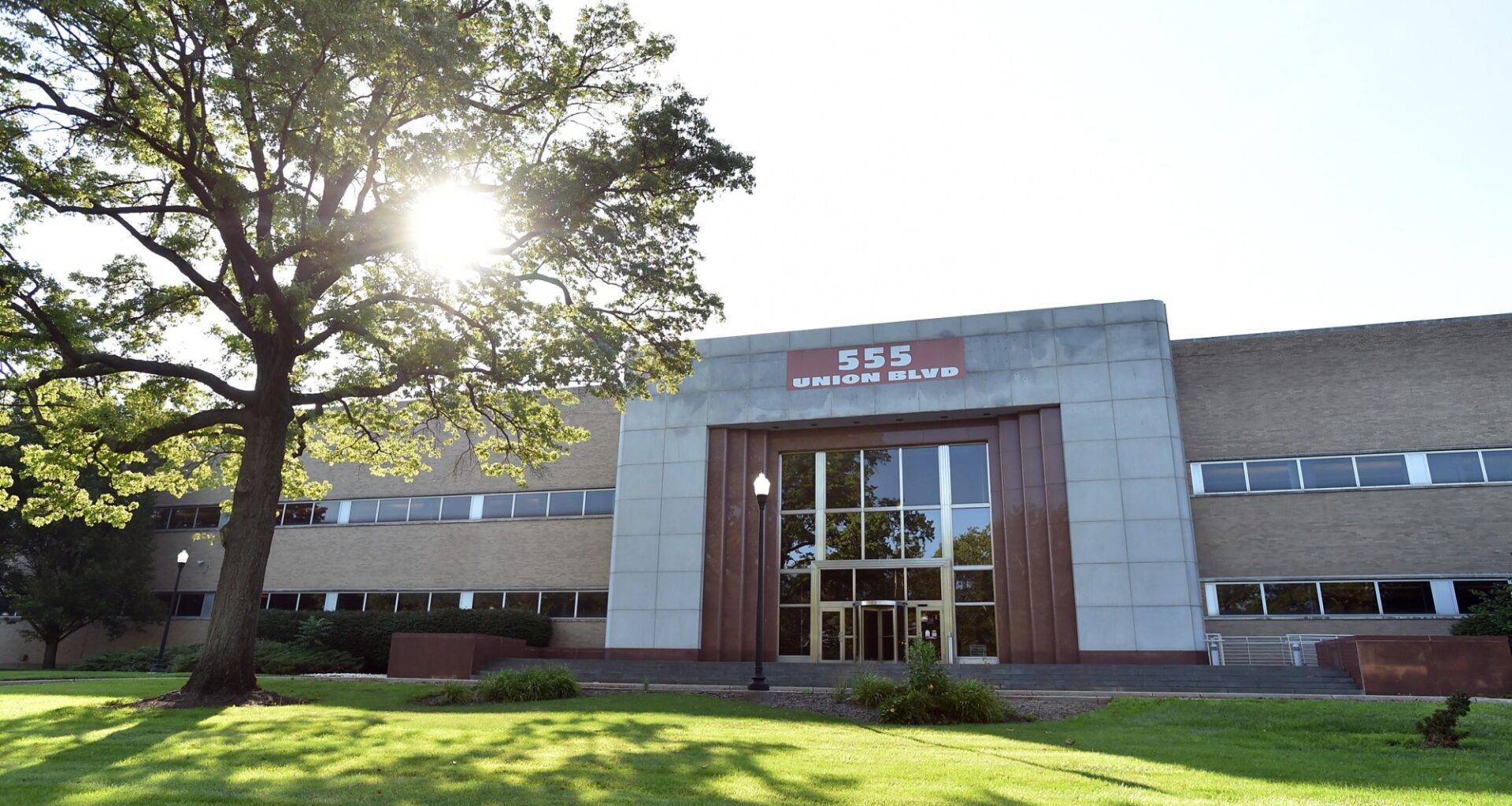
A proposed data center in Allentown, the second to hit city planners’ desks this year, would be near Coca-Cola Park and could use as much as 100,000 gallons of water per day, according to records obtained by The Morning Call.
Developer J.G. Petrucci on Aug. 5 applied to construct a 146,000-square-foot data center at 1024 N. Bradford St. on the city’s East Side, next to the ballpark and Executive Education Academy Charter School.
The developers submitted the application the same day City Council approved stricter requirements for where data centers can be built in the city.
J.G. Petrucci received approval to construct a “flex center warehouse” on the property in 2022, but the site remains vacant.
According to emails The Morning Call obtained via a Right to Know request, the original plans for the Allentown Flex Center warehouse stalled “due to market conditions,” per Joe Correia, project executive at J.G. Petrucci.
Petrucci is in talks with an “end user” for the data center. Typically, local developers build facilities on behalf of a tech company looking to use a data center, like Google, Amazon or Meta.
According to those emails, the proposed data center could use 50,000-100,000 gallons of water daily.
The Lehigh County Authority determined that its system has the capacity to meet that water demand, but engineers for the data center would have to determine the pipe sizes and water pressure needed for the building, according to the released emails.
Developers also plan to build an electrical substation to power the building; relocate storm sewer and sanitary pipes; and construct a stormwater management basin to control site runoff.
The developers received a zoning opinion from the city in April that determined that the data center is a “by-right” permitted use on the site, allowing the application to move forward.
Developers expect to begin construction in spring 2027 and complete the facility in winter 2027.
A spokesperson for the data center developer did not answer several specific questions from The Morning Call, including the data center’s anticipated noise levels; the type of cooling technology the developer plans to use; and how many generators would be constructed on site.
In a statement, the spokesperson said the proposed Bradford Street data center would use 100 megawatts continuously, which “is nothing like the major multi-gigawatt data centers being considered elsewhere in Pennsylvania,” some of which use up to 4.5 gigawatts.
“Developers want to work collaboratively with officials to design the project in a way that meets city priorities while delivering low-traffic investment that will generate significant revenue and benefits to the Allentown community,” the spokesperson said.
The 1024 Bradford St. facility is the second proposed data center in Allentown.
Developer Quantm LLC has proposed a 224,000-square-foot data center and 23,342-square-foot electrical substation at 2401 W. Emmaus Ave. in south Allentown. The site where the center is proposed is next to homes, local businesses and Camelot for Children, a nonprofit that helps chronically and terminally ill children.
The proposal has been met with fierce opposition from local residents; an online petition opposing its construction has received more than 4,900 signatures.
According to Frank Kane, managing director for Allentown, the city is still reviewing the application for completion and accuracy. Following that preliminary review, the full application will be forwarded to the city’s planning and zoning staff for a thorough assessment.
One outstanding unknown about the proposal is what standards the city will use to evaluate the project.
The city passed a zoning ordinance that restricts where data centers may be developed in June. That ordinance allowed data centers in two of the city’s three industrial zoning districts via a special exception permit. It also requires developers to submit a series of studies on the data center’s impact on noise, water use, electricity use and the surrounding environment.
In that version of the ordinance, data centers are not allowed within 75 feet of the right of way of a public street, or 200 feet of any residential, civic or childcare areas.
But that version of the data center ordinance received criticism from anti-data center advocates, who argued it was too lenient and would still allow data centers to cause harm in residential areas.
In response, council introduced amendments to the ordinance Aug. 5 that tightened those requirements, including bumping the required setback from homes and schools up to at least 500 feet; and reducing the number of zoning districts a data center could be constructed in to one.
Kane said the city is consulting with its lawyers on which version of the ordinance applies to the new application. Developers submitted the application Aug. 5, the day the stricter amendments were approved.
Lawyers for the developers wrote to the city arguing that the developer should be exempt from having to submit the detailed water, noise and environmental reports alongside its land development application.
Lawyers wrote that they “Acknowledge the need to prepare those reports eventually in connection with a special exception,” but that the city is “without authority to determine that the application submitted is incomplete due to a lack of inclusion of the reports.”
The lawyers also argued that the new, updated ordinance from August would illegally “preclude a data center at this Bradford Street site.”
Reporter Lindsay Weber can be reached at Liweber@mcall.com.