

Toxins falling below recreational limits have been detected, officials said. Persons should avoid areas with visible algal scum as scum risk may increase this week.
TOLEDO, Ohio — A substantial algal bloom is affecting waters in the western Lake Erie basin, with potential risk for scum to increase over the next week.
The bloom contains a surplus of cyanobacteria: microscopic, photosynthetic algae, according to the Lake Erie Harmful Algal Bloom Forecast from the National Centers for Coastal Ocean Science.

This story continues below.
Toxins detected from the 480 square mile cyanobacteria bloom fall beneath recreational limits, officials say.
However, people in or around the water should watch out for scum spots where harmful cyanobacteria can be more densely concentrated, officials advised.
According to the report, if there is visible scum in water areas, people and pets should stay out and avoid contact.
As of Aug. 24, algal scum risk was forecasted by officials to be “very low.”
That risk prediction jumps to “medium” by Aug. 25, remains lower for several days, and climbs back up to “medium” by Aug. 28.
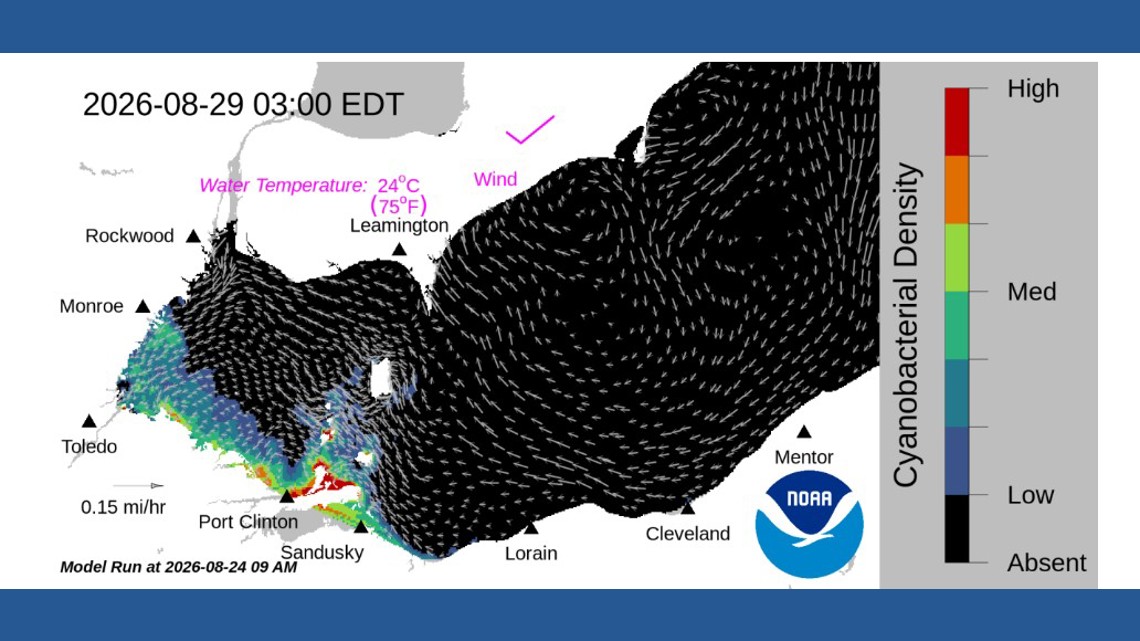
The forecasts provided by NCCOS indicate current and potential levels of cyanobacteria density over the next several days:
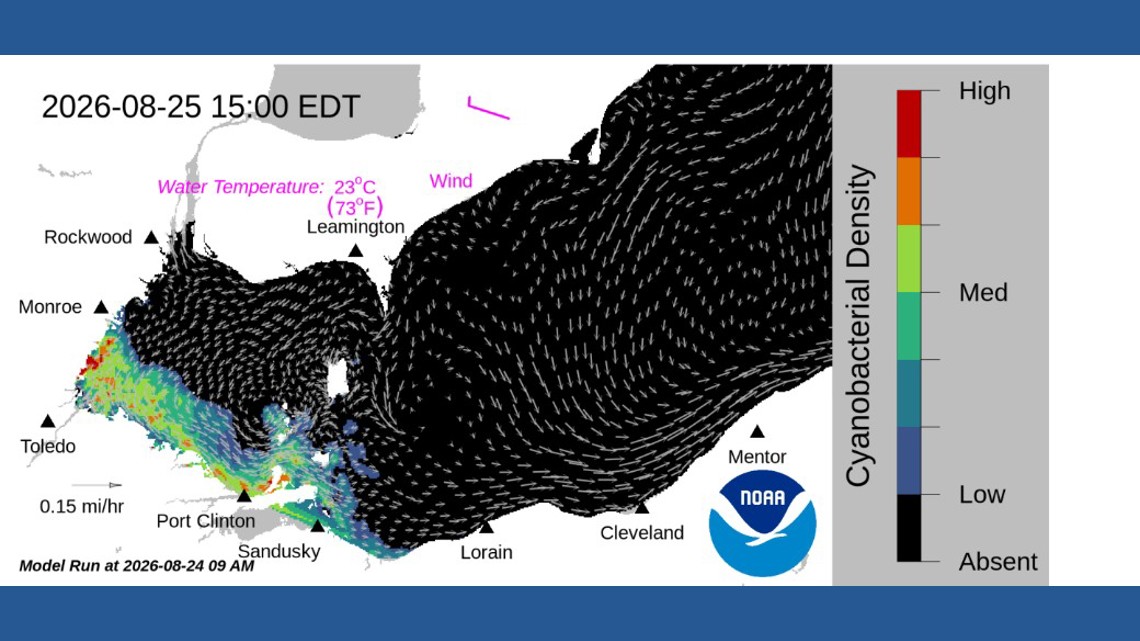
Higher densities of cyanobacteria may accumulate in lake waters near the Marblehead Peninsula by Aug. 29, forecasts indicate.
Additional information is available at the organization’s webpage.