
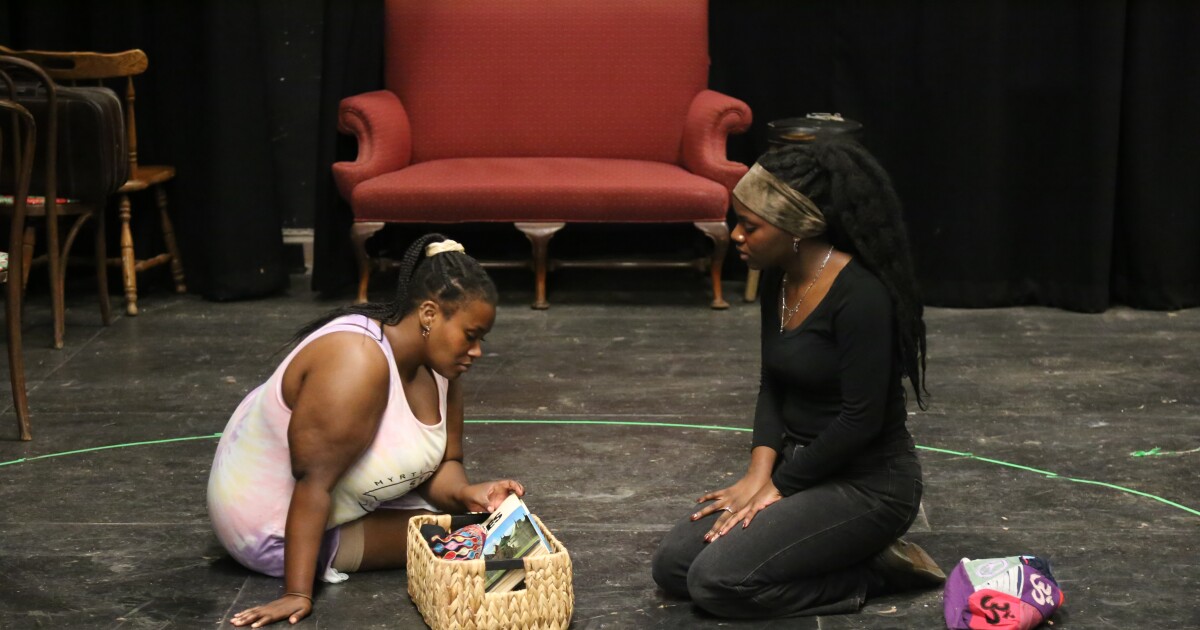
Pittsburgh-born a.k. payne is among the nation’s most acclaimed young playwrights. And in some ways, this week’s world premiere of “BURNBABYBURN! the american dream” is a homecoming, as the first professional staging of a full-length work by payne in their hometown.
But in other ways payne never really left. And the new drama about four generations of Black women in Pittsburgh is Exhibit A.
“I wanted to bring it back here because this play is, like, deeply Pittsburgh,” payne said.
Its protagonist, Sky II, “is looking back in order to imagine a future for herself and her communities.”
Auspiciously, the show marks Pittsburgh Playwrights Theatre Co.’s annual outdoor production in the backyard of the August Wilson House, the city’s best claim to sacred theatrical ground. After two preview performances this week, it opens Saturday, Aug. 29, and runs through Sept. 13.
‘A poetic voice’
The past couple of years have been a whirlwind for payne, 28. In January 2024, Atlanta’s Alliance Theater staged the premiere of their intimate and intense drama “Furlough’s Paradise.” The critically acclaimed play about two cousins whose lives have taken very different paths has gone on to a remarkable six additional productions at theaters around the country, including the Geffen Playhouse in Los Angeles.
Joan Marcus
/
Yale Repertory Theatre
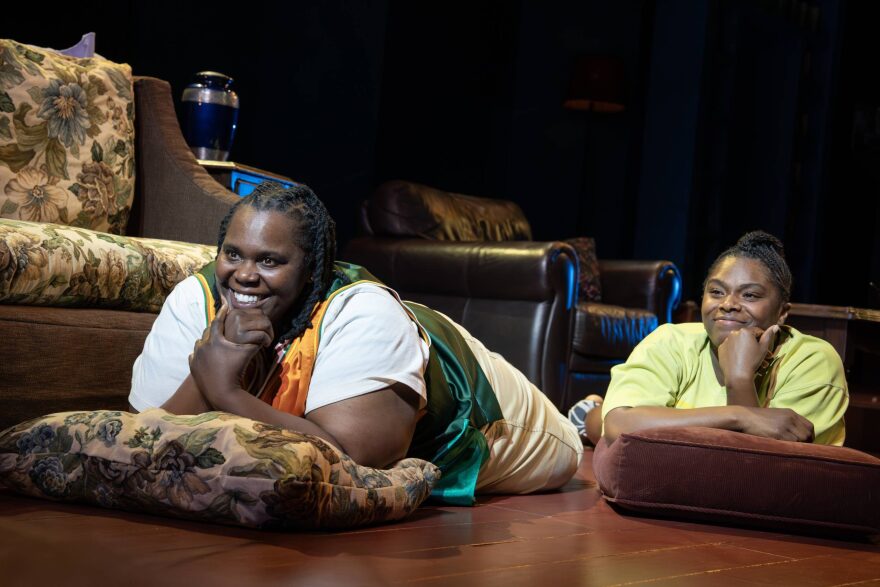
Actors Lauren F. Walker and Tiffany McLarty in Yale Rep’s 2026 production of payne’s “Furlough’s Paradise.”
A Washington Post review called the play “evocative” and “insightful.”
“a.k. payne’s writing is so poetic and beautiful while also being, in many ways, very raw and really cutting to the truth of things,” said Chantal Rodriguez, associate director of Yale Repertory Theater, which staged “Furlough’s Paradise” this past spring.
The bond between cousins in the play, added Rodriguez, depicted “a really beautiful connection about family and what are the barriers, and how our lives can go in such different directions, and what that means in particular for a.k.’s character as Black, as Black women, as Black genderqueer folks — what are the possibilities?”
“I think a.k. has a poetic voice that is going to become a classic in our American canon,” said Shanara Gabrielle, artistic director of Washington, D.C.’s Theater Alliance, which also produced the play.
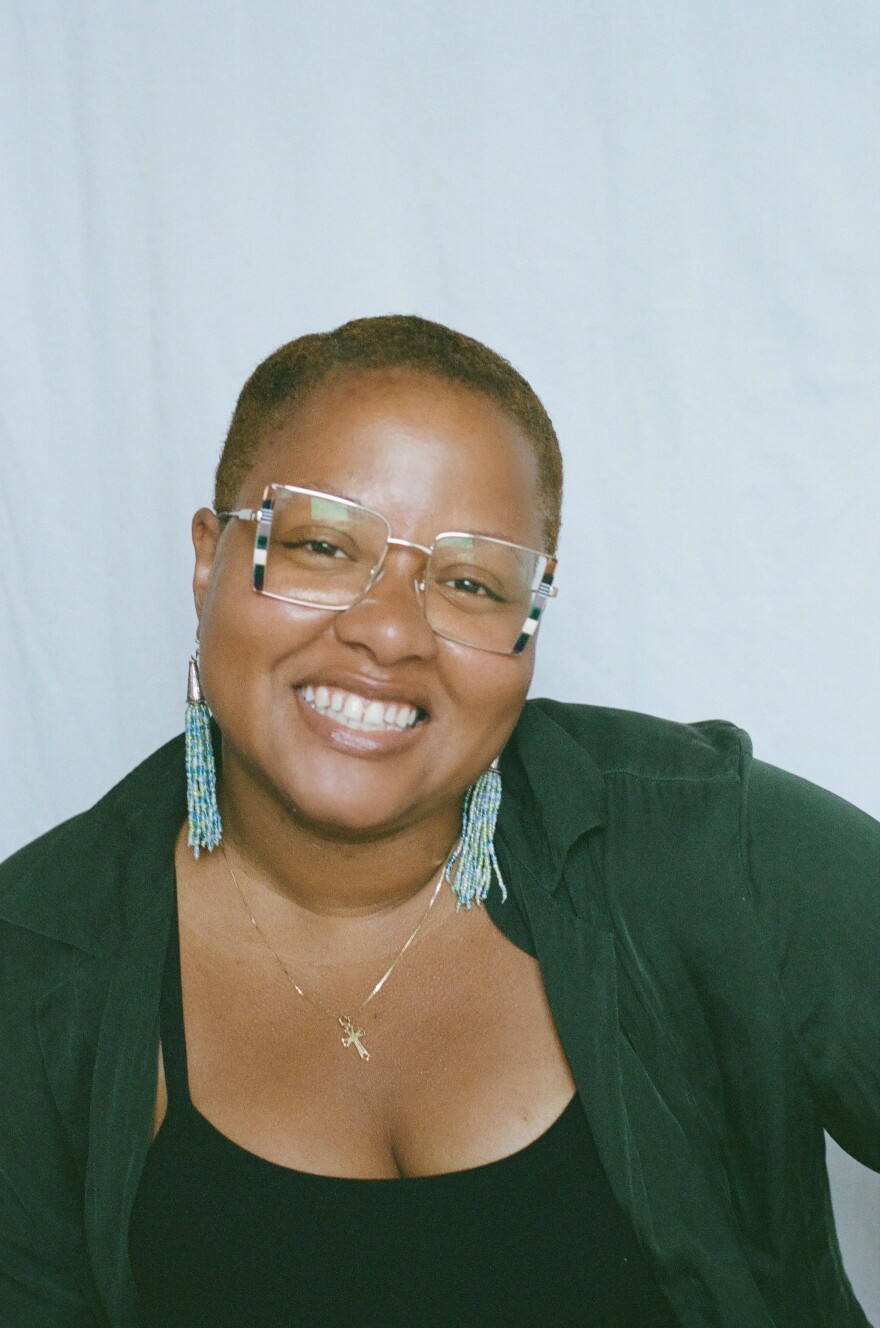
Playwright a.k. payne grew up in Mount Oliver.
Monteze Freeland, who chose “BURNBABYBURN!” for Playwrights, said payne’s work gives voice to characters too seldom represented on stage.
“These are people who you know, but you may not have seen in the American canon of theater and onstage,” he said. “And it’s so important that we have that space so that we’re looked at as full human beings, not talk pieces, or not stereotypes or anything of that nature, that people can really see where we come from.”
In 2025, “Furlough’s Paradise” earned payne the Susan Smith Blackburn Prize, a distinguished award for women playwrights previously claimed by the likes of Lynn Nottage, Annie Baker, Paula Vogel and Caryl Churchill. And last August, Variety magazine named payne one of its top ten storytellers to watch.
The national accolades complement payne’s very Pittsburgh story.
‘Building community’
The daughter of a union carpenter and a music teacher, payne grew up in Mount Oliver. Thanks largely to their mother, Tina Asu — now a music specialist at Pittsburgh Faison — they got stage experience with local choirs and even Pittsburgh Opera. They also trained with the Pittsburgh CLO Academy and Alumni Theatre Company.
Though payne appeared onstage in shows including the CLO’s “Joseph and the Amazing Technicolor Dreamcoat” and Pittsburgh Opera’s “Dead Man Walking” and “The Magic Flute,” they discovered their avocation as a middle-school literary arts major at Pittsburgh CAPA.
It was then, payne said, they they “just fell in love with the ways that playwriting creates pathways for building community.”
Their first play to reach the stage was “To Pave Her Path,” a one-act drama set in the 1960s about a girl who wants to become a civil rights activist. The play was accepted into City Theatre’s 2010 Young Playwrights Festival. The cast included a recent Point Park University graduate named Monteze Freeland, who played a pastor.
“I said, ‘Oh, this is deep,’” said Freeland, today artistic director of Alumni Theatre and a key presence on the local scene. “a.k. has always been deep and has always looked beyond the surface to really figure out how to make the surface poetic.”
After their undergrad years at Yale College, payne earned a master’s degree from the Yale School of Drama, where they studied under celebrated playwright Tarell Alvin McCraney.
Along the way, payne, who is nonbinary, adopted a lowercase spelling of their name. They were inspired by the critic and scholar bell hooks, and also sought to create “a kind of inversion of this name that was probably an English name that was given by a slave owner or something like that.”
With scripts typically rendered in the form of lowercase blank verse with minimal punctuation, payne tells stories in which the walls between time periods are fluid or nonexistent. “[I]n this play past is present and present is future,” read stage directions for “BURNBABYBURN!”
Their influences range from August Wilson and Ntozake Shange (“For Colored Girls Who Have Considered Suicide / When the Rainbow is Enough”) to McCraney (“The Brothers Size”) and Amy West, whose “4000 Miles” sparked the structure of “Furlough’s Paradise,” as payne noted in an interview with West in American Theatre magazine.
‘How can I imagine love?’
Today, payne lives on the South Side, not far from their grade school, Pittsburgh Phillips K-5, and has other strong professional ties locally as inaugural artist in residence at nearby City Theatre and a 2026 Playwright Fellow at the August Wilson House, where “BURNBABYBURN!” will be staged. It will be the first play so honored not written by Wilson himself.
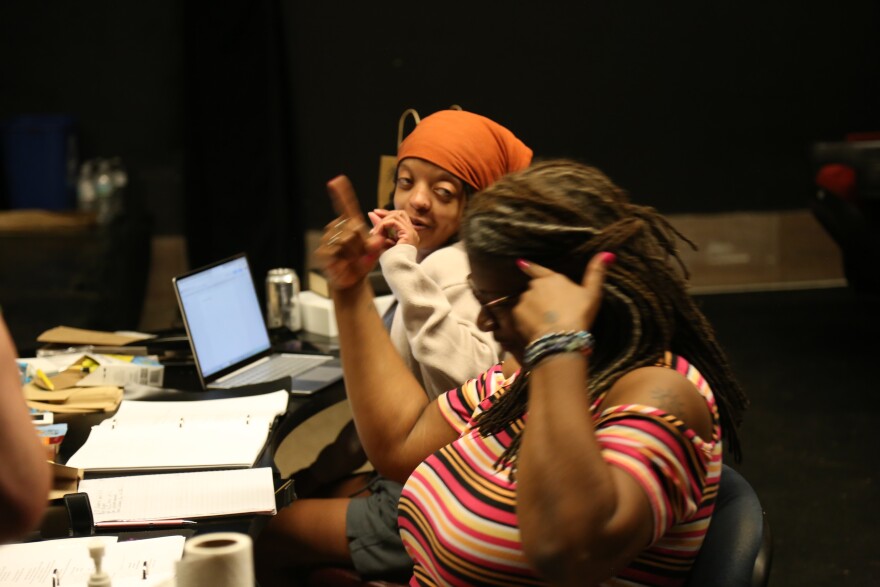
Director Karla C. Payne gives notes in rehearsal for “BURNBABYBURN!”
“BURNBABYBURN!” has six characters, born between 1928 and 1997, and slides between the Hill District, Homewood and Los Angeles, with scenes set in time frames mostly ranging from the 1960s through the 2010s.
The play was inspired by payne’s namesake late grandmother, Alexis, they said. The grandmother in the play is named Sky; payne’s stand-in is Sky II, who attempts to build a connection through old photos, letters and imagined meetings with her forebear.
“Grandma, how can I imagine love when all my mothers have borne bruises, when there’s no model for being alive in this body, for living well in this body, just a very long line of angry men?” Sky II pleads in one scene.
Other characters include Sky II’s great-grandmother, Myrna, a jazz singer; her grandfather, Will, who was Sky’s abusive husband; and her father, Joyner. The sixth character is Char, Sky’s childhood friend; the two were in love, but as adults become separated by society and circumstance.
“It’s like a time-traveling, time morphing story of reclamation of family lineage and the things we left behind,” said Karla Payne, who’s directing the show for Playwrights. (Payne is unrelated to payne, though in familiar two-degrees-of-separation Pittsburgh fashion, she attended college with payne’s mother.)
‘The hills are really critical’
The cast includes Hope Anthony, as Sky; Aisha Jordan Gunter, as Myrna; Destiny Nwafor, as Char; Anthony Grace as Sky’s husband, Will; and DeVaughn Robinson, as Sky II’s father, Joyner. (Most of the cast also participated in a Pittsburgh Playwrights workshop that helped develop the play this year.)
Sky II is played by Kat Bruce, who says the script resonated with her strongly.
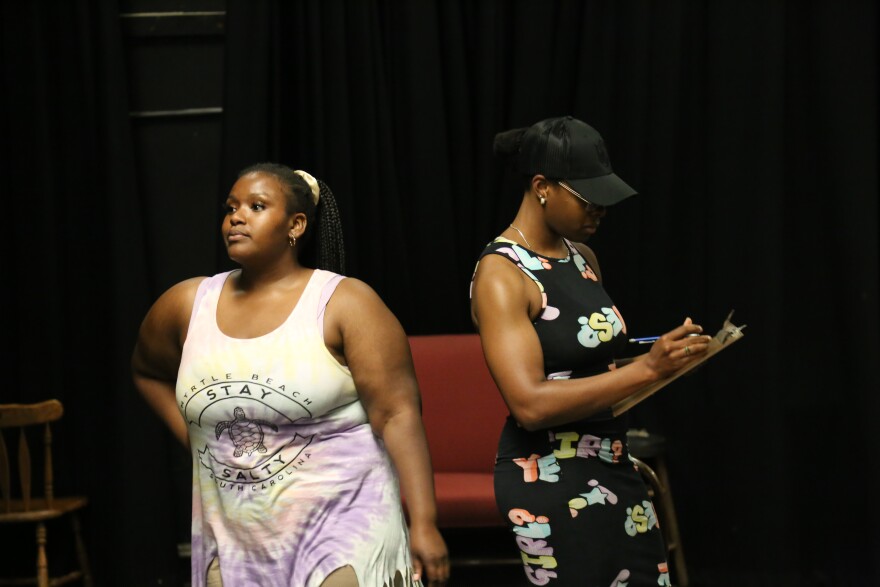
Hope Anthony and Destiny Nwafor rehearse “BURNBABYBURN!”
“Pittsburgh was where I was born and raised,” Bruce said, “and also the idea of being able to manipulate time in a way with my character and talk to these people that you have so many questions for, who you wish you had more time for.”
“The city means so much to me and really informs so much of my practice,” said payne. “And I think I realized when I went away for school, for sure, that the land itself is very, very special and the hills are really critical to how I think about storytelling.”
“I think so often about August Wilson’s characters and the ways that they have these epic, expansive dreams and such clear wants. And I think part of that is like from being in the Hill District and being able to see the world just like everywhere,” they added. “I think that growing up in the South Side Slopes, I had a similar experience.”
In most cities, payne said, a hilltop view is unusual for working-class people. But those vistas give their characters “their inherent sense of power, despite what the world might say or judge them as or put them in whatever box, like their power sort of emanates from their humanity.”