
Thanks to some moves at the federal level, Valley Health Partners is now eligible to receive hundreds of thousands in federal dollars, helping the nonprofit community health center expand its reach and serve more people who may not otherwise have access to affordable healthcare.
The U.S. Department of Health and Human Services recently announced $102 million in New Access Points awards to significantly expand the reach of the Health Resources & Services Administration’s Health Center Program. Under this expansion, Valley Health Partners is set to receive $650,000 in federal funding each year.
“Becoming a federally funded community health center represents an important milestone in VHP’s journey. It recognizes the work of our colleagues every day to ensure that comprehensive health care is accessible to everyone regardless of their income, insurance status, or background,” Valley Health Partners CEO Veronica Gonzalez said.
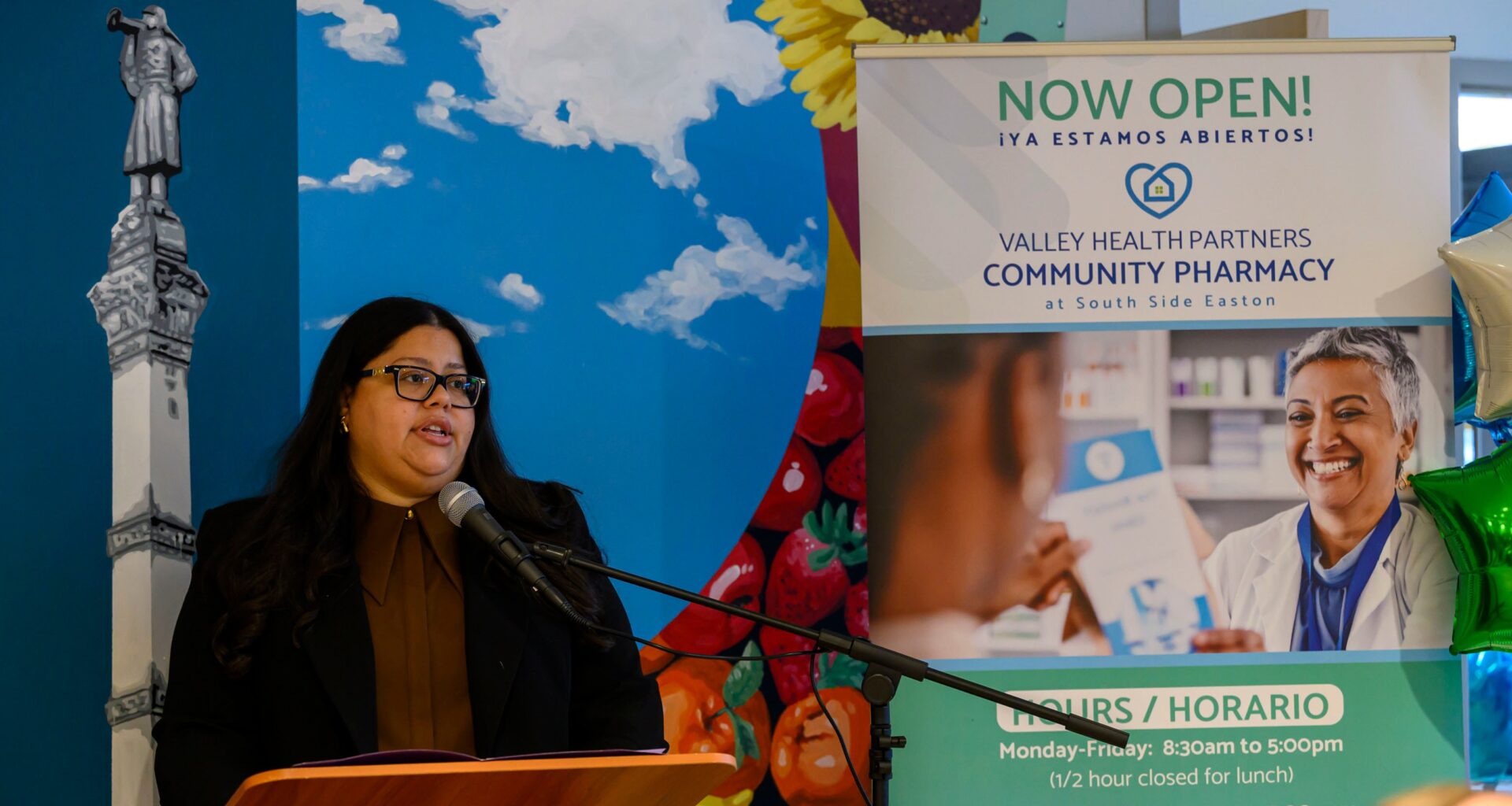
Valley Health Partners is an independent nonprofit that operates healthcare facilities in Allentown, Easton and Monroe County. Its services include primary care, dental, vision, psychiatry, pediatrics, same-day, women’s health, substance use treatment and chiropractic. It also provides pharmacy services and in January, Valley Health opened the only pharmacy in South Side Easton after CVS at 620 Old Philadelphia Road closed 10 months earlier.
During a news conference last week, Gonzalez said VHP already has 50,000 members across its service area, and the federal dollars will allow Valley Health to do more. She said that it will create a care access point at the Pocono YMCA in Stroudsburg and Allentown School District’s Family Community Resource Center, where it will offer primary care, behavioral health and social services.
The federal expansion made Valley Health Partners eligible to be a federally qualified health center, which are designated nonprofits or facilities that provide comprehensive primary care and preventive services to underserved communities. There are additional requirements they must meet, including having a governing board composed of at least 51% active patients of the center, and patients must be billed on a sliding scale that accounts for income and family size.
In return for meeting these requirements, centers receive enhanced financial reimbursements, special liability protections and are eligible for exclusive federal grant funding.
VHP was meeting those requirements, but because of a limit on the number of allowed health centers, it was considered a “lookalike.” That means that while it operated under the same rules, it was not eligible for grant funding.
U.S. Rep. Ryan Mackenzie, R-7th — who helped push for the biggest expansion to the federally qualified health centers program since 2019 — said that when health centers become qualified for annual federal funding, they also become eligible for federal grants, too.
Mackenzie said that VHP was trying to shed its lookalike status for years but, due to bureaucratic red tape, was never able to receive the federal funding that would allow it to do so. He said VHP brought this up to him shortly after he was elected to Congress, and helping out was a no-brainer to him.
“I’ve been a big fan of the work that FQHCs have done for years. They provide much-needed health care access into some of our most challenged communities. And they also do a lot of great preventive healthcare,” Mackenzie said in an interview. “It is, in fact, going to be not only life-changing for Valley Health Partners, but for all those individuals that [they] serve right here in our local community.”