
The director of Lehigh University’s Plasma Control Laboratory believes the 2030s will be “the decade of nuclear fusion,” and his lab recently received an infusion of federal funds to accelerate development of the next generation of clean energy technology.
Moving from nuclear fission technology, which splits atoms, to nuclear fusion technology, which joins atoms, has been a dream for decades because fusion reactors employ more common materials, generate less damaging waste and eliminate the risk of runaway reactions.
A commercial fusion reactor could run on hydrogen and lithium, so nuclear power producers would no longer be reliant on a limited supply of uranium mines, and the radioactive material produced would be lower-level and faster to decay, ending the need to safely isolate high-level waste for thousands of years.
Such reactors don’t exist. Fusion reactions are difficult to maintain, and scientists are still working out the physics behind the machines that attempt to confine and pressurize superhot plasma long enough to create the kind of self-sustaining reaction needed to generate commercial levels of power.
The difficulty of maintaining a fusion reaction is why the process doesn’t create the kind of runaway reactions that cause core meltdown in fission reactors. An unstable fusion reaction would shut down rather than cause an accident, but without precise control it could also damage the reactor’s inner walls.
That leaves scientists with little room for error. They need a longer-lasting fusion reaction to create their dream of safer, sustainable nuclear power, and they need to control their experiments precisely to avoid destroying the expensive equipment they use to manage plasma.
Lehigh’s project, dubbed “REACT: Reactor Exhaust And Core Twin — Multi-fidelity AI Predictions for Safe, Integrated, and High-Performance Control,” is part of the federal Genesis Mission, a U.S. Department of Energy program designed to apply artificial intelligence to scientific work.
The project is one of two at Lehigh being funded through Genesis; the other focuses on creating AI models for water systems.
Eugenio Schuster, director of Lehigh’s Plasma Control Laboratory, and his co-director, Tariq Rafiq, officially start Phase 1 of the project Sept. 1. They have a nine-month timeline for their initial work and will collaborate with the Oak Ridge National Laboratory and Columbia University. They hope to line up additional federal funding for future phases.
Making fusion viable
Schuster, Rafiq and their partners experiment on a doughnut-shaped machine called a tokamak. Their challenge is to confine a gas that has been heated to 100 million degrees Celsius long enough to sustain a reaction without the plasma reaching the tokamak’s inner wall.
Nuclear fusion is the process stars use to create energy. Inside a tokamak, it’s as if a mini-sun is being held in place with magnetic fields, with only a few inches of space around the edges.
The volume of the superhot plasma defines its power potential, so the goal is for that reactive core to be as close as possible to the inner walls. The exhaust given off is lower in temperature, and modeling how both the particles in the core and in the exhaust behave will help scientists design an experiment that won’t destroy their equipment.
Artificial intelligence can simulate the behavior of plasma, allowing scientists to make faster decisions about what controls they should apply in the limited chances they get to run physical experiments.
The pulses scientists use to power their plasma experiments typically only run a few seconds, although some advanced experiments have gotten up to 10 or 20 minutes, Schuster said, and the particle dynamics are so complicated it can take a month to simulate a five-to-six-second experiment.
AI can accelerate the process of building a physics-based model by inferring the properties of plasma from diagnostic sensors and data, and that model can then be used to create control algorithms to deploy during experiments.
The end goal of Lehigh’s project is to help move the field from tokamak experiments to the delivery of a fusion reactor. Researchers have funding to run experiments in the United States, including at a San Diego research site and at Princeton University, and they also travel internationally to locations such as South Korea.
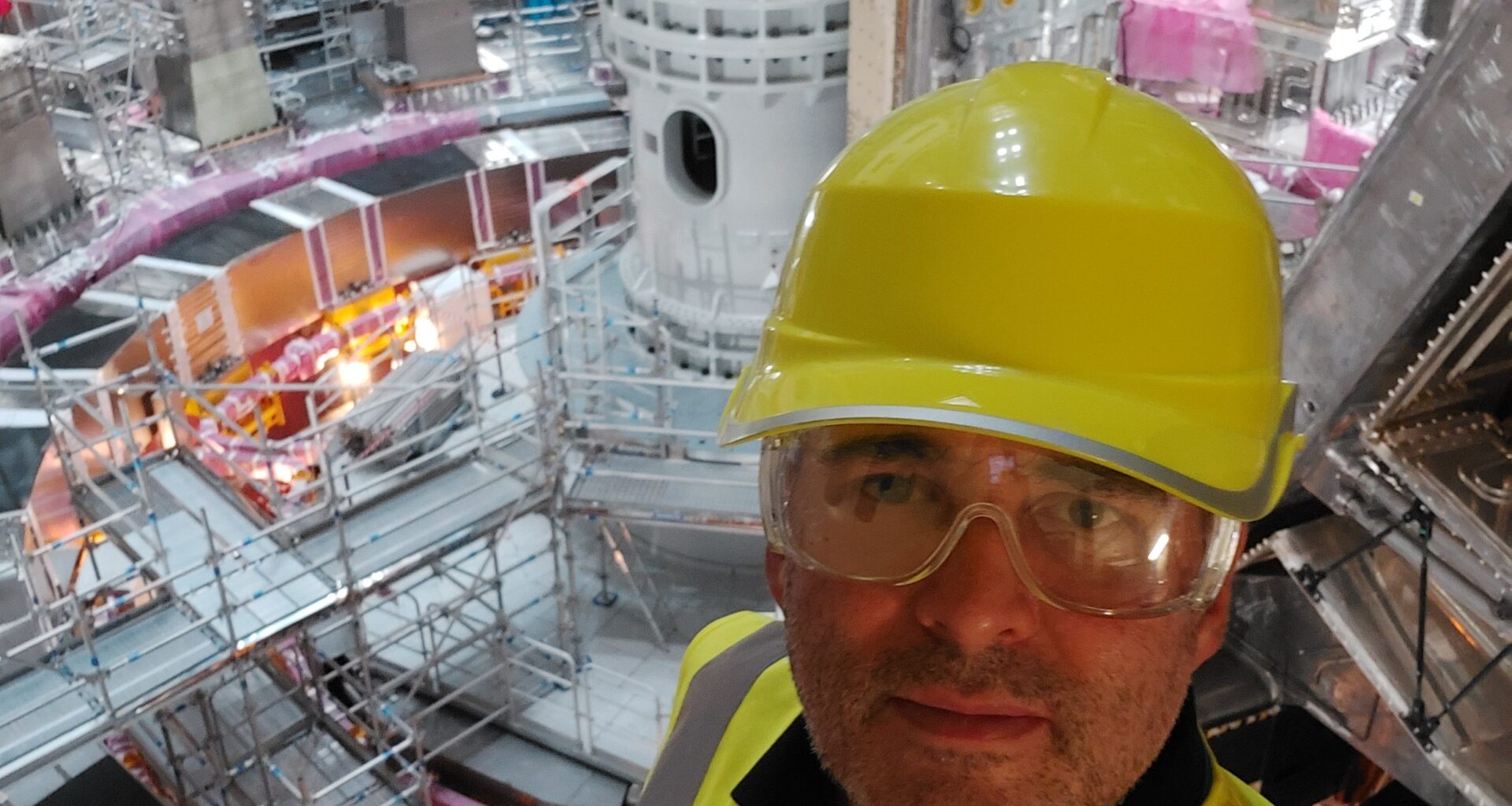
Scientists from the United States, the European Union, Japan, South Korea, Russia, India and China are also eagerly awaiting the completion of the world’s largest tokamak, which is being built in France.
Achieving major scientific milestones requires investment, and funding for nuclear fusion was hard to come by when it was perceived as decades away from viability, Schuster said, adding that government funding is now being joined by private investment.
“The feasibility of producing energy from fusion — I don’t think it’s decades down the road anymore,” Schuster said.
Advancing nuclear fusion used to be a serial process where researchers waited for results to decide what to build next, but many efforts are now moving in parallel, Rafiq said.
“People have money, investments, and they can have much more different concepts and designs and build different machines and produce the results, and based on that things can accelerate,” Rafiq said.