
HARRISBURG, Pa. (WHP) — Pennsylvania is expected to receive $519 million and potentially $729 million over the next years as part of a multistate settlement with Meta, the parent company of Facebook and Instagram.
The settlement follows a bipartisan investigation launched by attorneys general across the country in 2021 into how social media platforms impacted children and teens.
READ MORE | Meta reaches $17B settlement with states over claims its platforms harmed teens
The investigation alleged that Meta designed features on Instagram and Facebook that encouraged compulsive use among young people.
Pennsylvania Attorney General Dave Sunday says the settlement is about more than the money. It also requires Meta to make changes aimed at reducing potential harm to young users.
“This settlement puts real guardrails around the way that young people interact with Meta platforms,” Sunday said. “It gives parents more tools to know what’s in their child’s hands.”
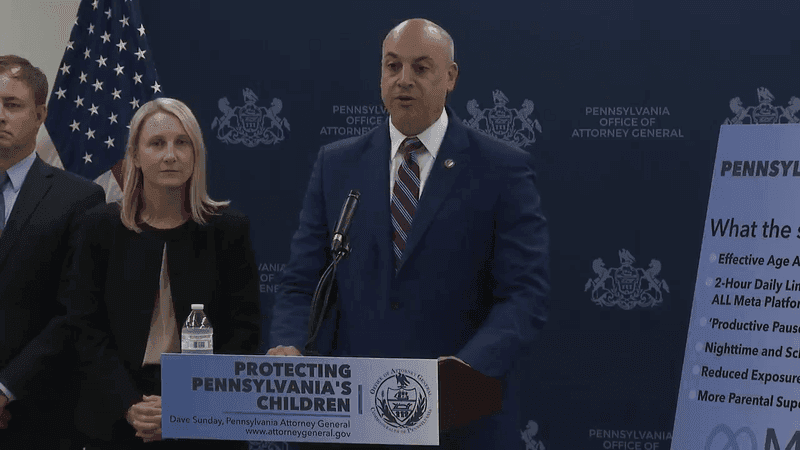
Pennsylvania Attorney General Dave Sunday speaks during a press conference on Wednesday, Aug. 26, 2026. (WHP)
The settlement requires Meta to implement technology to verify the ages of young users and ensure child safety features are applied.
It also includes a two-hour daily limit for children that can only be disabled with adult permission, eliminates push alerts during school hours and requires breaks for users.
Sunday said the restrictions also include limiting a child’s access to Meta platforms from midnight to 6 a.m. on school nights.
Meta must also disable visible like and reaction counts and remove filters that mimic the effects of plastic surgery.
An independent audit will track how Meta implements the changes and how effective the new features are.
“We are going to continue to hold these companies accountable,” Sunday said.
Sunday has also filed lawsuits against TikTok and Snapchat over similar concerns involving young users and social media.
Chardonnay G., a Harrisburg resident and senior at Monroe University in New York, said she would have appreciated more regulations when social media was emerging.
“I think we were learning how to navigate that kind of on our own,” she said. “I think a little bit of government interference is good with something like this, because there are very big parent companies like Meta that target younger audiences.”
Meta released a statement urging other social media companies to implement similar guidelines.
Pennsylvania is expected to receive more than $500 million from the settlement. How that money will be used is up to state lawmakers.