
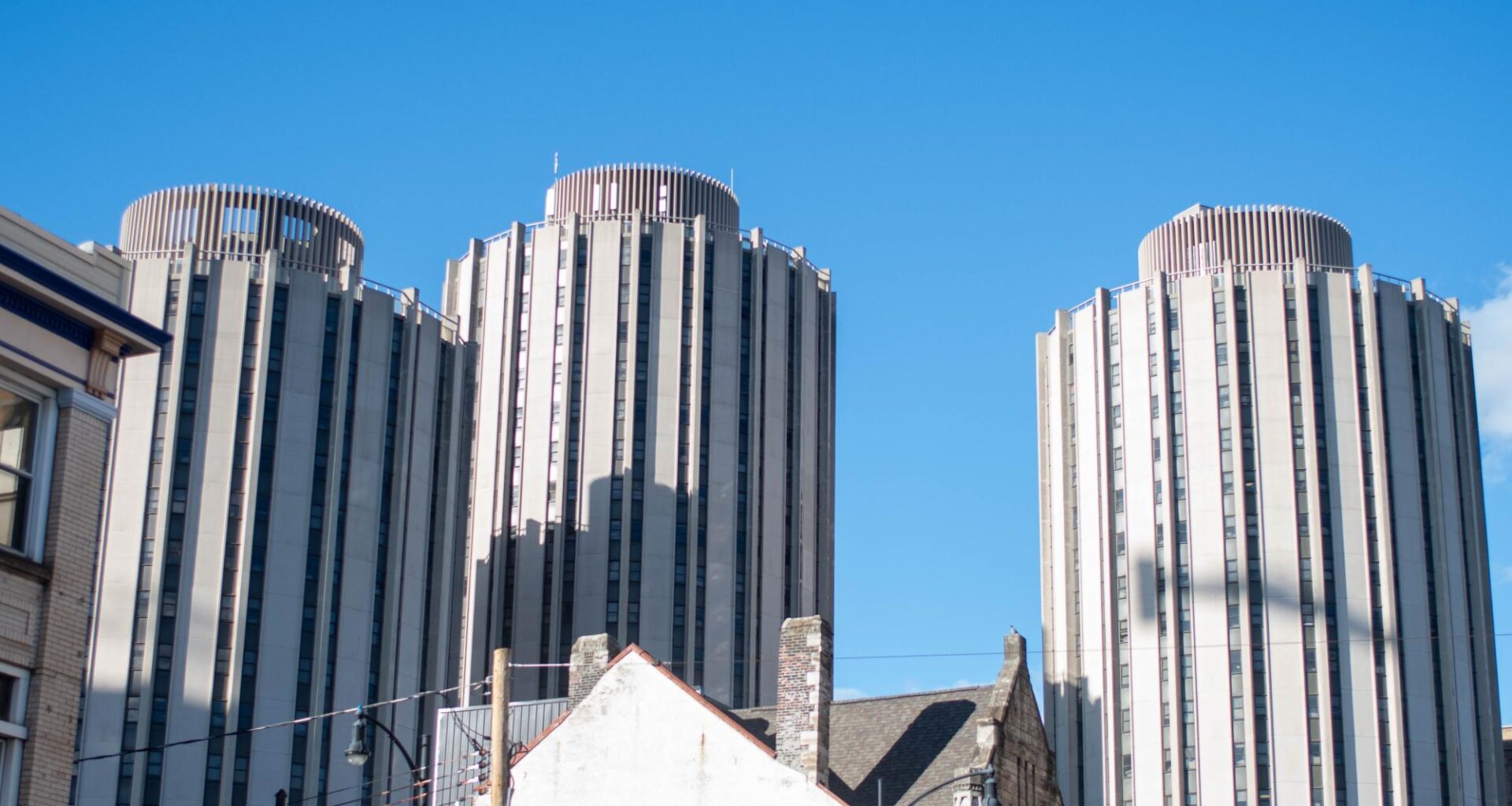
Current first-year students might not be able to live on campus once they become juniors.
Students were previously guaranteed on-campus housing for three years, but Pitt recently changed the guarantee to two years for current first-year students. This change follows increasing enrollment in line with the University’s plan to reach 22,000 undergraduate students by 2028.
According to University spokesperson Meredith Herndon, the University made this change due to rising demand for “a Pitt education.”
“The University is meeting that demand thoughtfully — recognizing that campus living supports academic success, community building and student connection,” Herndon said.
The 2026-2027 first-year class size is estimated to be 5,200 students. This is less than last academic year’s record-breaking 5,870 first-year students and more than the 4,589 first-year students in the 2024-2025 academic year.
“Currently, Pitt has offered on-campus housing to every student who requested it,” Herndon said.
Samuel Tinnell, a first-year engineering student, expressed concern about the change. Although Tinnell is planning on moving off-campus by his junior year, he believes the change will negatively impact certain students.
“Other people [don’t] have the means to pay [rent] because they can’t generate that money,” Tinnell said. “I would assume [the change] is pretty frustrating because your junior year, you’re just left stranded.”
Bouquet Gardens, an upperclass on-campus housing option, is $6,095 per term. Amos Hall, another upperclass housing option, is $5,700 per term for a single and $5,585 per term for a double.
Webster Hall Apartments, which is off-campus housing in North Oakland, is at least $1,910 per month for a one-bedroom apartment and $2,415 per month for a two-bedroom apartment. A one-bedroom apartment at University Commons in South Oakland starts at $1,175 per month, and a two-bedroom apartment is $1,800 per month.
When sophomore biology major Shauna Arseneau was applying to colleges, financial aid and housing were her primary concerns, and universities with the longest amount of guaranteed housing were her top choices.
“For my financial aid package, it made more sense for me to stay on campus rather than pay more money to live off-campus,” Arseneau said. “Not having the [three year guarantee], or having it cut, would have really impacted where I chose to go — living on campus, having that meal plan, having all that included for cheap is really important for a lot of people.”
Annmarie Whiteman, a first-year rehabilitation science major, said she is planning on living off-campus by her junior year. However, she thinks the change will negatively affect a lot of students and deter some students from coming to Pitt.
“I feel like lots of kids rely on [guaranteed housing] — kids that won’t be able to afford off-campus housing,” Whiteman said. “That probably affected lots of kids applying here.”
Claire Bacskai, a first-year pre-pharmacy student, said she didn’t know much about the guaranteed housing change and that it most likely won’t affect her housing situation.
“I don’t feel a certain way [about the guaranteed housing change] because I didn’t even know that it was a change,” Bacskai said.
Eric Blubaugh, a first-year applied mathematics major, was unaware that past classes received three years of guaranteed housing. He said he is disappointed about the change and thinks public universities should have guaranteed on-campus housing for all undergraduates, like at the University of California, Los Angeles.
“Now that I know [guaranteed housing] could have been three [years], I’m a little disappointed, especially with the housing in Pittsburgh,” Blubaugh said. “It’s very hard to find places close to campus.”