
SCRANTON — As the fight over data center development rages in Lackawanna County, officials want a clear understanding of what potential emergencies involving data centers and related infrastructure might entail and require of local first responders.
To that end, commissioners confirmed Wednesday plans to seek proposals for a threat, vulnerability and emergency response assessment of “critical infrastructure facilities” in the county, including proposed data centers and power plants.
That potential project would identify threats, hazards and operational risks that could affect such facilities and evaluate their physical security, cybersecurity, operational resilience and emergency preparedness, according to a draft “request for quotations” that county Emergency Management Agency Director Tom Taylor recently provided commissioners.
It would also assess the county’s ability to prepare for and respond to emergencies at critical infrastructure facilities, determine whether county and municipal emergency response agencies possess the requisite personnel, equipment and other resources to manage potential incidents and identify “capability gaps” with recommendations for “corrective action, capital investment, training, planning, and grant funding,” per the draft document.

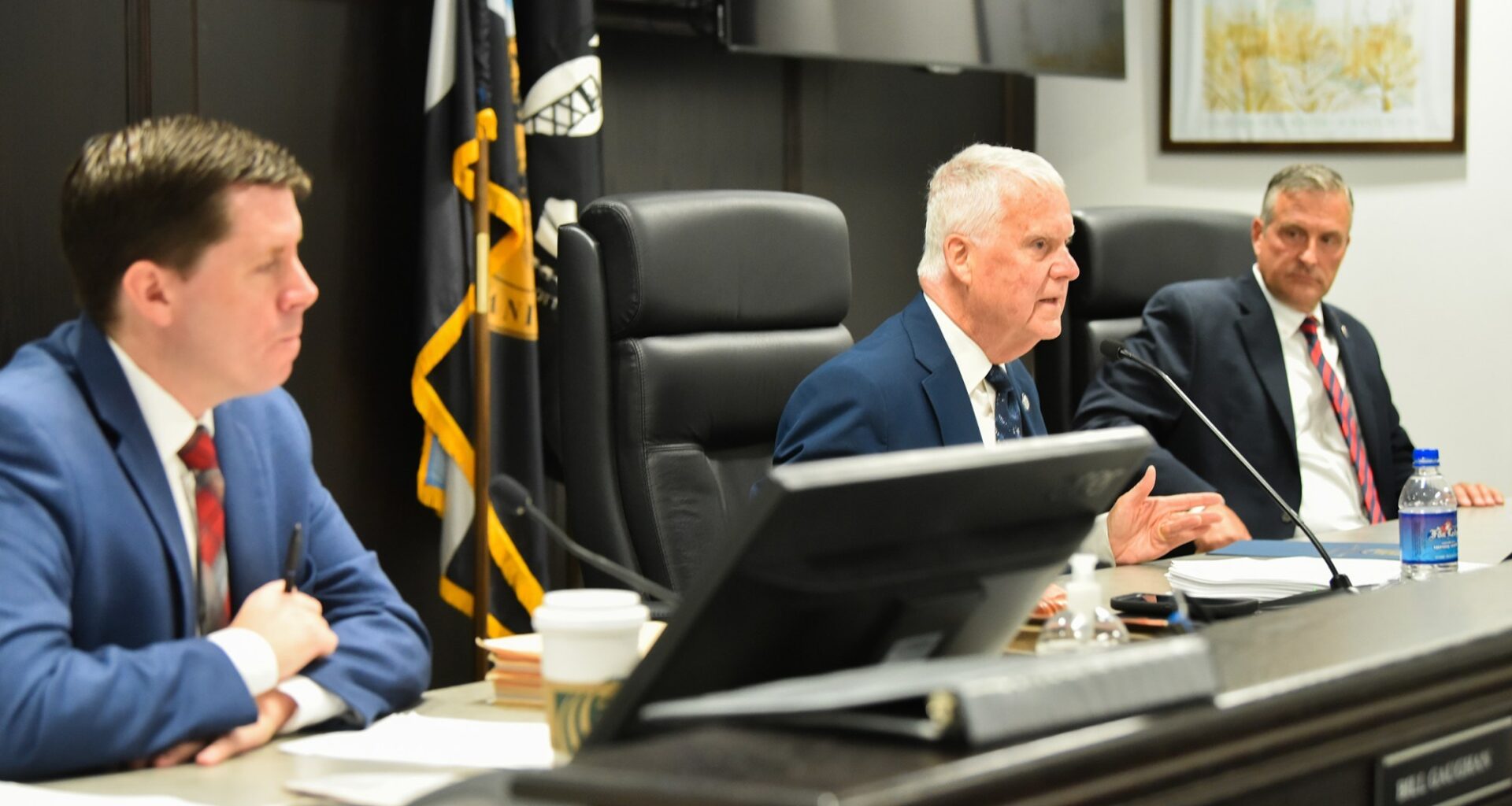
Lackawanna County Commissioner Thom Welby speaks during the commissioners meeting held at hte county goverment center in Scranton Wednesday, September 1, 2026. (SEAN MCKEAG / STAFF PHOTOGRAPHER)

Lackawanna County Commissioners Bill Gaughan, Thom Welby and Chris Chermak applaud during the commissioners meeting held at hte county goverment center in Scranton Wednesday, September 1, 2026. (SEAN MCKEAG / STAFF PHOTOGRAPHER)

Lackawanna County Commissioners Bill Gaughan, Thom Welby and Chris Chermak listen to public comment during the commissioners meeting held at hte county goverment center in Scranton Wednesday, September 1, 2026. (SEAN MCKEAG / STAFF PHOTOGRAPHER)
Show Caption
1 of 3
Lackawanna County Commissioner Thom Welby speaks during the commissioners meeting held at hte county goverment center in Scranton Wednesday, September 1, 2026. (SEAN MCKEAG / STAFF PHOTOGRAPHER)
The draft RFQ lists more than a dozen examples of critical infrastructure facilities to be assessed as part of the study, including data centers, electrical generation facilities, electrical transmission infrastructure, fuel storage and distribution facilities, healthcare and medical facilities, and water and wastewater treatment sites, among other examples.
It’s not clear when the county might formally solicit proposals for the project, which Commissioners Bill Gaughan, Thom Welby and Chris Chermak all endorsed in June, though commissioners plan to sit down with Taylor soon to discuss the matter.
Gaughan, a chief elected critic of data center development locally, said Wednesday the county should move forward with the assessment “as quickly and as reasonably as possible” in the interest of preparedness should proposals to build data center campuses, power plants and related infrastructure here come to fruition.
“Clearly … we have major changes taking place across Lackawanna County when it comes to critical infrastructure like data centers, power plants, substations, natural gas infrastructure, and if all of this is allowed to build out — which I pray to God it’s not — we need to ask a very simple question: Are we actually prepared if something goes wrong?” he said. “Do our volunteer firefighters have the right equipment and training? Does our 911 system have what it needs? Do we have sufficient hazardous-materials capabilities? What happens during a major fire, explosion, gas incident, cyber attack or extended power failure? And if we don’t have the resources locally, where are they coming from and how long will it take them to get here?”
Chermak and Welby confirmed after Wednesday’s meeting, which the latter left early to attend to a family emergency, the county’s intent to seek proposals for the emergency response assessment.
“In that world you’re training for stuff that you hope never happens,” Chermak said in June. “Putting a plan in place, getting to know exactly what’s in some of these buildings and then what you’re up against — I mean it’s just all part of what these guys train for all the time — but it’s definitely a necessity.”
Welby has described the project as critically important.
Lackawanna County remains a major hot spot for largely speculative data center development that’s inspired a passionate and growing grassroots opposition movement locally. Wednesday’s commissioners meeting came after the newspaper broke news that a joint venture between PPL Corp. and Blackstone Infrastructure secured the rights to purchase more than 11 square miles of land in northern Lackawanna County to explore building at least two massive power plants for data centers — news that prompted immediate backlash from Gaughan and other data center opponents.
A holding company tied to PPL Corp. and its venture with Blackstone signed agreements in April and June to purchase nearly 7,200 acres across Archbald, Carbondale, Carbondale Twp., Fell Twp. and Mayfield. The joint venture also filed requests to add 2.25 gigawatts of natural gas power plants in Lackawanna County, though the exact location of the two potential power plants remains unclear.
The county, meanwhile, is home to more than a dozen proposed data center projects. Multiple proposals are tied up in litigation.
The emergency response assessment commissioners are exploring would be separate and distinct from another project aimed at quantifying the cumulative health and air-quality impacts of data centers and related infrastructure proposed in the county. County officials issued a request for proposals last month seeking firms for that study.
The move to seek additional proposals frustrated Gaughan, who’d pushed for the county to move forward with a $165,000 proposal for the air-quality and health impact study he’d already secured from EmPower Analytics Group. Welby and Chermak, who took heat from data center opponents early last month for not immediately acting on the EmPower proposal, defended the decision to issue the RFP, describing it as a vehicle for a potentially stronger and possibly less-expensive end product.
Proposals for the health impact study are due back to the county Sept. 11.