
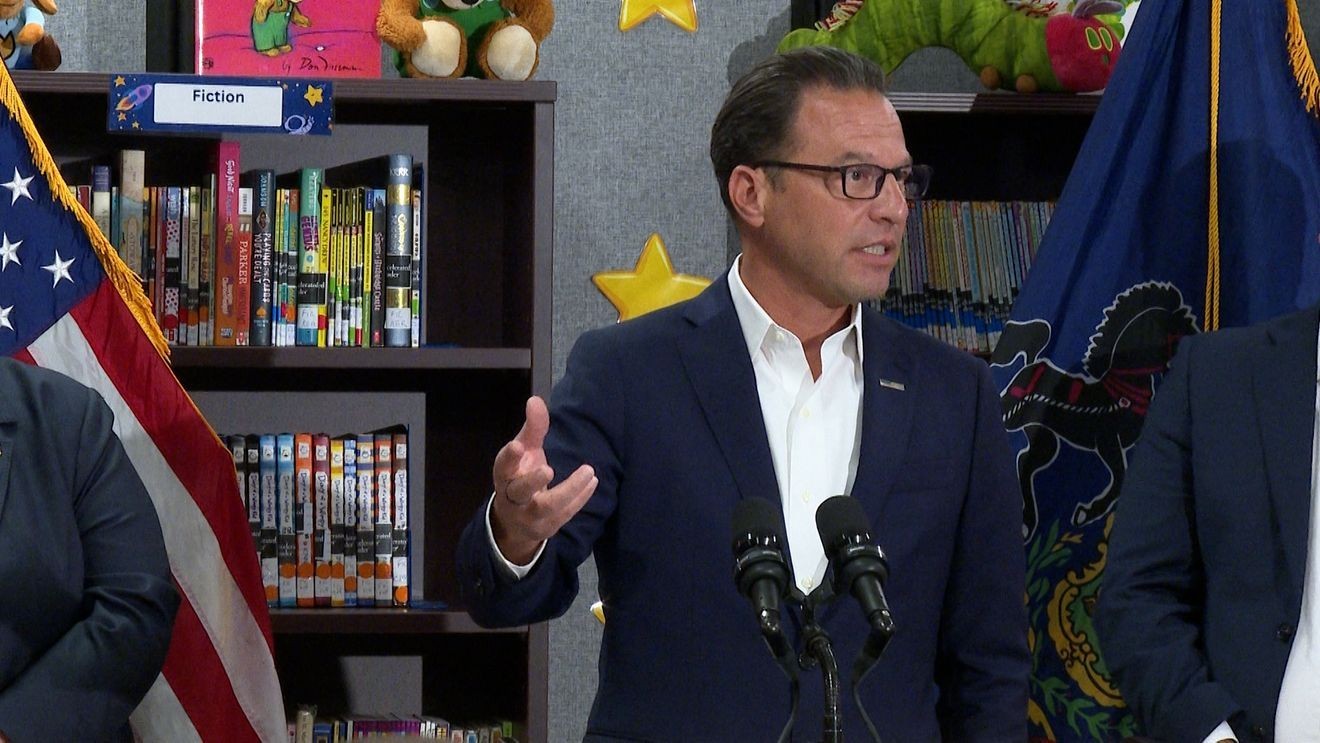
SCRANTON, LACKAWANNA CO. (WOLF) — Governor Josh Shapiro visited Neil Armstrong Elementary School in Scranton Wednesday, highlighting what his administration calls historic investments in Pennsylvania’s public schools.
The governor was joined by Pennsylvania Department of Education Secretary Dr. Carrie Rowe as they showcased how increased state funding is being used to restore programs and provide additional resources for students.
Over the past three years, the Shapiro administration says it has increased funding for Pennsylvania schools by $11.85 billion. The governor’s 2026-27 budget includes a $678 million, one-year increase in education funding, nearly a 35% increase since he took office.
Shapiro said the new funding formula is designed to direct more money to school districts that have historically received less state support.
“The school districts that have historically been left behind by the state, we’re actually driving those dollars out in a new formula,” Shapiro said. “The districts that need the most help are actually, for the first time, getting the most help.”
Scranton School District officials say the increased funding is helping bring back programs and positions that had been cut during years of financial challenges.
Inside Neil Armstrong Elementary, books line the walls, giving students plenty to choose from. But just a few years ago, this library didn’t exist.
Jennifer Telesco, president of the Scranton Federation of Teachers, said seeing the space restored represents more than just a physical change.
“It really is amazing to see what once just bare walls was returning to a classroom and a library for students where they have access to books,” Telesco said.
The district has also brought back elementary library programs, hired eight elementary STEM teachers and added school counselors for students in grades five through eight.
Middle school arts programs have also been restored, along with a district librarian.
Scranton has additionally expanded its special education offerings. Over the past three years, the district opened 26 autism support classrooms, bringing the total to 58 full autism support classrooms and 21 emotional support classrooms.
District officials say funding is also being used for infrastructure improvements throughout Scranton schools.
Dr. Erin Keating, superintendent of the Scranton School District, said education funding directly affects the opportunities available to students.
“When we talk about educational funding, I want people to realize we’re talking about children and we’re talking about opportunities, and we’re talking about essential things that every child deserves in a school,” Keating said.
Keating said the goal is to ensure a student’s educational opportunities aren’t determined by where they live.
“ZIP code should never determine the educational offerings for a student,” she said. “The investments that have been made in public education have allowed that to start to become a reality.”
Rowe said the increased funding is already having an impact across Pennsylvania.
“The impact of that money is finally being realized,” Rowe said.
She pointed to decreases in chronic absenteeism, increased attendance and a rising graduation rate over the past three years.
Rowe also said Pennsylvania is now a national leader in career readiness.
The Shapiro administration has also highlighted other education initiatives, including legislation providing free breakfast to students and a statewide requirement for recess.
The administration says the commonwealth has invested nearly $12 billion more in public schools since Shapiro took office, representing about a 30% increase in state funding for public education.
For the Scranton School District specifically, state-level funding has increased by 63.5% over the past four years.
District leaders say those investments are translating into tangible changes inside classrooms, from books and libraries to STEM education, counseling, arts and additional support for students with disabilities.