
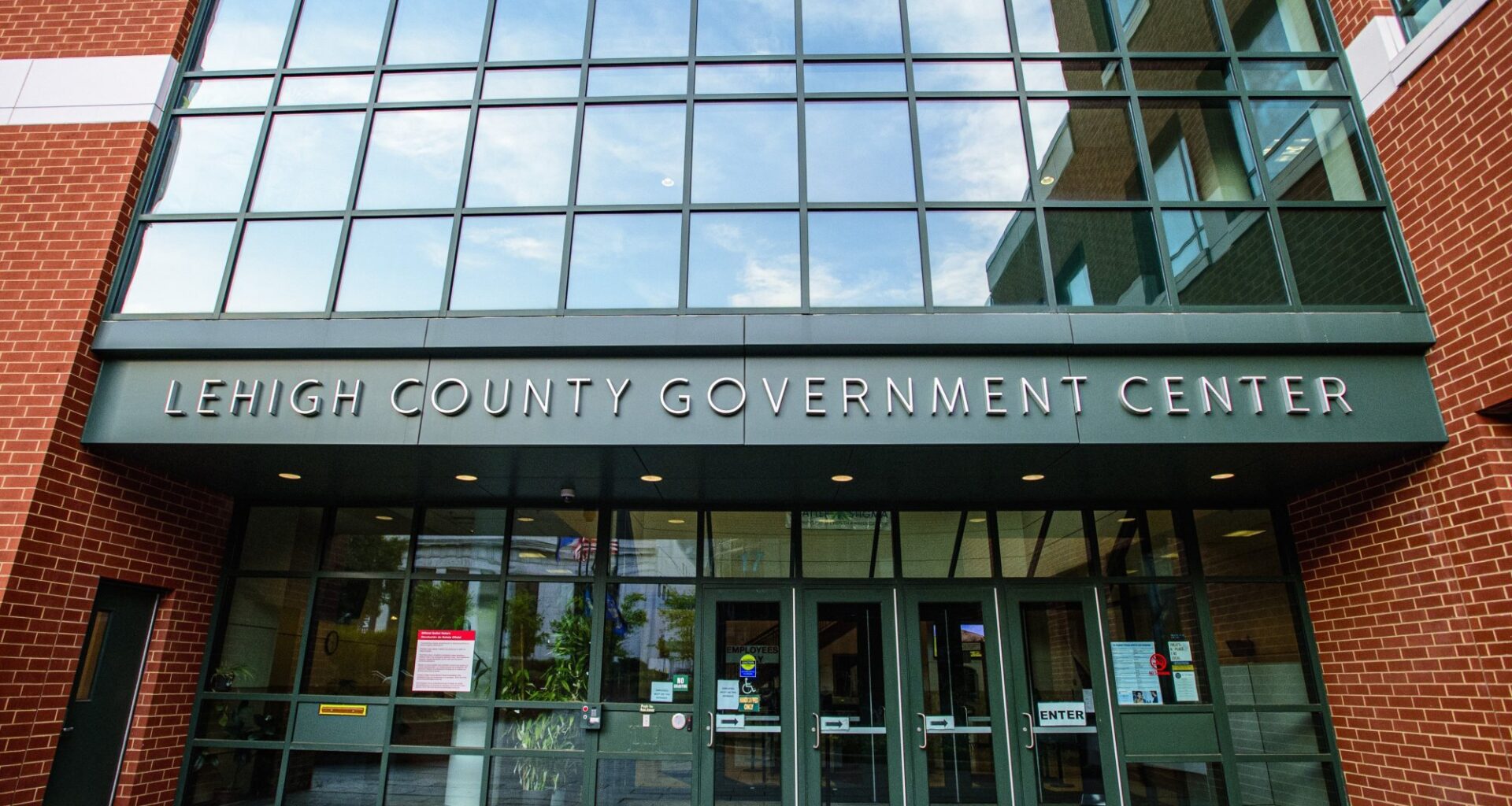
Two days after Lehigh County Executive Josh Siegel handed them his proposed 2027 budget, which included a request for a 17% property tax increase, county commissioners on Wednesday evening held the first of four public hearings before they’ll vote on the budget in late October.
Commissioner Sarah Fevig, chair of the Finance Committee, started the hearing with what she described as “difficult news to process.” What was believed to be a projected $3.7 million budget deficit is actually a $4.7 million deficit.
“Without a tax increase in six years, and that tax increase simply resetting us to a 2013 millage rate, this financial hole has been building and has now reached a critical mass,” Fevig said. “Lehigh County residents are facing an affordability crisis, driven by many factors. We must leave no stone unturned in our efforts to bring forth a fiscally responsible budget that maintains key services for our residents.”
While most of the three-plus hour hearing on the proposed $562 million budget was a recounting of county services and their increasing costs, it was three new initiatives that Siegel asked to add to the budget that generated the most reaction from the board and public.
Most controversial was Siegel’s request to spend $500,000 to create a Clean Elections anti-corruption fund, which would use taxpayer money to match small campaign contributions. If passed, it would be the first program of its kind in Pennsylvania.
“We are the shepherds, stewards and safeguards of democracy and the democratic process,” Siegel told the commissioners. “I don’t want you to think about it as a subsidization of politics, I want you to think about it as an alternative to a status quo that is broken, dysfunctional and corrosive.”
Under the initiative, the county would match small campaign donations 6 to 1. Candidates would have to follow strict rules and spending caps, and demonstrate a level of community support to access the funding.
Siegel noted that jurisdictions across the country, most notably New York state and Washington, D.C., have similar programs. The idea is to allow people who are not wealthy or well-connected to run for office, he said, and take the constant pressure of fundraising out of races.
“The idea is that you’re rewarding grassroots democracy. You’re not trying to lavishly overfund folks. You’re just trying to make sure people have a reasonable capacity to compete,” Siegel said. “It levels the playing field.”
Commissioner Antonio Pineda said he was against the idea, and promised to make an amendment to eliminate the Clean Elections proposal from the budget.
“I do not see the merits of funding people’s elections with county taxpayer dollars,” Pineda said. “There’s a large difference in my mind from administering elections, and pushing the button of financing campaigns. I fail to see how that is an anti-corruption fund, I think that’s ripe for corruption. I have a real problem with taking someone’s taxpayer dollars and giving it to a candidate they don’t support.”
George Rivera, chair of the Lehigh County Republican Committee, stepped up to the podium to voice his dislike of the Clean Elections proposal, saying county officials should be focused on cutting costs, not creating programs that could raise taxes.
“If you want campaign finance reform, establish reasonable contribution limits. Do not hand candidates taxpayer-funded checks. I don’t want to support someone that I don’t agree with who may not align with my values,” Rivera said.
Siegel also proposed a $500,000 Data Center and Open Space Defense Fund, and setting aside $500,000 annually to replenish the county’s stabilization fund, a savings account the county draws on at times when other accounts are low, like when there is a state budget stalemate.
Heather Dean, an Allentown resident who sought to be appointed to the board when Commissioner Jon Irons stepped down in July, urged the commissioners to think of taxpayers’ wallets when they vote on the budget.
“I don’t see a lot of fiscal responsibility here. Tonight, I heard a lot about wants, but not needs,” Dean said.
The commissioners will hold more budget hearings Sept. 16, 21 and 28.