
Pennsylvania allows data center developers to skip paying a 6% sales tax on their computer equipment — one of the biggest costs of running a data center — thanks to a 2021 law passed with bipartisan support from the Legislature.
Because of the tax break: the state will lose $188.4 million in tax revenue in 2026 alone, per a Department of Revenue analysis this year. That’s a 358% jump from just two years ago.
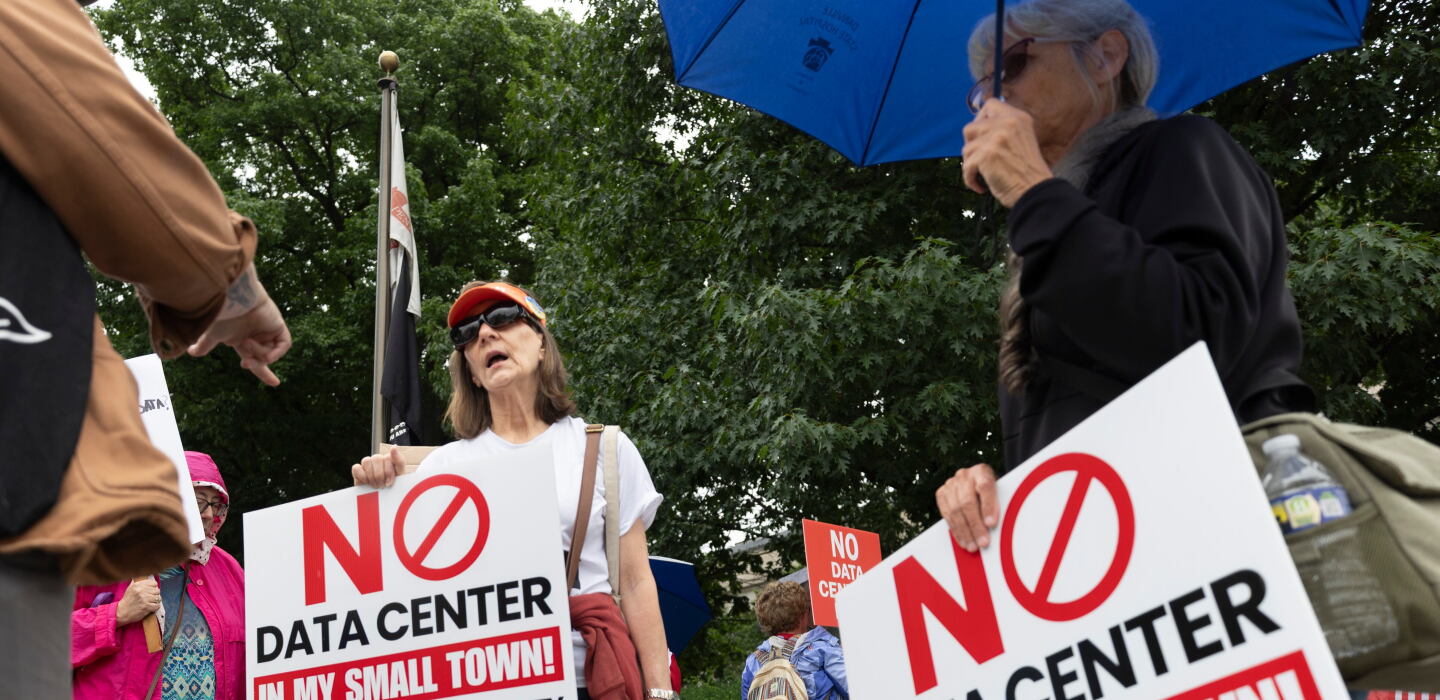
Now, five years after the law passed, many of the same lawmakers who voted for the sales tax break are trying to repeal it. The Democratically-controlled House passed a bill with overwhelming bipartisan support in late June to accomplish just that. But despite that vote and public backlash against data centers, the Republican-controlled Senate hasn’t acted on that bill.
Instead, the Senate passed an 80-page bill on the same day filled with different amendments, including a reference to repeal the tax break for data centers. The Senate then refused to move forward with it because of amendments added by Democrats, a tactic experts say provides “cover” ahead of a consequential election. It allows lawmakers to say they voted against the unpopular tax break without it ever coming to fruition.
Amid the politicking, top leaders from both chambers are taking money from businesses and people who have financial interests in data center growth.
A PennLive review of 2026 campaign finance filings found that the six leaders from the House and Senate took almost half a million dollars in campaign donations from individuals, PACs and business entities that have financial stakes in data center development. Senate President Pro Tempore Kim Ward, R-Westmoreland County, took the largest amount at $123,000 with House Majority Leader Matt Bradford, D-Montgomery County, trailing close behind at $113,000.
Senate Majority Leader Joe Pittman, R-Indiana County, who controls which bills get brought up for a vote, would not say why the Senate hasn’t taken up the House bill. Instead, in an emailed statement he blamed the House Democrats and criticized Gov. Josh Shapiro and his “anything but consistent” stances on data centers.
“Given the Governor has emphasized Pennsylvania now has the ‘strictest guardrails in the nation’ for data center development, it seems he believes the matter has been addressed,” Pittman said.
In an emailed statement, a spokesperson for Shapiro said he issued his recent executive order implementing guardrails for data centers because the “Legislature failed to enact significant data center restrictions or repeal this tax exemption,” adding that he would be open to “conversations on this issue.”
Ward, the Senate’s highest leader, who took the most in campaign donations, has a hyperscale data center in her district that already got state permits to operate. She deferred all questions to Pittman.
Pittman, whose district has a multibillion dollar data center proposal, said campaign donations do not influence his decisions. He added that he “strongly prioritizes” his constituents’ concerns and “at the same time, interest groups, lobbyists, and organizations also play a key role in offering a collective view on matters, which are useful and appropriate.”
Who Actually Benefits From the Tax Break?
State lawmakers have pushed dozens of mailers and press releases this year touting their votes on bills trying to repeal the data center tax break. But the tax break still remains and data center developers are using more and more of it every year.
The state Revenue Department estimates it will cost Pennsylvania more than half a billion dollars by 2030. But it’s unclear how accurate that is because the same department estimated the tax break would cost nearly $90 million by 2027, per Penn Capital-Star reporting. The cost has ballooned to almost triple that this year.
The state also allows data centers to use this unlimited tax break in secret, meaning the public doesn’t know how much each entity is using.
The revenue department reported that 13 known businesses used the tax break last year with only two requirements: invest up to $100 million and create a maximum of 45 jobs with no specifications on the type of job, including whether they are temporary.
The sales tax break is not unique to Pennsylvania; most states provide tax breaks in some form to aid data center growth.
But do developers planning multibillion dollar infrastructure absolutely need a tax break?
Bob Bair from Pennsylvania’s Building and Construction Trades Council argues they do, especially if they’re smaller developers. He said the tax break might be the “difference between them locating to Pennsylvania and not.”
The governor’s latest executive order included more guardrails, he added.
“You offer them the carrot, if they don’t take it, you might have to hit them with a stick,” he said. “Well, the governor just pretty much did that with his [GRID program] and says, look, if you don’t do this, this and this, you’re not getting your tax break.”
Shapiro’s order requires developers to sign legally binding agreements promising to pay for their own energy, get permissions from local governments, talk to communities in advance and report energy and water usage.
(Four data center projects, which include two Amazon data centers in Falls and Salem townships, already got state permits before the governor’s new rules kicked in but would be subject to the rules to obtain future permits.)
But Anthony Elmo with GoodJobsFirst, a national policy organization that advocates for government accountability with economic development, disagrees about the true benefits of the tax break, especially if there isn’t full transparency.
“If Pennsylvania does not disclose how much each company receives, how many permanent jobs result, or whether the investment would happen without the tax break, lawmakers have little basis for claiming taxpayers receive a strong return,” Elmo said.
‘Degree of Cover’
Lawmakers, from both parties for the most part, want the tax break gone.
But for a bill to become law in Harrisburg, it needs to pass both the House and the Senate before it reaches the governor’s desk.
In this case, both chambers passed bills to repeal the sales tax break for data centers. But the Senate’s version isn’t considered “clean.”
Instead, the Senate took a tax reform bill that the House passed last year and heavily edited it. Some of the added language increased funding for the education tax credit program; eliminated electric gross receipts tax; and expanded the manufacturing and investment tax credits.
Buried deep in the 80-page document is language repealing the sales tax break for data centers.
The House then added their own amendments to the bill, which ballooned to 203 pages with language to create a digital advertising tax, increase reporting requirements for the education tax credit and utility profits, among other things.
Senate Leader Pittman said that “House Democrats amended the legislation into an unrecognizable bill.”
The House did pass a clean bill earlier this year, meaning the bill only has language that gets rid of the tax break. The bill, sponsored by Rep. Greg Vitali, D-Delaware County, passed 197-5 with overwhelming support from both Republican and Democrat lawmakers. And the Senate hasn’t brought it up for a vote.
Pittman did not directly answer why. However, in an August press release, he said that “work is also being undertaken” to bring up data center-related bills in the fall when lawmakers are back in session for nine days.
Sen. Cris Dush, R-Centre County, called the situation “strange” but said “unfortunately, that’s far too common.”
“When people see that there’s an opportunity for a bill that everybody wants to get behind…’okay, let me stick this into that so that I can get the thing that I’ve been working on for five or ten years and finally get it passed,’” Dush told PennLive.
With the midterm elections just 10 weeks away, lawmakers, especially in vulnerable districts, are desperate to get the word out about their stance against data centers.
Showing how they voted on the tax break is the “lowest hanging fruit,” said Chris Borick, a longtime Pennsylvania pollster and professor at Lehigh University.
But election years also come with fewer actual laws passed, he said.
“So now I think they want to have a little bit of it both ways,” Borick told PennLive. “It gives them a degree of cover where they could say, yeah, I voted on this and the process in Harrisburg is holding it up right now. And I don’t think they’re all that sad if that’s the case.”
Track hyperscale data centers projects in Pennsylvania via our map and database.
If we’ve missed one, please submit via this form. Click here to see our methodology and read more stories in PennLive’s ongoing data center coverage.
©2026 Advance Local Media LLC. Visit pennlive.com. Distributed by Tribune Content Agency, LLC.