
In their 2006 song “Pittsburgh,” college rock band They Might Be Giants sang, “I still have dreams about a place / called The Electric Banana, where we’re falling into space.”
The tiny club they’re talking about had a big reputation. After starting their business as a dance club in the 1970s, the Electric Banana’s owners, couple Johnny and Judy Zarra, aka Johnny and Judy Banana, pivoted toward
the burgeoning punk scene in 1979. What
occurred over the next two decades is the stuff of legend for scene kids and punks of the era.
Punk and indie rock pioneers including Black Flag, Minutemen, Hüsker Dü, Sonic Youth and many more graced the not-quite-a-stage in the tiny room.
The spot at 3887 Bigelow Blvd. in North Oakland may have turned from a noisy club space into a well-appointed Italian restaurant in 2000. But the memories of shows past still live within the music lovers on Pittsburgh’s outer fringes.
Johnny Zarra said that the eccentric name was an accident, a joke that came out of a conversation with Judy about the quirky names that new bars around town were giving themselves.
“It was going to be The Disco Cockpit,” Zarra said. “It was going to be all airplane motifs. I bought a plane, I paid 350 bucks for it. I was just going to cut the front off, just enough for the propeller and wings sticking out of the wall.”
He never picked up the plane.
Today, one person is doing more to keep the soul of The Banana alive than anyone: Joe Landolina has been maintaining electricbananaclub.net, a comprehensive archive of shows at The Electric Banana, since 2014.
“I got real interested in the punk rock scene and the punk rock music that was coming out,” Landolina said. “And then I found out that we had a scene up here. So I went to The Banana late in 1980 and I had some friends with me and my cousin. I think they came to laugh at the punks, you know. I was the one who was interested.”
He ended up getting hooked on the music and atmosphere of the smoky venue. For the next four years, before he got married and got a “real job,” he spent many nights in crowds of varying sizes at The Electric Banana.
“It was loud. People might imagine it was overbearingly loud, but only Black Flag fit into that category. The people were nice. It seemed like they were all kind of united because they liked the music,” Landolina said.
He cherishes many of his memories there, especially getting to see his favorite band, Minutemen, perform.
“That was a terrific show. I actually have a bootleg of it,” he said.
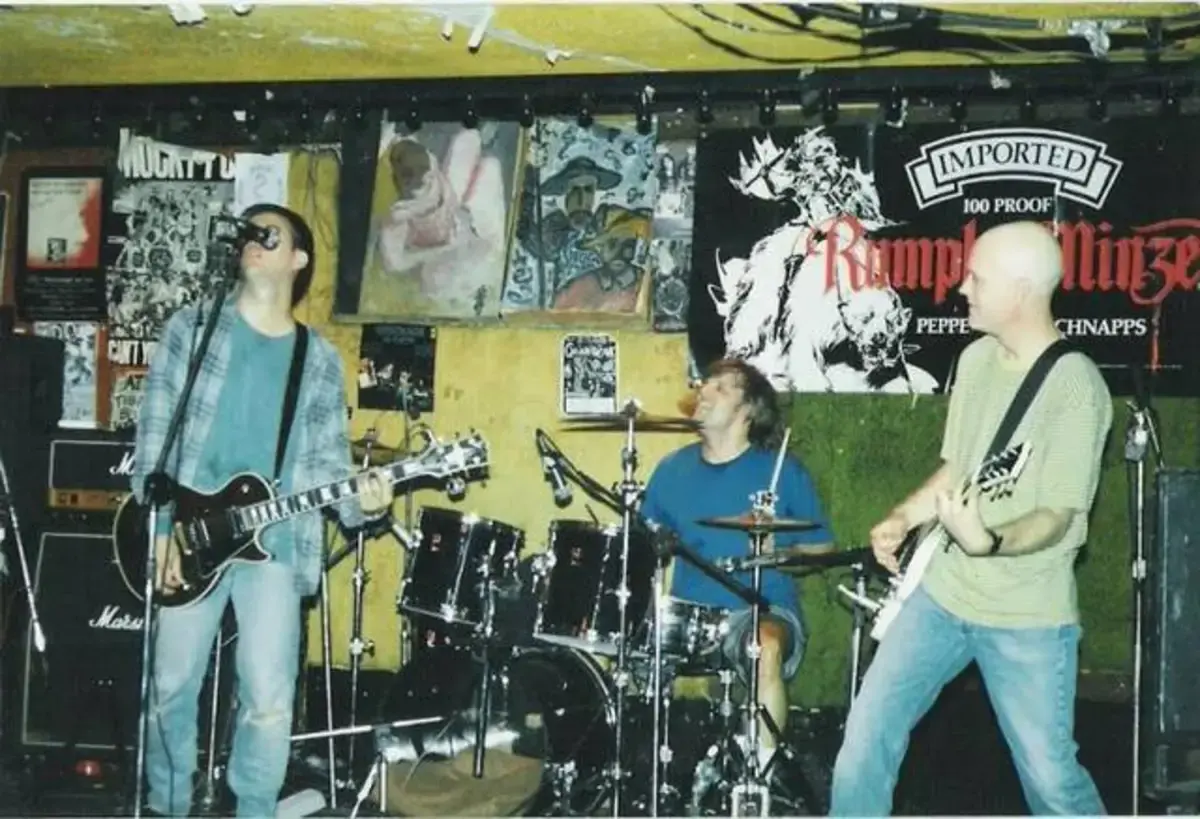
What was it like playing there? The members of the band ATS met at The Banana in the 1980s — and are still playing shows and putting out records around town today.
“I think we considered The Electric Banana like a punk rock college, or an academy,” ATS guitarist Evan Knauer said. “Like a training ground.”
The three members played at the club more than any other band. They described playing to almost-empty weeknight crowds, opening for legendary favorites and out-of-town bands, and getting free beers from Judy when Johnny wasn’t looking.
“It was carpeted. There were posters and T-shirts on the ceiling. It smelled like cigarettes and beer. And it was dark and Johnny’s voice, you could hear it above the band sometimes,” Knauer said.
“I don’t know what the women’s room looked like, but the men’s room was pretty abysmal,” joked Kip Ruefle, ATS’s drummer.
Bill Poznanski’s band The Imprints played The Electric Banana for the first time on Aug. 11, 1980.
“When we played that first time, we had two people show up, and they left after about the fifth song,” Poznanski said.
The more performance-art-focused band pulled stunts like bringing the club’s cigarette machine up onstage when they opened for The Dancing Cigarettes and holding “Renovation Night.”
“We brought in paint cans and tools and tarps and everything. We didn’t really go renovating The Electric Banana, we were just more concentrating on props and everything. Johnny would often do like an Alfred Hitchcock thing and come onstage and participate.”
Johnny was well-known for his big personality and Judy was well known for cooking amazing meals for the punk rockers who came through the club. They got a reputation for treating the counterculture musicians and fans like their kids.
Featured Local Businesses
And Johnny Zarra did enjoy the music that came through — especially the guitar-heavy acts.
“Nobody would book them for years,” Zarra said. “There wasn’t a club owner in the city that would go near it.”
But he saw much promise in the kids with mohawks whose parents were dropping them off at his club.
“They were really all nice kids. Honest to God nice kids. Never had any trouble with them. … I used to watch out for them,” he said.
The club was a mythical place for a great night out. But it was also important as a home for the evolving punk subculture in Pittsburgh, much like similar clubs in cities like Columbus and Buffalo where bands cut their teeth.
At their Aug. 14 show at the Pavilion at Star Lake, the Goo Goo Dolls’ lead singer Johnny Rzeznik brought up the band’s time playing the club during their early hard-rock/punk days in the late 1980s: “All the way from The Electric Banana to here,” he said onstage to loud cheers from the crowd.
John Hargnett was playing in the alt-rock band The Axis Y around Greensburg and Latrobe in the early 1990s when they decided to branch out into the city, sending tapes and press kits to venues around the region.
“I came home to a message that my mom had written and said that Judy from the Electric Banana called, and I thought, ‘OK, so we’ve made it.’ ”
He also remembered the passion and love that Johnny and especially Judy put into the club — including one instance when The Axis Y’s drummer was ill and Judy made him soup.
“It did work. I’ve heard many stories like that, of Judy especially feeding the bands and taking them in,” Hargnett said.
When Judy died in August 2025, she was remembered fondly by many musicians. And while The Electric Banana may have been replaced by Zarra’s Restaurant at the turn of the century, the memories live on in many punks’ heads, on the internet and within the DNA of the building itself.
“I remember asking him, ‘What did you guys do with the posters?’ ” ATS’s Ruefle said of a conversation with Zarra. “And this warmed my heart, because he said, ‘Oh, I didn’t have the heart to take them down, so we just put drywall up in front of them.’ ”