
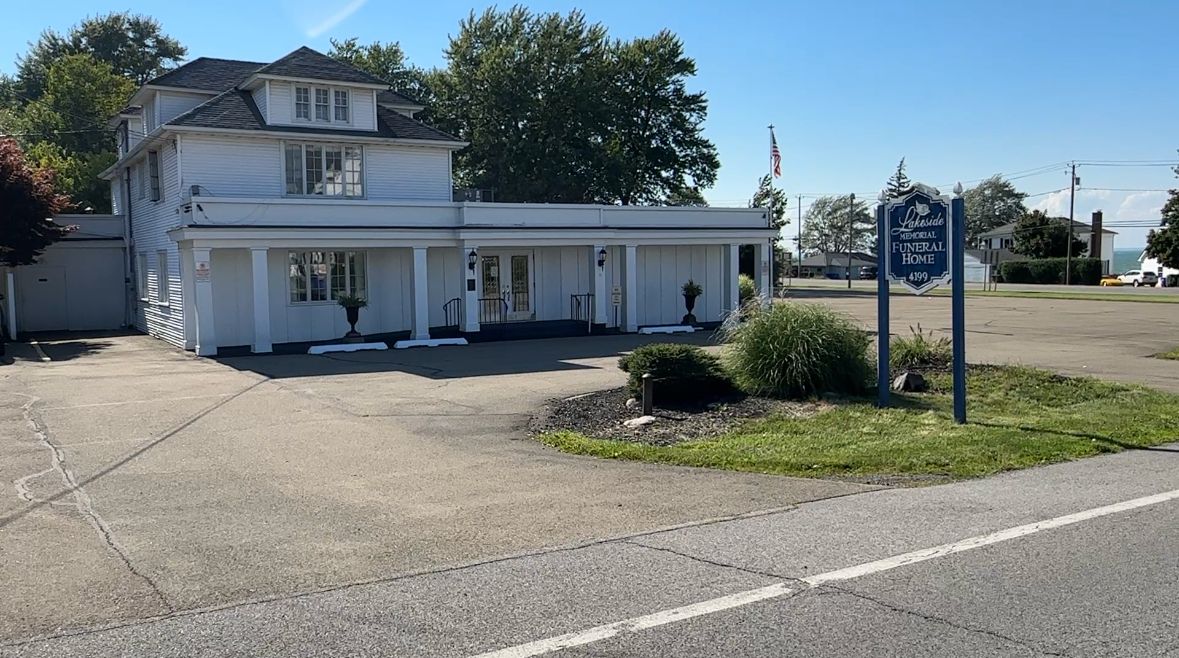
ERIE COUNTY, N.Y. — Charles Castiglia, owner of Lakeside Memorial Funeral Home, has collected fingerprints for almost 20 years for families wanting to memorialize a loved one in a piece of jewelry or a tattoo.
“Something unique of the person that they lost,” said Castiglia.
Under Erie County’s recently signed Biometrics Law, the funeral home will now have to shred old paper copies of the data.
“Which kinda stinks because if the family comes back to us and we’ve had families come back, five, six, 10 years later, saying, ‘do you still have a copy of the prints?’ We don’t have it. Well, I no longer have the copies of the prints for those families,” Castiglia said.
During a public hearing in May, Castiglia led the charge and made a presentation on behalf of the Erie Niagara Funeral Directors Association.
He asked county leaders for, and was granted, an exemption now allowing funeral homes to hold prints for one year before destroying them or giving them to the family.
He had asked for a three-to-five-year exemption.
“I wish the county would give us a little bit longer than one year, just because families do come back. They’re very emotional. They’ll ask us to take the fingerprints and say, ‘hey, could you wait a little bit? We’re not ready to make that decision just yet.’ And it could take them longer than a year to make a decision that they want to do something with the fingerprint. But I understand why they did a year. It makes sense because they’re not looking at it from a grieving person’s perspective. Their just saying, ‘well, it seems reasonable,'” said Castiglia.
Erie County Executive Mark Poloncarz signed the Biometrics Transparency and Privacy Act into law in May, banning businesses from collecting, using, retaining and selling biometric data, or information that can be derived from it.
“It’s a little bit different than a user name and password. It’s unique to an individual and if someone were to compromise your biometric data or a thief were to steal it, you can’t get that back. You can’t change it,” said Jennifer Andres, director of consumer protection, Erie County.
Businesses had until July 5 to disclose if they possess the data and how they plan to destroy it.
“If the division is made aware of a business that is in possession of biometric data and has not fulfilled the requirements of the law, than we would work toward enforcing that,” said Andres.
Legal experts with Phillips Lytle cite an upward trend in regulating the data.
“We’ve seen amendments to existing data privacy and security laws expand the definition of personal and private information that includes biometric data,” said Anna Mercado Clark, chief information security officer, Phillips Lytle.
She says there are some circumstances when the date could help maintain security, or access an employer provided protected system.
“Without relying on a document that could be forges, that could be lost, that could contain incorrect information,” she said.
County leaders are urging full compliance from the business community.
“It is on the business to understand if this law applies to them and to uncover whether or not they are collecting, using, storing, selling, monetizing biometric data in any way,” said Andres.
Businesses like Lakeside Memorial.
“It’s the law. It’s important for us to do things the right way. We totally understand why the county created this law and enacted it,” said Castiglia.
The law states that, depending on the type of violation, businesses could face fines of a $1,000 to $5,000 a day.
The Syracuse Common Council and Monroe County Legislature have also voted to also ban local businesses from collecting and sharing data.