
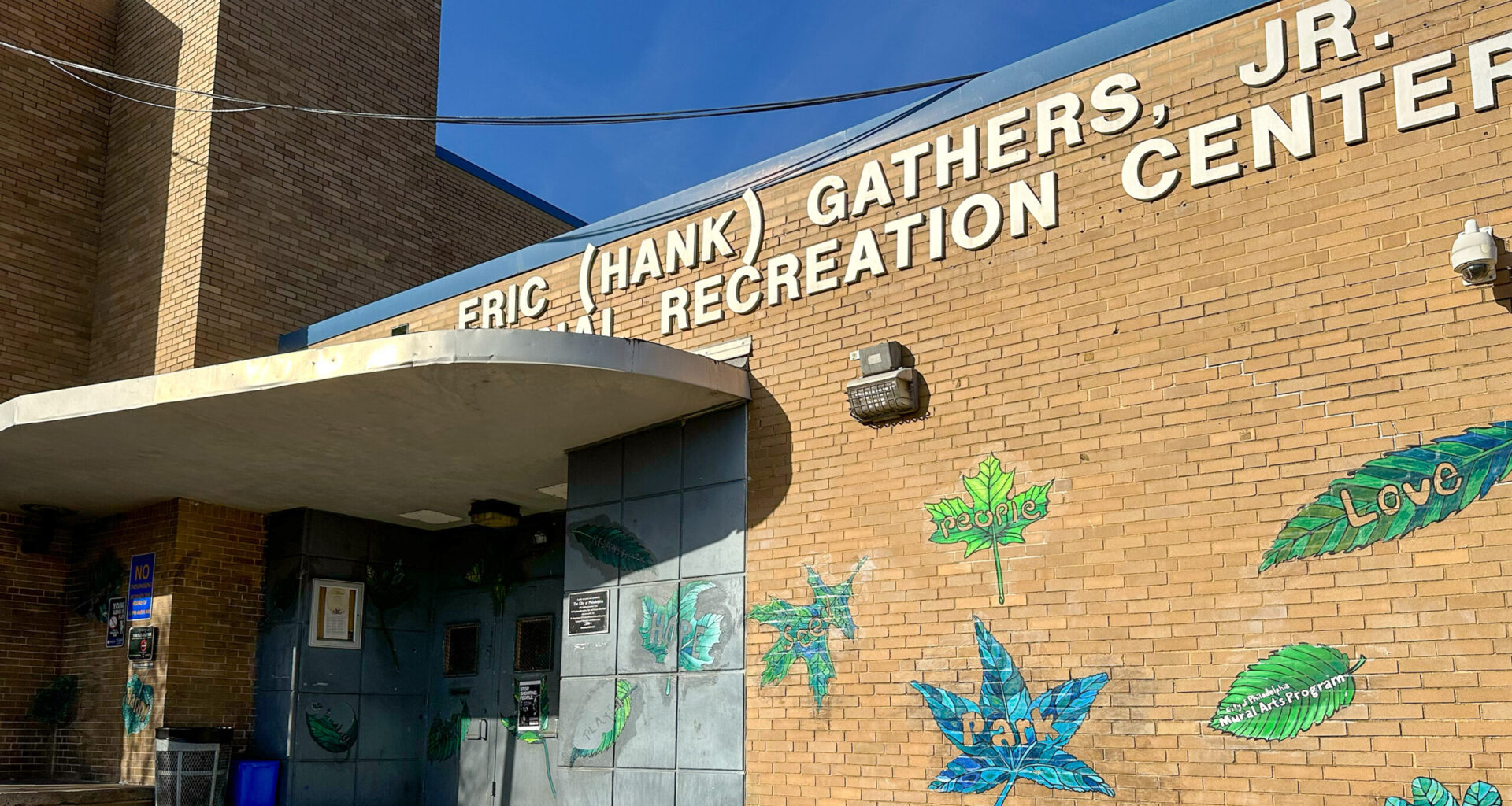
Philadelphia’s recreation centers and other publicly owned buildings are nearing a major connectivity upgrade.
Two years after Verizon agreed to install public internet across 183 city sites, officials say 172 now have broadband and the company hopes to finish the rest by the end of 2026.
Officially called the Institutional Network Services (iNET) project, it was supposed to be completed within two years, but construction timelines caused delays, Kikelomo Abegunde, lead engineer and project manager for iNET, told Technical.ly. The original announcement specified broadband in rec centers, but the scope has expanded to other places like older adult centers, district offices and other park buildings.
“The goal is to democratize the access to broadband and Wi-Fi throughout the city of Philadelphia,” Abegunde said.
The project is part of Verizon’s franchise deal with the city, which locked in the price at $456 per location per month, totaling about $5 million over the next five years, with room for growth.
That agreement specifies that Verizon will connect 183 places, including the city’s 154 recreation centers. It also allows the city to expand Verizon’s internet service to as many as 261 additional spots, for a total of 444 connected places, said Eric Reed, Verizon’s vice president of state government affairs for Pennsylvania and Delaware.
Since the original announcement, local officials have already added city field offices and the Winter Street Building in Center City to the plan, according to Abegunde, bringing the total to 185 sites planned or already online.
From construction to connection
When Abegunde was hired in September 2024, the project was already behind schedule.
Since then, her team has been working to catch up, but with eight of the venues under construction, they can only do so much.
The installation process started in Center City, where Verizon’s existing infrastructure was the strongest, she said. Then they went to South Philly, then east and west, and are now addressing North Philly.
The project’s initial pilot looked at a list of priority sites provided by the commissioner of Parks and Recreation.
Verizon and the city worked to bring Wi-Fi to three locations “for the folks who live in Philadelphia, but also those who would be visiting for various events … [so that] we could put our best foot forward,” she said. They included Vare Recreation Center, Love Park and FDR Park’s welcome center, where World Cup visitors were expected to be.
Before this initiative, the city’s rec centers all offered different internet services, with some having none, Steve Robertson, deputy CIO for the city’s Office of Innovation and Technology (OIT), previously told Technical.ly. Some rec center leaders were even paying for internet out of their own pockets.
Throughout this process, what stands out to Abegunde is the gratitude from rec center leaders. For example, Eastwick Recreation Center in southwest Philadelphia had been trying to get Wi-Fi access for years. When they finally got online, the center leader wrote her a thank you note.
“They were so accustomed to going without for so long, and this now represents a change in the way in which they are able to connect,” she said, “with their community and the types of programming that they’re allowed.”
The internet at these locations runs on the same publicly available network, OCF Guest, which does not require a password.
The plugged-in ones have 1 gigabit speeds, which is fast enough to accommodate online learning, telehealth appointments and gaming, Reed from Verizon said.
Digital equity funding in flux
From the get-go, increasing digital equity has been at the center of the project’s mission, according to Reed.
“We wanted to provide the greatest flexibility possible,” Reed told Technical.ly, “to ensure that we have broadband assets and resources deployed throughout the city for those that may not have it at home.”
But Philadelphia’s digital equity ecosystem is in a very different place than it was two years ago.
At the beginning of 2025, Philadelphia was selected for almost $12 million from the federal Digital Equity Act (DEA) to support device distribution, digital skills programming and affordable internet initiatives.
Last summer, the US Department of Commerce canceled those grants, calling the programs within the act unconstitutional because they specify “racial preferences.” This disruption caused local orgs to pause their plans for digital access work.
“With the federal funding, there was a thought that a lot of things were going to change for us,” Madison Lee, director of communications in OIT, told Technical.ly. “We’ve still been able to attack all of our goals, which is to provide access, to provide resources, and to provide skills to residents to connect with technology.”
Advocacy org the National Digital Inclusion Alliance sued the Trump administration over the matter last fall and partially won. The court decided that the federal government could not completely cancel the grant program, but that the DEA had to remove language referring to racial minorities.
Recently, the National Telecommunications and Information Administration revealed plans to bring back some of that funding.
“Having a rec center locally in the neighborhood that has internet access,” Deputy CIO Robertson previously said, “that’s just another linking the chain of things that we try all the time to explore in terms of digital equity and the digital divide.”