
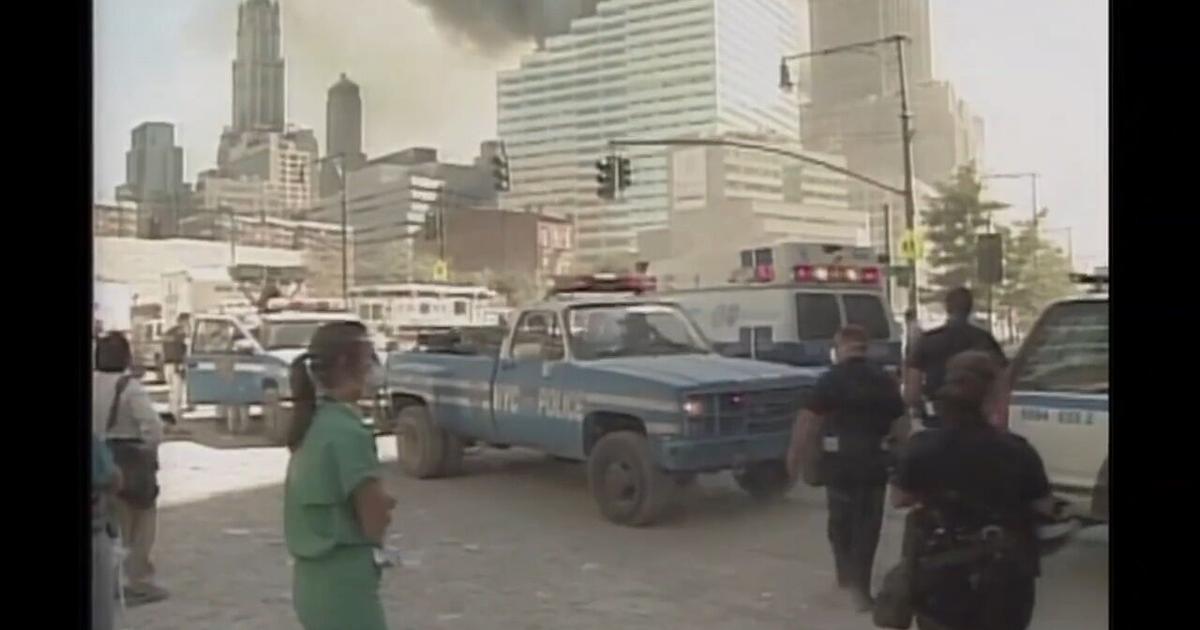
ALLENTOWN, Pa. – Twenty-five years after the Sept. 11 terrorist attacks, the memories remain vivid for those who experienced the day and for the first responders who answered the call to help.
Allentown Fire Department Capt. Jonathan Hammel, the department’s public information officer, was serving as a Marine Corps reservist when he first learned about the attacks.
“I was still a reservist in the Marine Corps. One of the guys came in and alerted us that a plane had crashed into the towers. I don’t think anybody understood the gravity of that statement at that given time, especially in a room that didn’t have a television,” Hammel said.
Hammel said the passage of time has not made the events of that day feel distant.
“It’s hard to believe that it’s 25 years. It seems like just yesterday,” he said.
Nearly 3,000 people were killed in the attacks on Sept. 11, 2001. Many others survived because civilians and first responders ran toward the danger, often risking their own lives to help those trapped inside the World Trade Center, the Pentagon and the area near Shanksville, Pennsylvania.
Hammel said he has difficulty imagining what it took for firefighters to enter the World Trade Center towers.
“I really have a hard time putting myself in their shoes to first off go into a high-rise that’s that tall, knowing that I have to climb all those stairs. That in itself is a feat,” he said.
He added, “I pray I never get put in that position.”
The dangers of Sept. 11 did not end when the towers fell. First responders and others who worked at the sites were exposed to toxic dust and debris, and many have since suffered from illnesses linked to that exposure.
The 9/11 Memorial & Museum has documented the long-term health consequences faced by survivors and responders, including cancers and other illnesses associated with exposure to the toxic environment following the attacks.
“It’s still heartbreaking to hear, those that suffer with the illnesses and the long-lasting effects mental or physical from that day, whether that’s those who directly responded or whether those are family members that have suffered losses,” Hammel said.
Hammel said the sacrifices made by first responders and civilians on Sept. 11 are part of the nation’s history and should continue to be remembered.
“There’s been many, many years of sacrifice given by many Americans over that time period. And I think that speaks a lot to us as a nation and exactly the kind of people that make this nation great,” he said.
The legacy of the attacks also continues to unfold as new information about the aftermath becomes public.
Earlier this week, New York City released more than 170,000 pages of documents related to the aftermath of the attacks. The records include information about the city’s response and air quality concerns following the collapse of the World Trade Center towers. The documents have raised questions about what officials knew about air quality and what information was communicated to residents and first responders in the days and weeks after the attacks.
More records are expected to be released in the coming months, potentially providing additional insight into the response to one of the most consequential days in American history.