
September 14, 2026 | 3:37 PM
The viral infection is most common between December and February, but experts recommend getting vaccinated in September to protect yourself and your community.
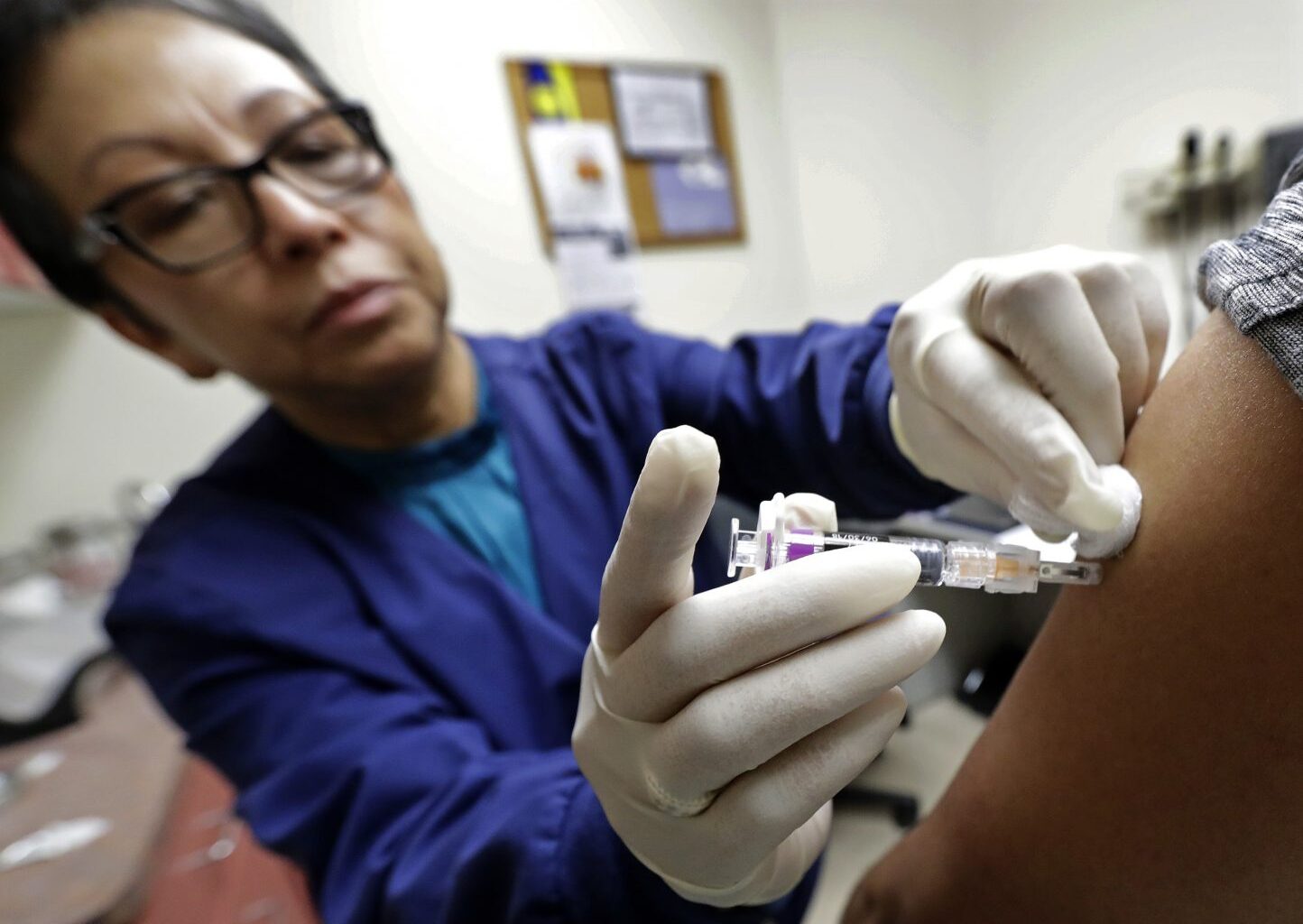
Katie Knol/WITF

Katie Knol is WITF’s General Assignment Reporter & Host.
She graduated from Penn State University in 2024, earning bachelor’s degrees in journalism and political science. She has also worked at WPSU, the News Lab at Penn State, The Daily Collegian and CommRadio.
Ted S. Warren / AP Photo
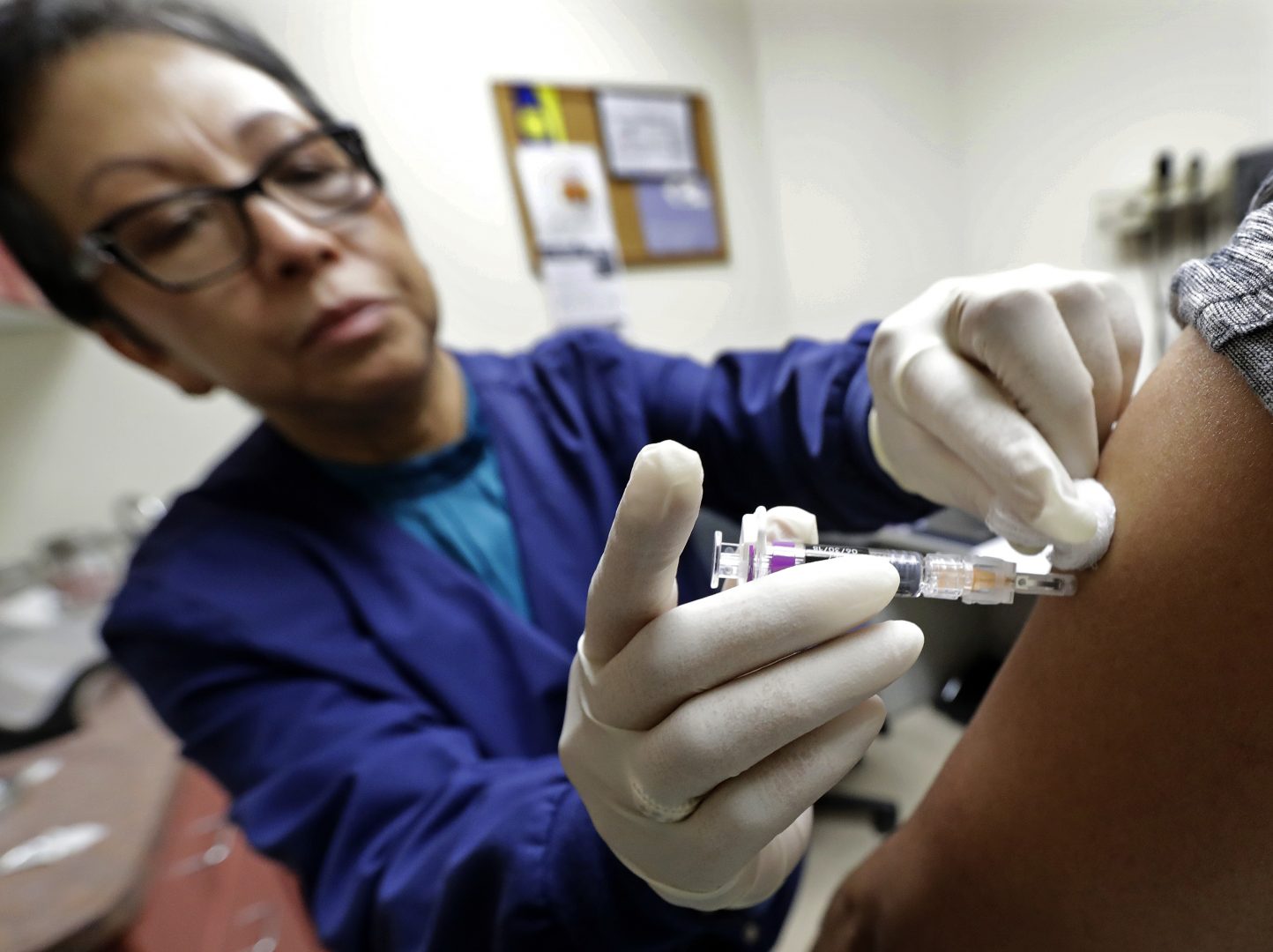
FILE PHOTO: Ana Martinez, a medical assistant at the Sea Mar Community Health Center, gives a patient a flu shot, Thursday, Jan. 11, 2018 in Seattle.
Flu season, which typically occurs in the fall and winter, is approaching. The viral infection is most common between December and February, but experts recommend getting vaccinated now to protect yourself and your community.
“Anything that can help prevent an infectious disease from spreading will help community members, but there’s a proviso on that,” Penn State Health internal medicine physician Dr. Paul Haidet said. “Enough community members actually need to have gotten the shot to slow the spread of an infectious illness throughout a community.”
Here’s what you need to know about the flu shot.
When should I get my flu shot?
Medical experts recommend that people 6 months and older and without severe allergies to an ingredient in the vaccine get a flu shot every season.
September and October are good times to be vaccinated for full protection by the end of October. It takes about two weeks for the shot to be fully effective.
Most adults, especially those over 65 and pregnant women in the first or second trimester, should avoid getting vaccinated too early because protection decreases over time.
How effective is the flu shot?
Flu shot effectiveness varies each year and can’t be known until flu season is underway. However, it’s generally about 40% to 60% effective at preventing the need to see a healthcare professional for flu treatment, according to GoodRx.
Even if a shot doesn’t prevent someone from catching the flu, it can lead to a milder case.
Should I still get vaccinated against COVID-19 during flu season?
Yes, experts say. You should get vaccinated against COVID-19 during flu season, especially if you’re older, immunocompromised or pregnant. Haidet said he speaks with patients individually about their health goals and makes other recommendations if they don’t want a COVID-19 or flu vaccine, but also don’t want to get sick.
This could mean staying away from large groups of people during flu season or wearing a facemask when in public spaces.
It’s safe to get both shots at the same time.
How safe is the flu shot?
The flu shot is safe and recommended for most people 6 months and older.
There are nine versions of the shot this year, and Haidet said some are made in eggs. He recommended that anyone allergic to eggs tell their healthcare provider to ensure they receive a version with ingredients safe for them. If attending a pharmacy for the vaccine, Haidet said people with egg allergies could call to check which vaccine preparations are available.
National Foundation for Infectious Diseases Director Dr. Robert Hopkins said the vaccine is “very safe” and has many benefits.
“There are no common severe adverse events associated with influenza vaccination,” he said. “The greatest benefit of influenza vaccination is reducing the risk of severe influenza disease leading to hospitalization, death and chronic health impacts.”
What are the symptoms of flu?
According to the Centers for Disease Control and Prevention, symptoms could include the following:
Fever or chills
Cough
Sore throat
Runny or stuffy nose
Muscle or body aches
Headaches
Tiredness
Vomiting or diarrhea
What are some possible complications from the flu?
There is a range of possible flu complications, ranging from sinus and ear infections to the more serious complication of pneumonia. Inflammation of the heart, brain or muscle tissues is also possible, along with multi-organ failure.
The flu can make underlying chronic medical problems worse, such as asthma or chronic heart disease.
Who’s at an increased risk of getting the flu?
Anyone can catch the flu, but some people are at an increased risk of complications, including people 65 years old or older, people with chronic medical conditions, pregnant women, and children younger than 5 years old.
Hopkins said children catch and transmit viruses very effectively — in daycares or schools, on the playground and within their homes.

Member support provides the foundation we rely on to connect our community with trusted journalism. Support WITF’s Fall Membership Campaign today.