
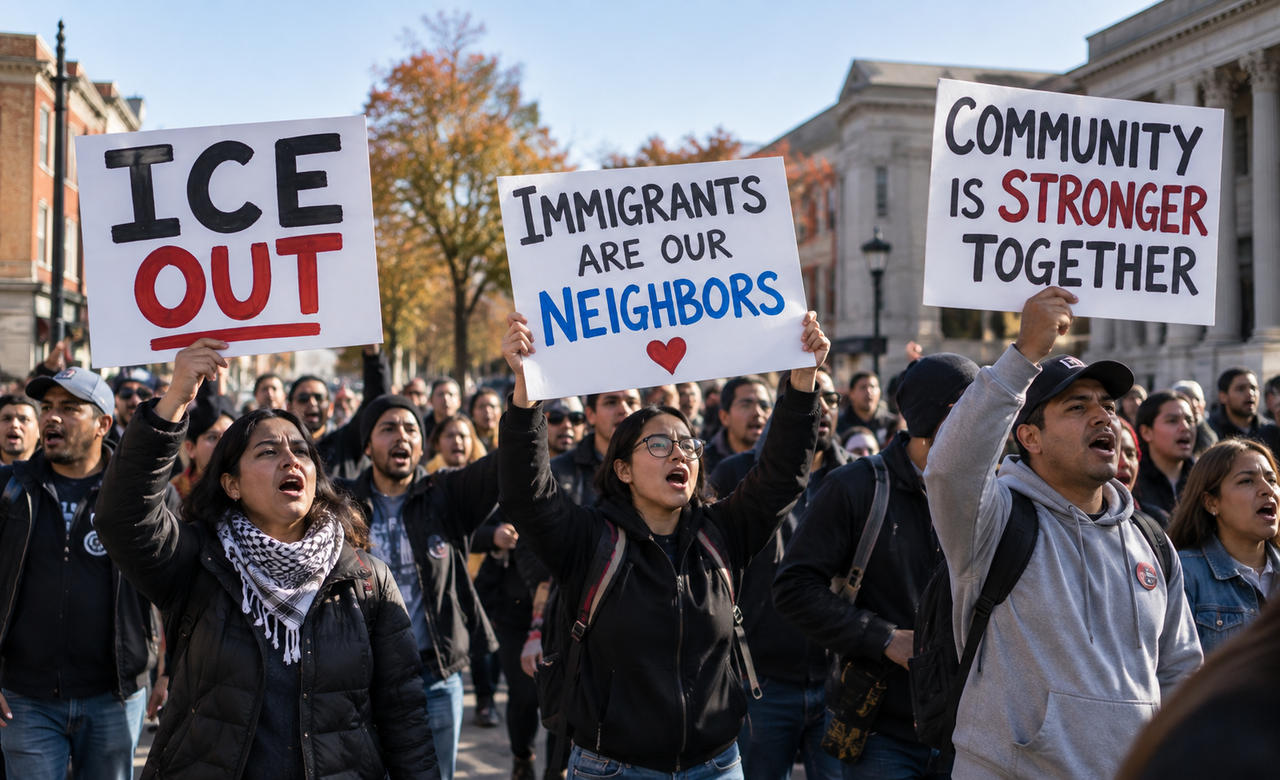
For years, Philadelphia has kept its distance from cooperation with federal immigration authorities. Now, the debate is crossing the city’s borders. Upper Darby, one of the region’s most diverse suburbs, is considering turning into local law a policy that would limit the use of municipal resources to support the civil enforcement of immigration laws.
A public hearing on Ordinance 2026-12 is scheduled for September 16. It raises a question that cuts across the United States: How far should a local government go when federal immigration policy comes into conflict with the trust of its own community?
The shift is significant. For years, Philadelphia has developed policies designed to limit its cooperation with ICE, while many suburban municipalities have maintained different or less clearly defined positions. That political boundary is now beginning to blur.
From Policy Statement to Law
Upper Darby is not starting from scratch. In February, its Township Council unanimously approved a resolution limiting cooperation between local law enforcement and ICE on civil immigration matters and rejecting participation in the federal 287(g) program, which allows certain local law enforcement agencies to assume immigration-enforcement functions.
The current proposal would go further. A resolution expresses a political position; an ordinance can turn that position into a permanent rule.
Upper Darby has more than 85,000 residents and, according to the U.S. Census Bureau, 23.5% of its population was born outside the United States. In a community where nearly one in four residents is an immigrant, immigration policy is not a distant debate.
It is experienced in schools, small businesses, religious institutions, and neighborhoods where families from different parts of the world live side by side.
The municipal government has responded by publishing resources for immigrants and reiterating that its police officers do not ask about immigration status or participate in the civil enforcement of federal immigration laws.
But concerns have intensified.
The death this year of Parady La, an Upper Darby resident who died while in ICE custody, deepened concerns among activists and community members. In February, students at Upper Darby High School also staged protests related to immigration authorities.
The debate then moved beyond ICE itself. The question became what responsibility local government has toward its own residents.
The Philadelphia Lesson
In April, Philadelphia City Council approved the “ICE Out” legislative package, designed to limit municipal cooperation with ICE and strengthen protections for immigrants.
But the initiative also demonstrated the limits of local power. In July, a federal judge blocked portions of the legislation that sought to regulate the identification of federal agents, underscoring that a city cannot directly control how federal agencies operate.
Upper Darby appears to have taken note of that dispute.
The proposed ordinance does not seek to prevent ICE from operating within the township. Nor can it remove a federal agency from its jurisdiction. Instead, it focuses on what the municipality controls: its police officers, facilities, information, and resources.
Immigration is a federal responsibility. Local governments, however, can determine how far their own cooperation extends.
A Battle Over Trust
For supporters of these policies, that separation is a matter of public safety. If immigrants fear that calling 911, reporting a crime, or cooperating with an investigation could expose them to immigration consequences, trust in institutions can erode.
Critics argue that limiting cooperation could make coordination between local and federal authorities more difficult.
Both positions reveal a broader dispute over American federalism: Who exercises power, and who bears the consequences?
Although immigration rules are written in Washington, their effects are felt locally—when a family becomes afraid, when a student worries about a parent, or when a witness decides to remain silent.
That is why what happens in Upper Darby matters beyond its municipal boundaries.
Philadelphia has spent years serving as a regional reference point for resistance to broad cooperation with ICE. Now, the debate is beginning to move into suburban communities with different demographic and political realities.
Upper Darby will not resolve the national immigration debate or alter federal authority. But it can decide what role it wants to play.
That decision may reflect a broader political reality: resistance to cooperation with federal immigration enforcement no longer ends where Philadelphia ends.
It is beginning to cross the city’s borders and, slowly, take root in the suburbs.