
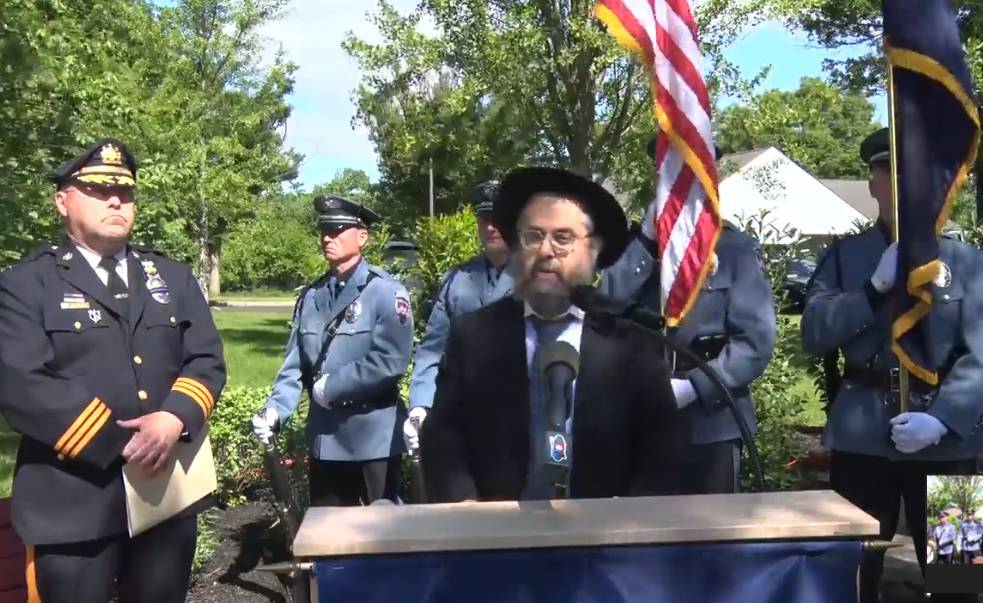
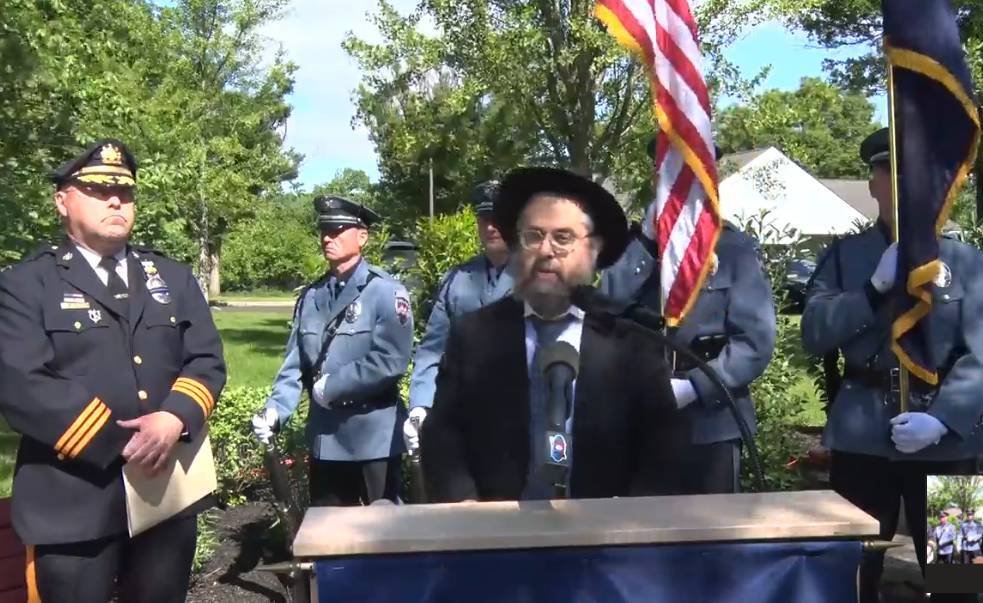
 Rabbi Moshe Travitsky (Courtesy of the Bensalem Jewish Outreach Center)
Every night when he was a kid, Moshe Travitsky got the same speech from his father, a former rabbi: Don’t become a rabbi.
“When you grow up, be a plumber and be honest,” recalled Travitsky with a chuckle.
Naturally, the son didn’t listen. He became not only a rabbi but also the founder and spiritual leader of the Bensalem Jewish Outreach Center, a multi-faceted Jewish education and engagement organization that celebrated its 25th anniversary in April.
“Everyone’s got their calling in life, and at the end of the day, if you feel a passion for it, if you feel a call for it … ” said Travitsky.
To be clear, the rabbi’s father never lost his love for Judaism or hunger for knowledge and wisdom from the many Jewish texts. He studied Torah in his free time. He just felt like, in an official rabbinic role, he was being asked “to say things that weren’t true,” said the son.
By day, Travitsky’s father became a public school teacher in New York City. The son planned to follow a similar path. He said he dreamed that he would “teach on a high level.”
But when Travitsky was a young man studying in a kollel in Lakewood, his wife came home one day from her job as a computer programmer in Trenton, New Jersey, the state capital.
She had met a woman from Bucks County who had approached her with “Jewish questions,” the rabbi recalled.
“My wife came home that night and said, ‘What do I tell her?’ I said, ‘Why don’t we invite her over for lunch?’” Travitsky said.
So they did.
They invited the woman and her husband over for Shabbat. And then the rabbi kashered the couple’s kitchen. And then the husband came every Thursday night to study with the rabbi.
“He brought a friend. We kashered his kitchen. The two of them had a third friend who lived in Bensalem. We kashered his kitchen,” the rabbi said.
All of a sudden, there was a group.
“It was a small group. They had broken off from the local Conservative synagogue,” Travitsky said.
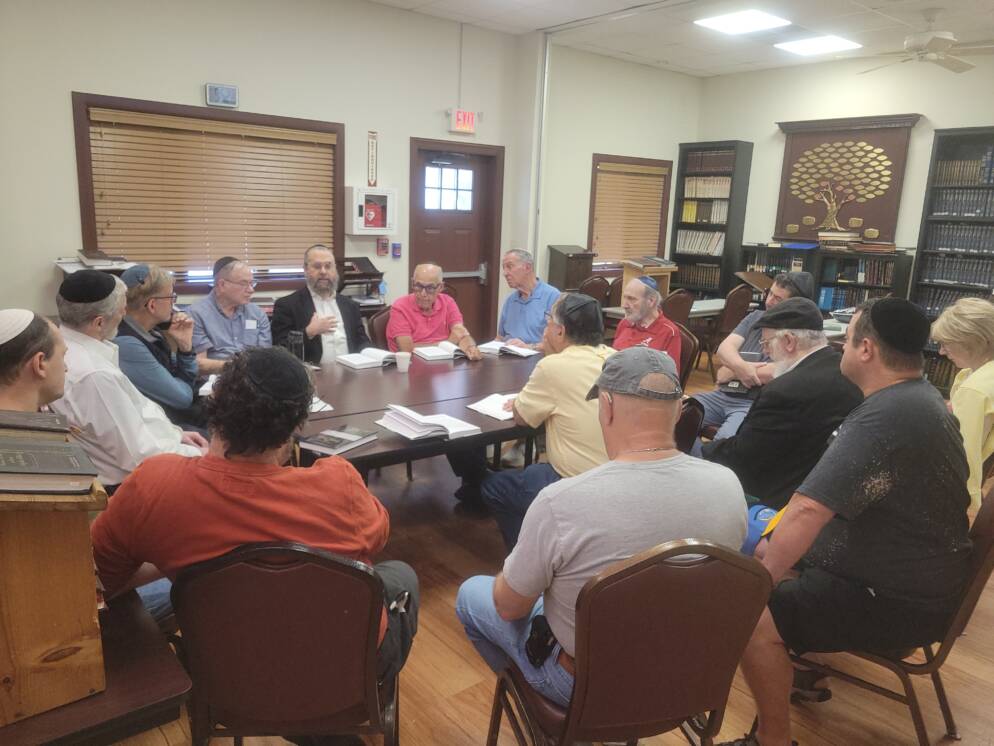 Rabbi Moshe Travitsky, center, leads a discussion at the Bensalem Jewish Outreach Center. (Courtesy of the Bensalem Jewish Outreach Center)
Soon enough, the rabbi was driving an hour to Bensalem to be there for every second Shabbat of the month. The group met in people’s houses.
“There was no synagogue at that point,” Travitsky said.
Shortly after he started coming, a woman in the community told the rabbi about a Jewish Federation of Greater Philadelphia study. It asked women what interested them most. One of the first answers was a mikvah.
“She said there was no mikvah in the county. To us, it’s more important to have a mikvah than a synagogue. I had never really raised money in my life. It was something I stayed away from,” he said. “I spent four years building the mikvah.”
The rabbi spent four years traveling around the United States and Toronto to raise money for his mikvah. But he got it done.
The facility has now been used almost 8,000 times. By the end of the process of building it, Travitsky had moved to Bensalem and started the Bensalem Jewish Outreach Center. The year was 2001. He’s been building the community ever since.
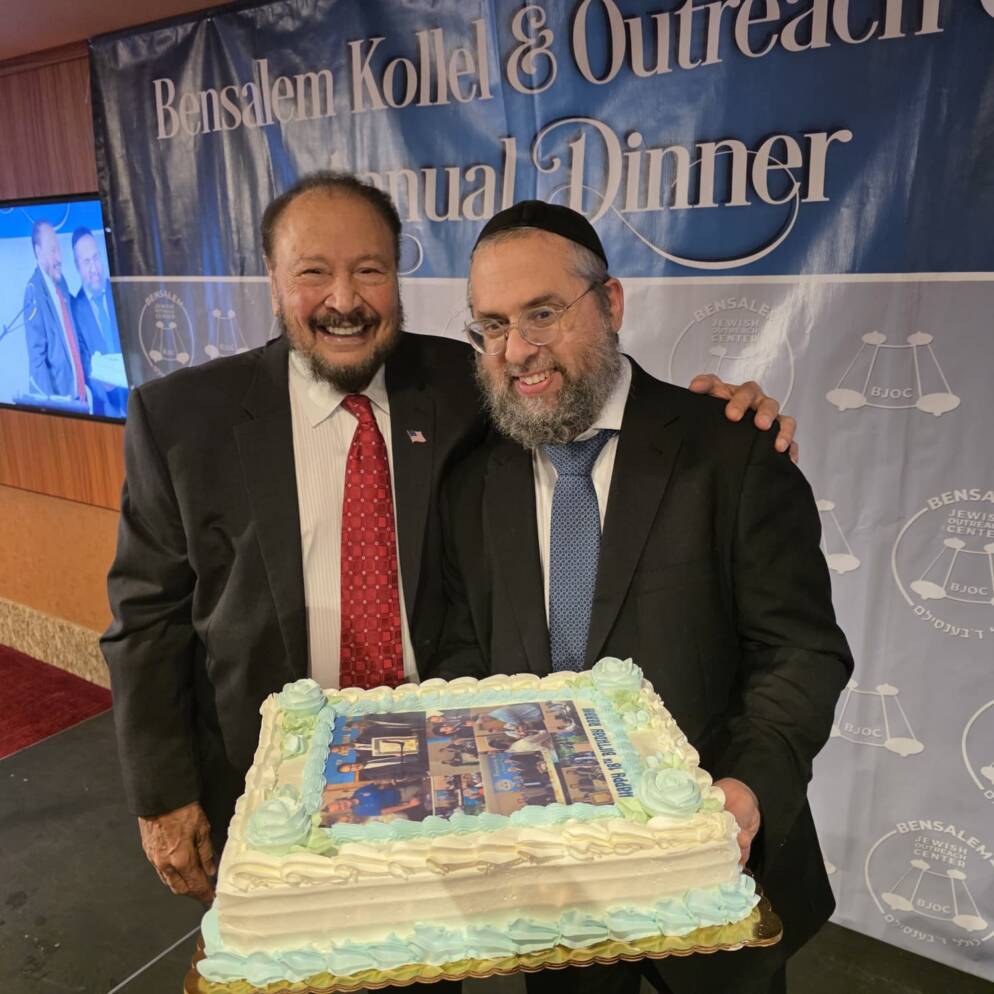 Rabbi Moshe Travitsky, right, at the Bensalem Jewish Outreach Center’s annual dinner (Courtesy of the Bensalem Jewish Outreach Center)
The center is finishing up a round of renovations on that same mikvah. It also now has a synagogue with services three times a day, a Hebrew school on Sunday mornings and a kollel with 10 to 12 rabbis who spend their time studying Torah and Talmud.
A full-time outreach director, Rabbi Daniel Miller, spreads the word about the community to help bring more people in. Travitsky wants to hire another one, too. During the fundraising campaign to celebrate the Outreach Center’s 25th anniversary in the spring, Travitsky and his fellow leaders raised $1.1 million.
For kiddush on Friday evening, Travitsky welcomes close to 100 people. Saturday morning Shabbat services are frequently attended by 30 to 35 men.
“We’re here to try to educate people and introduce them to Judaism,” the rabbi said.
Looking ahead, Travitsky would like to add to his kollel in order to continue enhancing Torah scholarship across generations. He also wants to attract Jews to the community who came up through the yeshiva system but now work as computer programmers, lawyers or in other professions or jobs.
“It builds his life,” the rabbi said.
But perhaps most importantly, Travitsky wants a second outreach director so the center can reach even more Jews in Bucks County and its surrounding areas.
“We hope we’ll be attracting a lot more Jews and a lot more unaffiliated Jews to join,” Travitsky said. “In a certain sense, we look at it like we’re saving lives by doing this. We’re saving Jewish lives.”
jsaffren@midatlanticmedia.com