
BETHLEHEM, Pa. — As the United States marks its 250th anniversary, two exhibitions at Lehigh University are examining the nation’s history not as a finished story, but as an ongoing and sometimes contradictory one.
“Unfinished Chapter: The First 250 Years of American Liberty” is on display inside Linderman Library, while “This Land: Reimagining the United States of America on its 250th Anniversary” is being presented by Lehigh University Art Galleries at Zoellner Arts Center. Lehigh’s calendar lists “This Land” as running through Dec. 4.
The exhibitions bring together historical documents, photographs, and original works of art to explore how ideas about liberty, identity, and the American experience have evolved over 250 years.
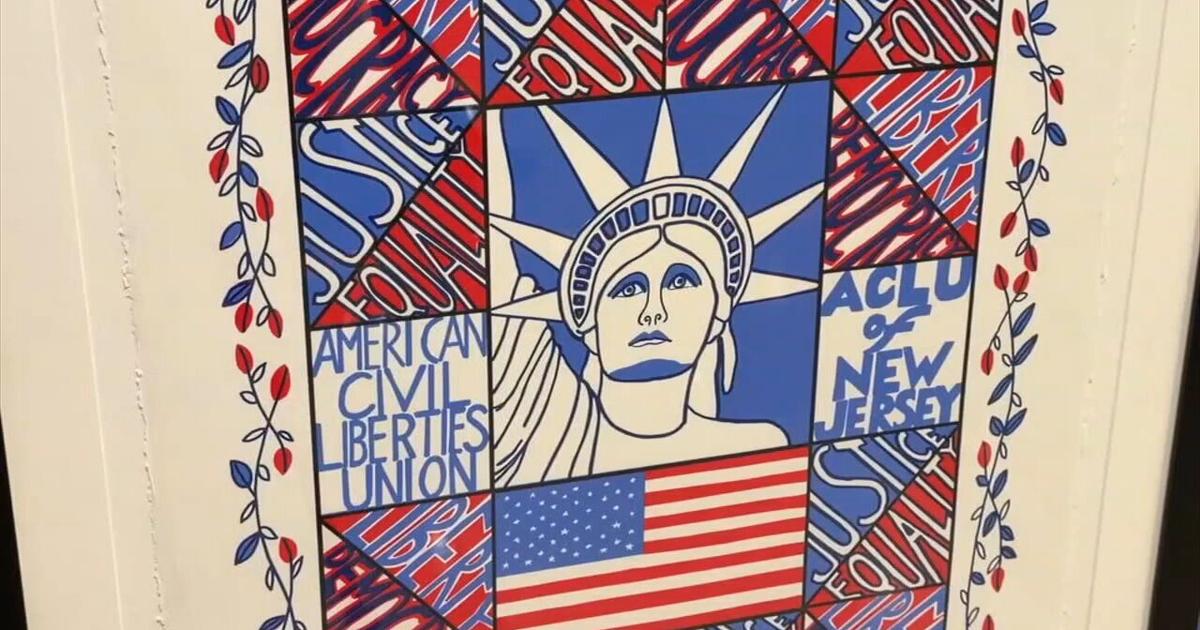
One part of the exhibition examines the Statue of Liberty and its relationship to generations of immigrants who arrived in the United States.
“It stands right by Ellis Island, which was one of the main entry points for immigrants to this country,” said Alex Japha, Lehigh University’s Digital Archives and Special Collections Librarian.
Japha said the history represented by the statue goes beyond the idea of simply arriving in the United States.
“It wasn’t just about arriving and being welcomed; it was about, you know, really making a life,” Japha said.
Exploring America through documents and art
Visitors to the exhibitions can see rare, sepia-toned historical documents connected to the nation’s founding alongside photographs, paintings and other original works of art.
The material spans different periods and experiences in American history, including immigration, labor, recreation, the natural landscape and changing ideas about American identity.
At Lehigh University Art Galleries, Mark Wonsidler, curator of exhibitions and collections, pointed to a 1970s work by Cuban American artist Ana Mendieta as one example of how the exhibition uses art to examine American culture.
Wonsidler said the work “confronts kind of unrealistic expectations about beauty, celebrity, popularity, those sorts of things.”
The exhibitions also ask visitors to consider what 250 years of American history can say about the country today.
Asked what the works collectively reveal about the United States, Wonsidler described the country’s history as an ongoing conversation.
“We are in the middle of a big conversation that is ongoing, and that it’s really necessary to listen to each other as we move through that,” Wonsidler said.
What becomes history?
The exhibitions also raise questions about how the historical record is created, what changes endure and how people in the future may understand events taking place today.
Japha pointed to the renaming of geographic features as an example.
“If you change the name of a body of water, you know, is that a permanent, lasting change?” Japha said. “Is that something that’s going to be entered into the historical record, or is that kind of just a blip on the timeline of history?”
The exhibits place those contemporary questions alongside materials spanning different chapters of the American experience — from documents bearing the names of the nation’s founders to photographs and works examining later generations and different perspectives on American life.
The exhibitions are part of Lehigh University’s programming surrounding the nation’s 250th anniversary. Both are currently open on campus, with “Unfinished Chapter” at Linderman Library and “This Land” at Lehigh University Art Galleries in Zoellner Arts Center.
For the curators, the anniversary represents less an ending than another moment in a history that continues to be written.
At 250, America’s story remains an unfinished chapter.